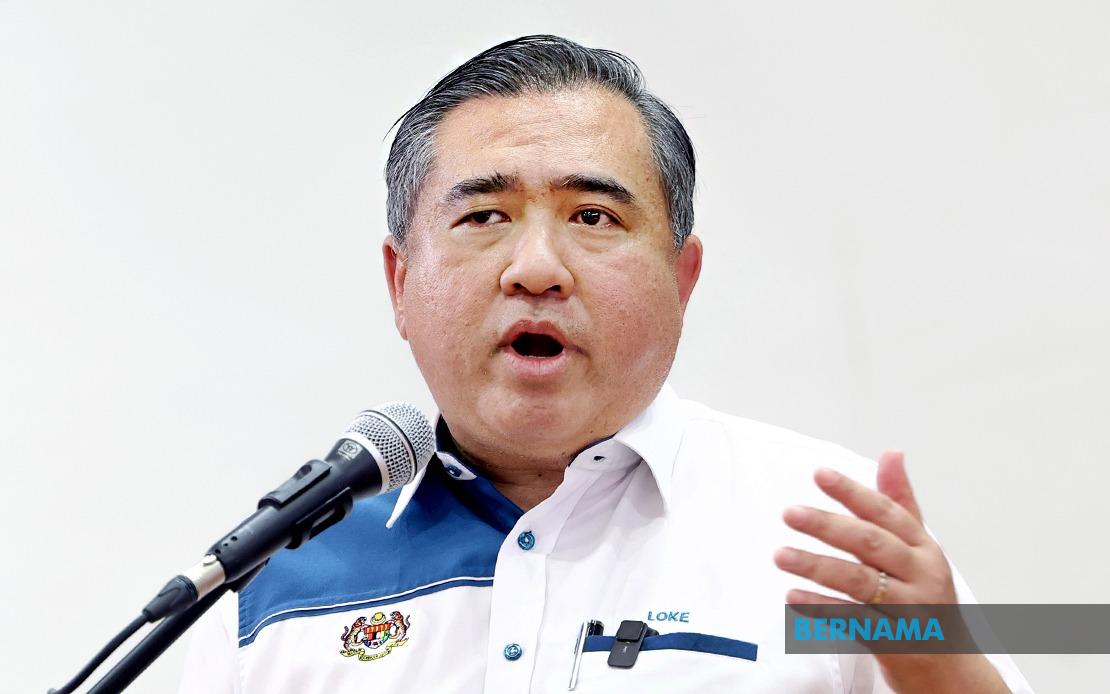
The Malaysian Transport Ministry has defended its decision to operate diesel-powered trains on the newly expanded Southern Shuttle service as a pragmatic interim measure while manufacturing of next-generation Electric Multiple Unit trains proceeds. Transport Minister Anthony Loke made the clarification in response to public criticism, emphasizing that the temporary deployment reflects a deliberate choice to provide immediate connectivity rather than delay service expansion until new rolling stock materializes. The ministry faces a strategic dilemma between extending service now using available assets or waiting for technologically superior replacements, a tension that underscores broader challenges in rail infrastructure modernization across Southeast Asia.
Loke's decision to deploy existing diesel equipment represents a calculated trade-off between passenger convenience and long-term sustainability goals. The Southern Shuttle connects three major Johor centers—Kulai, JB Sentral, and Pasir Gudang—offering journey times of approximately 40 to 45 minutes depending on the specific route. By operating the service immediately with diesel locomotives rather than postponing launch for two to three years, the ministry demonstrates responsiveness to public demand while the manufacturing of ten new EMU train sets progresses. This pragmatism reflects recognition that modern rail development requires balancing technological advancement with immediate transportation needs in growing urban corridors.
The annual subsidy commitment of between RM11 million and RM15 million demonstrates government willingness to sustain rail-based public transport even when operating older, less efficient equipment. This level of financial commitment places the Southern Shuttle within Malaysia's broader rail modernization strategy, which has historically struggled with funding constraints. The subsidy ensures that fares remain competitive and accessible to working-class commuters, though critics have pointed out that current ticket prices remain approximately three times higher than comparable services in Kuala Lumpur and Seremban, raising questions about pricing equity across different regional rail networks.
A particularly significant development involves the reopening of the Kempas Baru-Pasir Gudang corridor to passenger traffic for the first time, having previously served exclusively freight operations. This represents productive use of existing infrastructure to serve growing suburban populations in Johor, reflecting how regional governments can maximize utility of current rail assets before major capital investments in new technology materialize. The dual-use strategy—converting underutilized freight corridors to passenger service—offers a replicable model for other Southeast Asian nations grappling with infrastructure efficiency questions.
The planned completion of the Gemas-Johor Bahru electrified double-tracking project will fundamentally alter the Southern Shuttle's operational framework. Once this infrastructure upgrade concludes, the new EMU trains will replace both the temporary diesel locomotives and eventually the Electric Train Service currently operating on portions of the network. This staged transition illustrates how infrastructure projects in developing economies often unfold in phases, with interim solutions bridging gaps between initial implementation and final comprehensive modernization. The electrification project itself represents substantial capital investment aimed at reducing operating costs and emissions while improving service reliability.
Public criticism regarding the diesel train deployment reflects broader anxieties about Malaysia's commitment to sustainable transport and technological parity with advanced regional competitors. The use of fossil-fuel powered rolling stock appears inconsistent with contemporary environmental standards and contradicts Malaysia's public positioning on climate action. However, Loke's framing addresses this tension by presenting the diesel phase as temporary, with a definitive endpoint tied to EMU delivery and infrastructure completion. This narrative strategy attempts to mollify environmental concerns while maintaining political support for a service that genuinely expands transport options for Johor residents.
The timing of new EMU train procurement reflects delays endemic to large-scale infrastructure projects across the region. Two to three-year manufacturing timelines are standard for Asian railway suppliers, requiring advance planning and financing coordination. That the ministry has already secured orders and is managing the interim period with available assets suggests a maturing approach to infrastructure governance, moving beyond the binary choice of immediate compromise or indefinite delay. However, the lengthy lag between service initiation and technology refresh raises questions about capital planning efficiency.
Comparative analysis with other Malaysian rail services demonstrates regional variation in service standards and investment prioritization. The Kuala Lumpur and Seremban networks, which command lower fares and presumably benefit from more recent infrastructure, suggest that Johor's peripheral status within national transport planning may disadvantage its residents. The Southern Shuttle represents an attempt to correct this imbalance, yet the temporary deployment of older technology underscores persistent resource allocation challenges. Understanding whether this represents acceptable compromise or systematic underinvestment in southern states remains contested among transport policy analysts.
For Malaysian commuters and businesses operating in the Johor corridor, the Southern Shuttle's immediate availability offers tangible benefits regardless of technological generation. Reduced travel times, improved reliability compared to road transport, and new connectivity options justify public support even while acknowledging that future EMU operation will enhance the service further. The psychology of having a working service versus waiting for perfection often determines real-world modal shift in transport behavior, making the interim diesel solution strategically sound from demand-generation perspectives.
Broader implications for Southeast Asia's rail development trajectory emerge from Malaysia's pragmatic approach. As regional economies grapple with infrastructure modernization, the balance between immediate service provision and technological upgrade cycles will recur repeatedly. The Southern Shuttle offers a case study in managing this tension through transparent communication about temporary measures and clear timelines for improvement. Loke's public messaging, while defensive in tone, reflects maturation in explaining infrastructure policy trade-offs to increasingly sophisticated urban constituencies.
The subsidy allocation framework also warrants examination regarding financial sustainability. At RM11 million to RM15 million annually, the ministry is essentially underwriting passenger rail operations, acknowledging that fare revenue alone cannot sustain service viability. This subsidy model is common across the region but raises long-term fiscal questions. If EMU operation reduces per-kilometer costs substantially, the subsidy requirement may eventually decrease; conversely, if fare structures remain suppressed for social policy reasons, subsidies may persist indefinitely, creating budgetary pressures that could constrain expansion to other corridors.
Looking forward, the successful transition from diesel to electric operation on the Southern Shuttle will establish precedents for similar peripheral rail services throughout Malaysia. Success metrics will include ridership growth, on-time performance, and ultimately whether the service genuinely redistributes transport demand away from congested highways. The temporary diesel phase should therefore be viewed not merely as a stopgap but as a foundational period establishing ridership patterns and operational routines that will determine whether the eventual EMU-operated service achieves its intended impact on regional mobility and urban development patterns.
Ultimately, Transport Minister Loke's defense of the diesel deployment reflects practical realities of infrastructure governance in developing economies. While environmental purists may object to fossil-fuel train operation, the alternative—withholding service for several additional years—would not reduce emissions but merely delay their avoidance. The Southern Shuttle exemplifies how transitional solutions, properly explained and clearly time-bound, can serve genuine public interest even when they represent technological compromises. Whether this pragmatism becomes a model for enlightened infrastructure policy or merely another postponed modernization ultimately depends on faithful execution of the promised EMU transition timeline.