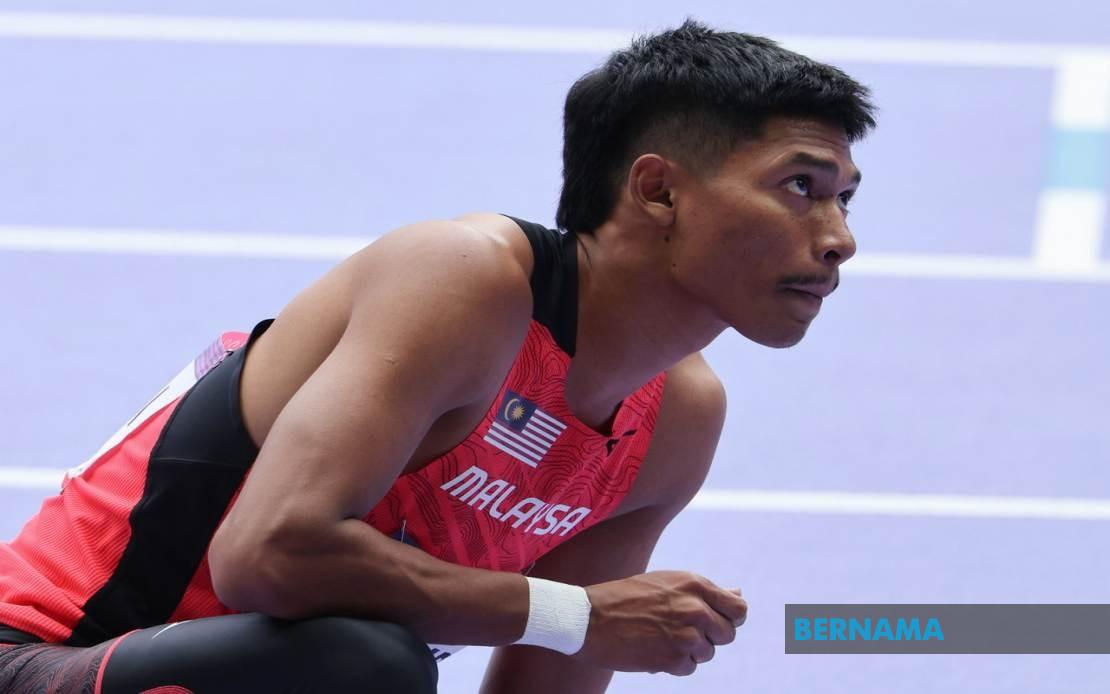
National sprinter Muhammad Azeem Mohd Fahmi has confirmed his intention to establish his competitive athletics career in Malaysia rather than return to the United States, marking a significant decision for one of the country's most promising track talents following the completion of his undergraduate degree at Auburn University.
The 22-year-old sprinter, who holds the national 100-metre record with a time of 10.09 seconds, announced that he has no immediate plans to relocate abroad and views his future as firmly rooted in his home country. The decision comes after four years spent pursuing his university education and athletic development in Alabama, a period that substantially shaped his maturation as both a scholar and athlete on the international stage.
Azeem's commitment to remaining in Malaysia reflects his prioritisation of family connections that were inevitably strained during his extended overseas tenure. He emphasised that quality time with his immediate family, extended relatives, and the broader support network that nurtured his development has emerged as a central consideration in his post-graduation planning. This personal dimension carries particular resonance in Malaysian sporting culture, where family involvement often proves instrumental in sustaining young athletes' motivation during demanding training periods.
The sprinter will continue his athletic development through a hybrid coaching arrangement that leverages both international expertise and local knowledge. His training regimen will operate according to a programme designed by his American coach Ken Harnden, whose technical guidance contributed to Azeem's record-breaking performance. However, the day-to-day operational supervision and logistics will fall to local coach Muhammad Amir Izwan Tan Abdullah, ensuring continuity of coaching philosophy while accommodating the practical realities of training within Malaysia's climate and facilities infrastructure.
This coaching structure represents a pragmatic approach increasingly adopted by Malaysian sporting bodies seeking to retain emerging talent domestically while maintaining exposure to world-class methodologies. By preserving the transatlantic coaching relationship in modified form, Azeem can benefit from Harnden's expertise through periodic consultations and remote programme adjustments without requiring his physical presence in the United States. Such arrangements have become more feasible through digital communication technologies and represent a cost-effective strategy for national sports development.
Beyond his immediate athletic objectives, Azeem has signalled academic ambitions that underscore his commitment to long-term personal development alongside competitive pursuits. He indicated intentions to eventually pursue postgraduate studies, though he has deliberately sequenced this goal to occur after an intensive period of sports-focused training. The decision to defer higher education temporarily demonstrates strategic prioritisation, acknowledging that athletic performance at elite levels demands comprehensive commitment and that premature academic demands might compromise the developmental window during which his competitive potential can be maximised.
Azeem's decision carries implications for Malaysia's broader athletic pipeline and the retention of locally-developed talent. The country has invested substantially in nurturing sprinters capable of competing at regional and continental levels, and the loss of emerging athletes to overseas opportunities or permanent relocation represents a persistent challenge for national sports planning. His choice to remain domestically sends a potentially encouraging signal about the viability of elite-level athletic careers within Malaysia, particularly when coupled with access to quality coaching and appropriate training infrastructure.
The national record-holder's commitment also reflects confidence in Malaysia's athletic ecosystem and coaching personnel. The emphasis on collaboration with local coach Muhammad Amir Izwan Tan Abdullah suggests that Azeem, having experienced American university athletics firsthand, believes Malaysian coaching can provide the sophisticated technical guidance and holistic athlete management necessary for continued progression. This assessment may influence other promising athletes' decisions regarding post-university career trajectories.
From a regional perspective, Azeem's development as a 100-metre sprinter addresses a longstanding capacity gap in Malaysian athletics. Sprint performance has historically lagged behind regional competitors from Thailand, Indonesia, and the Philippines, making indigenous development of sub-10.10-second performers strategically significant for international competitiveness. His commitment to domestic training may facilitate mentorship relationships with younger sprinters and contribute to sustainable institutional knowledge within Malaysian athletics.
The transition from university athlete to professional competitor typically presents athletes with pronounced adjustment challenges, particularly regarding training regimen restructuring, competition scheduling, and financial sustainability. Azeem's decision to spend an initial period focused exclusively on athletics rather than immediately balancing professional or graduate commitments demonstrates recognition of this critical developmental phase. Most elite sprinters require dedicated focus during the post-university transition to consolidate technical improvements and adapt to the different demands of open competition against fully professional athletes.
Looking ahead, Azeem's performance trajectory will significantly influence Malaysian athletics' capacity to produce competitive sprinters within the Southeast Asian context. His continued presence within the domestic sporting ecosystem ensures that his experience, expertise, and competitive achievements remain accessible to younger athletes and coaching staff. The deliberate decision to reject overseas relocation and invest in Malaysian-based development represents a meaningful commitment that extends beyond personal achievement to encompass broader national sporting development objectives.