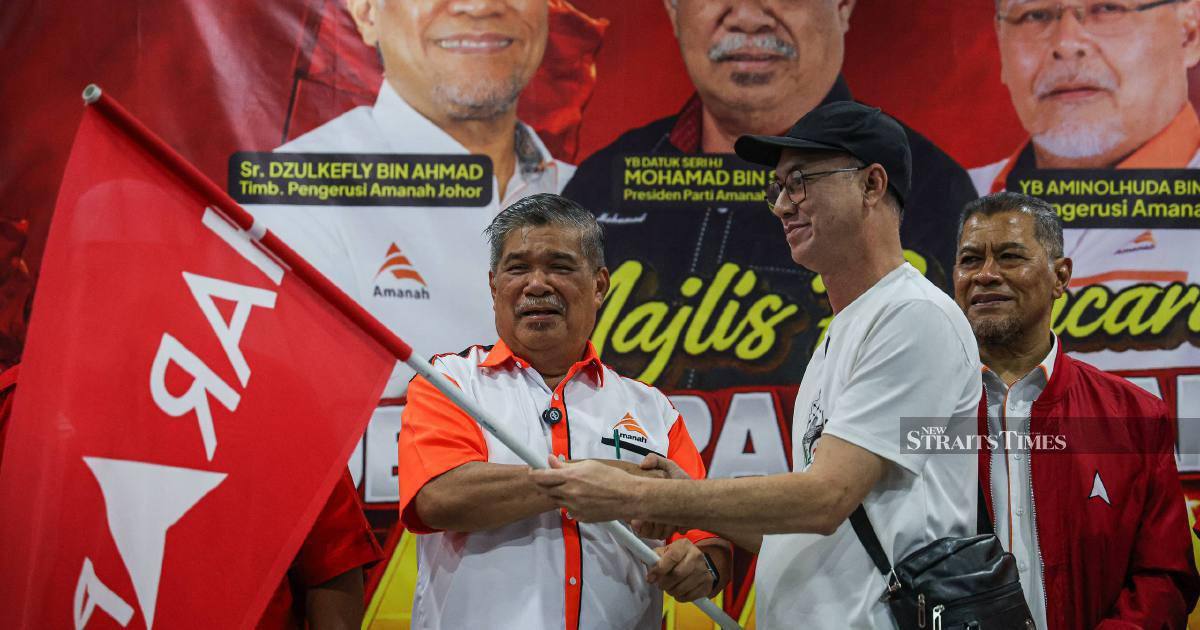
Amanah is refreshing its political roster ahead of the Johor state election scheduled for July 11, with party president Mat Sabu announcing the deployment of 13 new candidates among a slate of 19 contenders. The move signals a strategic pivot towards injecting younger energy and untested political talent into an electoral contest where the party seeks to consolidate support in one of Malaysia's most significant state battlegrounds.
The decision to field a substantial number of debutant candidates reflects a broader calculation within Amanah's leadership regarding generational renewal and voter appetite for fresh faces unburdened by previous legislative records. By rotating in thirteen newcomers across nearly 70 percent of its candidate roster, the party is banking on the possibility that voters in Johor may respond positively to contenders without lengthy parliamentary histories, while maintaining enough experienced figures to provide strategic guidance and institutional memory.
Johor has historically remained a crucial political laboratory for Malaysian electoral politics, given its size, economic importance, and swing-vote character. The state's 56 state assembly seats represent a significant prize for any coalition, and Amanah's decision to contest 19 seats reflects both its ambitions in the state and its limitations as a mid-sized political force. The party's strategy of embedding new candidates within its candidate list suggests confidence in its ground organisation's ability to support and promote untested politicians.
Mat Sabu's announcement comes as the Malaysian political landscape continues its post-2022 reconfiguration, with various coalitions and parties reassessing their positioning ahead of both state and federal contests. Amanah, as a component member of the Pakatan Harapan coalition, must balance its individual party interests with broader coalition dynamics while simultaneously appealing to Johor voters who have demonstrated sophisticated and sometimes unpredictable voting patterns in previous elections.
The inclusion of thirteen new candidates carries implications beyond mere generational succession. These are individuals who have not yet faced the grinding demands of state-level campaigning, public scrutiny of their records and statements, or the mechanics of legislative work. Their performance in the July 11 election will provide important data regarding whether Johor voters favour renewal and freshness, or whether they penalise candidates lacking established track records and public recognition.
For Malaysian political analysts, the composition of Amanah's candidate list offers insight into how the party assesses its own strengths and vulnerabilities in Johor. By clustering new candidates across multiple districts rather than concentrating them in safer seats, the party may be signalling either genuine confidence in their electability or pragmatic recognition that it lacks sufficient depth of experienced candidates to field across all contested seats.
The timing of the Johor election itself carries significance for Malaysian federalism and coalition politics. As the largest state by population and one of the most economically developed, Johor's electoral outcome will reverberate across Malaysia's political system and influence calculations for the federal election that cannot be indefinitely postponed. Amanah's strategy in this contest thus extends beyond provincial significance to become a barometer of coalition health and political momentum.
The party's recruitment of new candidates also suggests internal confidence regarding campaign financing and volunteer mobilisation. Supporting thirteen debut candidates requires additional investment in candidate vetting, campaign training, media exposure, and grassroots organisation compared to fielding entirely experienced contenders. Amanah's willingness to incur these costs indicates that the party leadership believes the political environment and internal organisational capacity justify this expenditure.
Malaysian voters, particularly in Johor, will ultimately determine whether Amanah's generational renewal strategy succeeds. The state's electorate has shown capacity for surprising political choices and demonstrated sophistication in distinguishing between individual candidates and party brands. The performance of Amanah's new faces in the July 11 election will not only shape the party's representation in the Johor state assembly but also provide evidence regarding whether Malaysian voters, at state level, remain receptive to new political talent or increasingly demand experience and established credentials from their elected representatives.
The election results will additionally inform whether other opposition parties adopt similar refreshment strategies in their own state and federal preparations. If Amanah's new candidates perform competitively, this may validate youth-focused strategies across Malaysian opposition politics. Conversely, if voters demonstrate preference for experienced legislators, this pattern could prompt other parties to reconsider generational balance within their own candidate selection processes moving forward into the next election cycle.