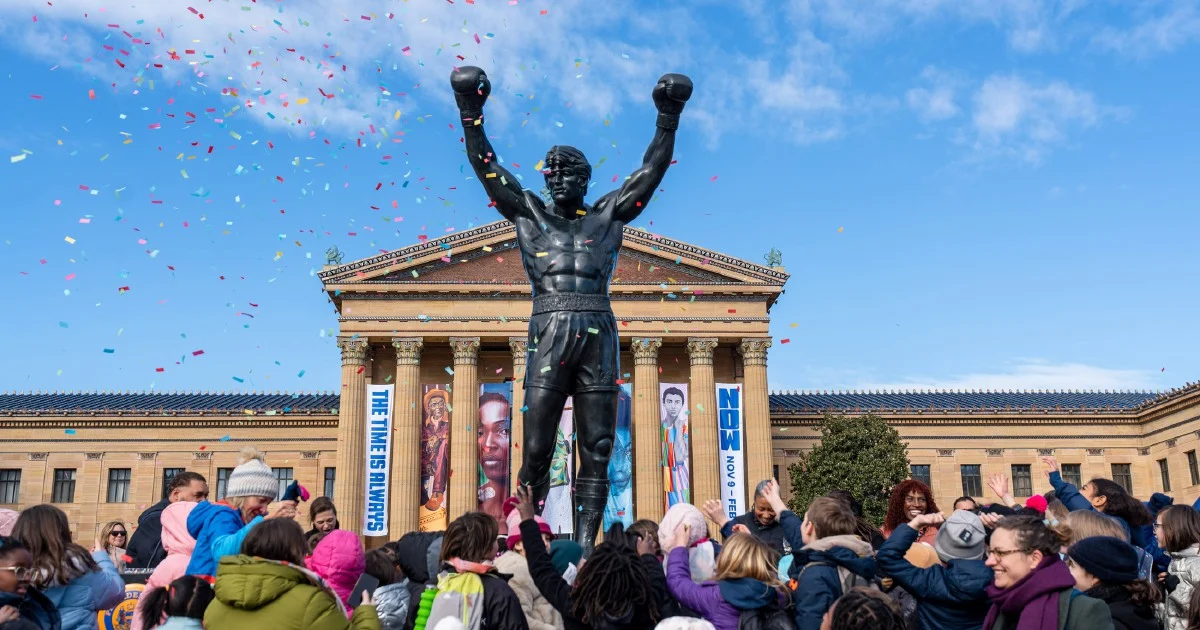
French fans heading to the World Cup have received an unusual but serious advisory: avoid the Rocky Balboa statue in Philadelphia. Stadium officials and local authorities issued the warning on Saturday, citing a pattern of sporting disasters that have plagued teams after their supporters decorated the beloved bronze monument with their national colours.
The statue, which stands as a tribute to the fictional boxer immortalised in film and has become a genuine cultural landmark in Philadelphia, apparently carries substantial superstitious weight. The warning reflects genuine concern that tampering with the sculpture—whether by draping flags, painting insignia, or otherwise dressing it in team regalia—may trigger a curse resulting in tournament eliminations, poor performances, or unexpected defeats.
Philadelphia's iconic statue has witnessed numerous attempts by international supporters to claim it as a symbol of their team's strength and resilience. The practice of adorning the Rocky monument has become something of a tradition for visiting fans, who see the image of determination and triumph as auspicious for their squad's prospects. However, the cumulative evidence suggests the opposite may be true.
The curse theory gained credibility through a series of tangible sporting setbacks. Multiple national teams whose supporters previously decorated the statue experienced surprising failures in subsequent tournaments. Whether coincidence or consequence, the pattern has become sufficiently notable that local authorities felt compelled to issue an explicit deterrent specifically targeting France's supporters before the World Cup competition.
This superstition reflects the broader psychology of international football, where fans invest enormous emotional significance in symbolic acts and rituals. The notion that touching a statue might influence tournament outcomes may seem irrational to outsiders, but within the intense culture of World Cup competition, such beliefs take on real weight. Teams and their supporters often credit or blame extraneous factors for performance variations.
The Rocky statue itself remains a fixture of immense popularity in Philadelphia, drawing thousands of visitors annually. Positioned in the city's sports district, it has transcended its origins as a movie prop to become a genuine landmark representing perseverance and triumph. The statue's association with success—both in the fictional narrative and in Philadelphia's sporting identity—makes it an obvious target for superstitious supporters seeking external validation for their team's prospects.
France's World Cup ambitions carry particular weight given their status as defending champions and perennial tournament contenders. The national team has cultivated a reputation for excellence and consistency at the international level. The warning issued to their supporters reflects the seriousness with which tournament outcomes are treated, particularly by administrative bodies in host cities.
The curse narrative also speaks to the broader relationship between fans, symbols, and sporting identity. International supporters often engage in ritualistic practices around their team's participation in major tournaments, treating certain locations or objects as having mystical properties. The Rocky statue has become one such focal point, with its history of misfortune making it simultaneously attractive and hazardous as a symbolic destination.
For French fans planning to visit Philadelphia as part of their World Cup journey, the message is unambiguous. Local authorities have established clear boundaries designed to protect both the statue and, theoretically, France's tournament viability. Breaking this informal rule risks not only confrontation with local enforcement but also violation of the curse itself—a double jeopardy that few supporters are willing to chance.
The warning underscores how World Cup tournaments generate profound cultural and psychological dimensions extending well beyond the pitch. Cities hosting matches or significant fan gatherings become sites where national identity, sporting aspiration, and local tradition intersect. Philadelphia's Rocky statue exemplifies this intersection, serving as a meeting point where international supporters and American civic pride converge.
Whether the curse possesses genuine explanatory power or merely reflects confirmation bias and selective memory remains unknowable. What is certain is that France's supporters have been explicitly cautioned, and the next few weeks will reveal whether they heed this warning or attempt to test the statue's legendary curse against their team's tournament ambitions. The stakes, both literal and symbolic, have been clearly established.
%22%2F%3E%3C%2Fpattern%3E%3C%2Fdefs%3E%3Crect%20width%3D%22100%25%22%20height%3D%22100%25%22%20fill%3D%22url(%23ph19mfpg)%22%2F%3E%3Crect%20width%3D%22100%25%22%20height%3D%22100%25%22%20fill%3D%22url(%23ph19mfpp)%22%2F%3E%3Ctext%20x%3D%2250%25%22%20y%3D%2250%25%22%20text-anchor%3D%22middle%22%20dominant-baseline%3D%22central%22%20fill%3D%22rgba(255%2C255%2C255%2C0.95)%22%20font-family%3D%22Georgia%2C%20'Times%20New%20Roman'%2C%20serif%22%20font-weight%3D%22700%22%20font-size%3D%22170%22%20letter-spacing%3D%22-0.02em%22%3EMinistry%3C%2Ftext%3E%3C%2Fsvg%3E)