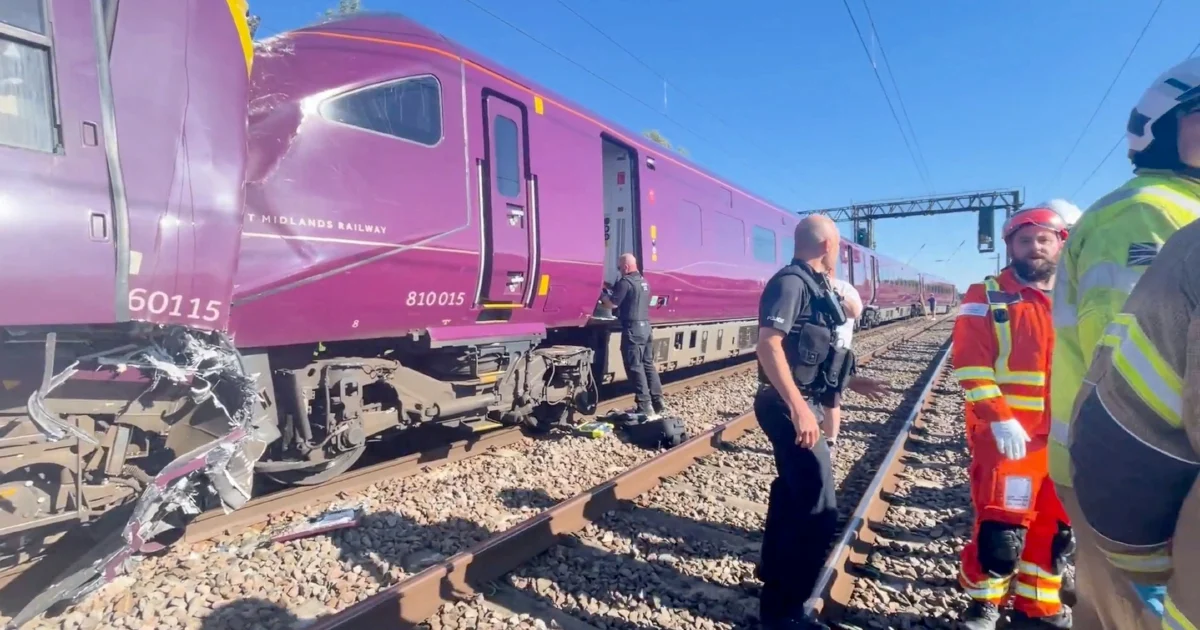
A serious railway accident unfolded north of London on Friday when two passenger trains came together in a collision that claimed the life of one person and left multiple others nursing significant injuries. According to reports from UK emergency services, the incident resulted in a severe health and rescue situation, with paramedics and emergency workers attending to 11 individuals classified as suffering "very serious" injuries, alongside numerous others who sustained lighter wounds in the impact.
Railway incidents of this severity are relatively uncommon in the modern British rail network, which benefits from advanced safety systems and signalling infrastructure. However, when collisions do occur, they tend to generate widespread disruption to services and raise questions about system reliability and operational procedures. The location of this accident in the densely populated region north of London, where multiple rail lines intersect and carry substantial passenger traffic daily, compounds the operational challenges faced by emergency responders and rail operators alike.
For Malaysian readers, such incidents underscore the importance of robust railway safety governance, a matter increasingly relevant as Malaysia expands its own rail network through projects like the East Coast Rail Link and enhanced commuter services. The UK's experience with rail regulation through bodies like the Office of Rail and Road provides instructive lessons about maintaining infrastructure standards and investigating system failures that can lead to catastrophic events.
The presence of 11 "very seriously" injured individuals indicates that the collision involved considerable force, likely occurring at elevated speeds or involving a configuration where the trains struck each other at an angle. Serious rail accidents typically result in rapid escalation of emergency response, with multiple ambulances, fire services, and rescue teams converging on the location to extract trapped passengers and provide urgent medical intervention. The number of seriously injured passengers points to the scale of the emergency facing first responders.
Railway collisions in developed nations with mature safety systems are typically attributable to human error, signal failures, track maintenance issues, or in rare cases, mechanical defects in rolling stock. British railways have implemented extensive layers of protection including automatic train protection systems designed to prevent trains from approaching signals at dangerous speeds, yet incidents continue to occur when these safeguards malfunction or are bypassed under specific operational circumstances.
The immediate aftermath of such an accident involves coordinated action spanning emergency medicine, casualty management, scene clearance, and beginning preliminary investigations into causation. Hospitals across the affected region would have activated major incident protocols to accommodate the injured, deploying additional staff and mobilising trauma specialists to manage those with the most critical injuries. The psychological impact on surviving passengers, many of whom will have experienced significant trauma, also represents an often-overlooked consequence of railway disasters.
From a Southeast Asian perspective, this incident is worth monitoring as Malaysia and neighbouring countries develop their rail infrastructure. While the UK maintains some of the world's oldest rail lines, continuous investment and regulatory oversight have established frameworks for safety that newer networks should aspire to emulate. The investigation that follows this collision will likely yield findings applicable to rail operators globally, particularly regarding human factors and systems integration.
The economic implications of railway accidents extend beyond immediate medical costs to encompass substantial service disruption, infrastructure repairs, compensation claims, and regulatory inquiries that can occupy significant institutional resources. For a country like Malaysia where rail expansion is accelerating, understanding how mature networks manage safety and respond to failures becomes increasingly pertinent as passenger volumes on projects like the MRT and LRT systems continue climbing.
Emergency services across the UK demonstrated the capacity to mobilise resources rapidly in response to the collision, reflecting years of training and established protocols for mass casualty incidents. This institutional capability, built through repeated exercises and real-world experience, emphasises why regular safety audits and emergency preparedness programmes remain essential for transport operators everywhere, not merely as regulatory compliance measures but as practical safeguards against the inevitable occurrence of accidents.
The investigation into Friday's collision will likely examine factors including signalling system performance, driver actions, train maintenance records, weather conditions, and track geometry. Such inquiries, when conducted transparently and with genuine commitment to identifying system weaknesses, generate knowledge that benefits the entire rail industry. For operators in Malaysia and the broader Southeast Asian region, access to findings from accident investigations in developed nations provides invaluable guidance for preventing similar occurrences.