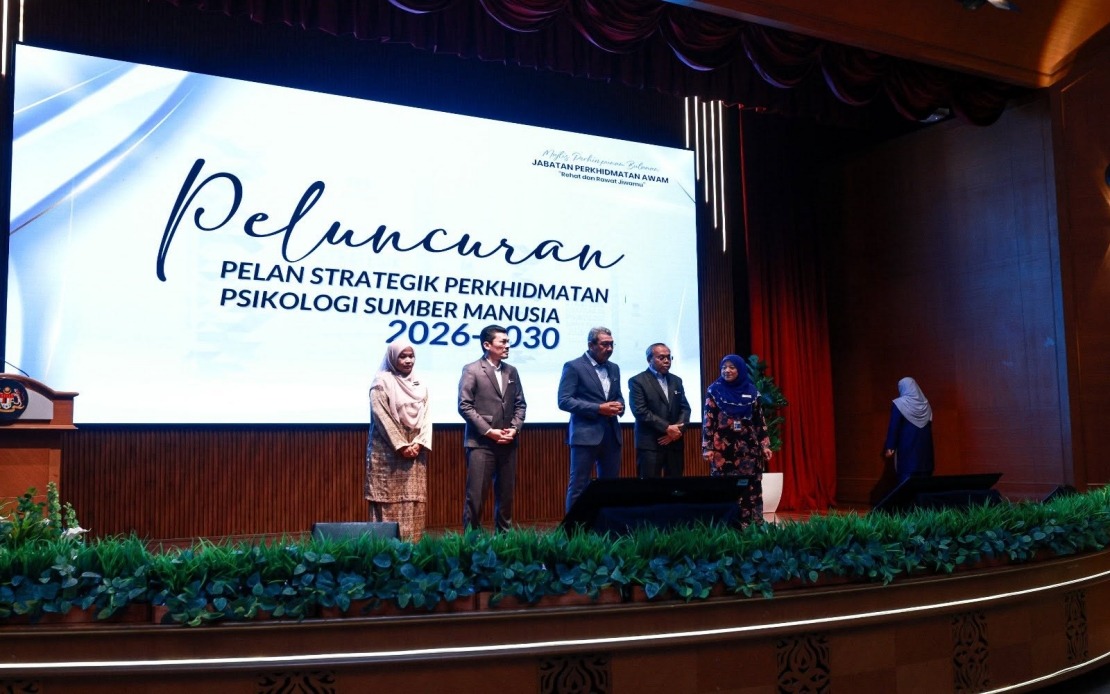
The Public Service Department has rolled out a comprehensive psychological services strategy spanning 2026 to 2030, signalling a major institutional pivot toward employee mental health and organisational wellness within Malaysia's civil service. The initiative was unveiled at the PSD's June monthly assembly in Putrajaya, with the occasion themed "R&R (Rest and Treat) Your Soul" and formally sanctioned by Tan Sri Wan Ahmad Dahlan Abdul Aziz, the department's Director-General. The framework encompasses 12 distinct strategies, 22 programmatic interventions, and 48 measurable performance indicators designed to systematically strengthen the psychological resilience and emotional well-being of Malaysia's civil service workforce.
At the core of this initiative lies a philosophical reorientation toward mental health support within the public sector. Tan Sri Wan Ahmad Dahlan emphasised the concept of "Treat," which fundamentally reframes how civil servants should engage with psychological challenges. Rather than viewing mental health support as a last resort or sign of weakness, the strategy positions professional intervention as a proactive choice requiring personal courage. This framing addresses a persistent cultural barrier within many Asian bureaucracies: the reluctance to acknowledge or seek help for psychological concerns due to embedded stigma and perceived professional consequences. By positioning intervention as an act of personal strength, the PSD is attempting to fundamentally reshape institutional attitudes toward mental health across the public sector.
The underlying philosophy, articulated through the slogan "the well-being of an organisation starts with the well-being of its people," reflects growing recognition within Malaysia's governance structures that employee mental health directly impacts organisational effectiveness, service delivery quality, and institutional resilience. This represents a departure from traditional civil service paradigms that compartmentalised personal welfare from professional performance. The strategy explicitly calls for the cultivation of positive workplace support systems, systematic dismantling of psychological service stigma, and institutionalisation of effective self-care practices across the civil service hierarchy.
The "Rawat" concept introduced through this initiative—which translates roughly as "care" or "nurture" in Malay—denotes structured, proactive intervention mechanisms targeting mental health and employee well-being challenges before they escalate into serious crises. This preventative approach contrasts with reactive crisis management models and recognises that early identification and professional support can prevent productivity losses, absenteeism, and more serious mental health deterioration. The concept deliberately complements existing PSD reform initiatives, particularly the H.E.M.A.T work culture framework, which emphasises governance excellence, public empathy, progressive mindset, innovation appreciation, and transparent administration.
Integrating the "Rawat" concept with H.E.M.A.T represents a holistic governance modernisation strategy. Rather than compartmentalising mental health as a separate human resources function, the PSD is embedding psychological well-being into the broader cultural and operational transformation of the public service. This integration suggests that creating psychologically healthy workplaces requires simultaneous reforms across governance structures, organisational empathy, institutional mindset evolution, and administrative transparency. The framework acknowledges that psychological distress often stems not merely from individual factors but from organisational structures, communication failures, and governance deficits.
The scale of this initiative carries significance for Malaysia's approximately 1.6 million civil servants across federal, state, and local government levels. The comprehensive metrics framework—encompassing 48 key performance indicators—indicates that the PSD intends to measure effectiveness systematically rather than relying on anecdotal evidence or subjective assessments. This data-driven approach aligns with international best practices in occupational health and organisational psychology, potentially positioning Malaysia's civil service as a regional leader in institutionalised mental health support.
From a regional perspective, this strategic plan reflects broader Southeast Asian shifts toward recognising mental health as a public health and organisational priority. Many ASEAN nations have historically struggled with workplace mental health awareness and intervention capacity, with stigma and resource constraints limiting service accessibility. Malaysia's institutional commitment, particularly through a dedicated strategic framework at the PSD level, potentially establishes benchmarks for other regional governments and demonstrates that mental health investment can be embedded within public sector modernisation agendas.
The initiative also addresses implicit challenges within the Malaysian context. High-pressure work environments, hierarchical institutional structures, and cultural attitudes toward mental health have historically created barriers to service utilisation. By framing mental health support through a wellness and rest-focused narrative rather than pathological language, the PSD is employing psychologically informed messaging designed to resonate across diverse educational and cultural backgrounds within the civil service. The emphasis on rest and self-care acknowledges that Malaysian civil servants frequently operate under demanding conditions with extended working hours.
Implementation effectiveness will likely depend on several critical factors. Senior leadership modelling—with high-ranking officials openly endorsing and potentially utilising psychological services—will be essential for normalising such support across the hierarchy. Resource allocation, including staffing for psychological services, training for line managers in mental health awareness, and accessibility of services across geographically dispersed civil service locations, will determine practical reach. Additionally, confidentiality safeguards and explicit protections against professional discrimination for service users will be necessary to build trust and encourage genuine engagement.
The 22 programmatic interventions within the strategic plan likely encompass various components: employee assistance programmes, mental health awareness training, peer support networks, crisis intervention capabilities, and potentially partnerships with external mental health organisations. The specificity of this number suggests thoughtful programme design rather than generic initiatives. The 12 strategies probably address implementation pathways across different aspects of civil service operations, from recruitment and onboarding through to leadership development and organisational culture change.
Looking forward, this initiative carries implications extending beyond immediate civil service improvements. A psychologically healthier public sector workforce typically translates into improved service delivery for Malaysian citizens, more responsive governance, and reduced institutional dysfunction stemming from stress-related performance deterioration. The strategy also potentially influences private sector employers observing government approaches to occupational mental health, creating cascading effects across Malaysia's broader employment landscape.
The PSD's investment in this comprehensive mental health framework represents a significant institutional acknowledgment that psychological well-being is central to effective governance and organisational excellence. By combining strategic planning, measurable outcomes, and culturally informed messaging, the department is attempting to create systematic change within one of Southeast Asia's largest employment sectors. The success of this initiative will be closely watched both domestically and regionally as evidence of whether institutional commitment can effectively transform long-entrenched stigmas around mental health within traditional hierarchical bureaucracies.

%22%2F%3E%3C%2Fpattern%3E%3C%2Fdefs%3E%3Crect%20width%3D%22100%25%22%20height%3D%22100%25%22%20fill%3D%22url(%23ph523ndg)%22%2F%3E%3Crect%20width%3D%22100%25%22%20height%3D%22100%25%22%20fill%3D%22url(%23ph523ndp)%22%2F%3E%3Ctext%20x%3D%2250%25%22%20y%3D%2250%25%22%20text-anchor%3D%22middle%22%20dominant-baseline%3D%22central%22%20fill%3D%22rgba(255%2C255%2C255%2C0.95)%22%20font-family%3D%22Georgia%2C%20'Times%20New%20Roman'%2C%20serif%22%20font-weight%3D%22700%22%20font-size%3D%22272%22%20letter-spacing%3D%22-0.02em%22%3EAnwar%3C%2Ftext%3E%3C%2Fsvg%3E)