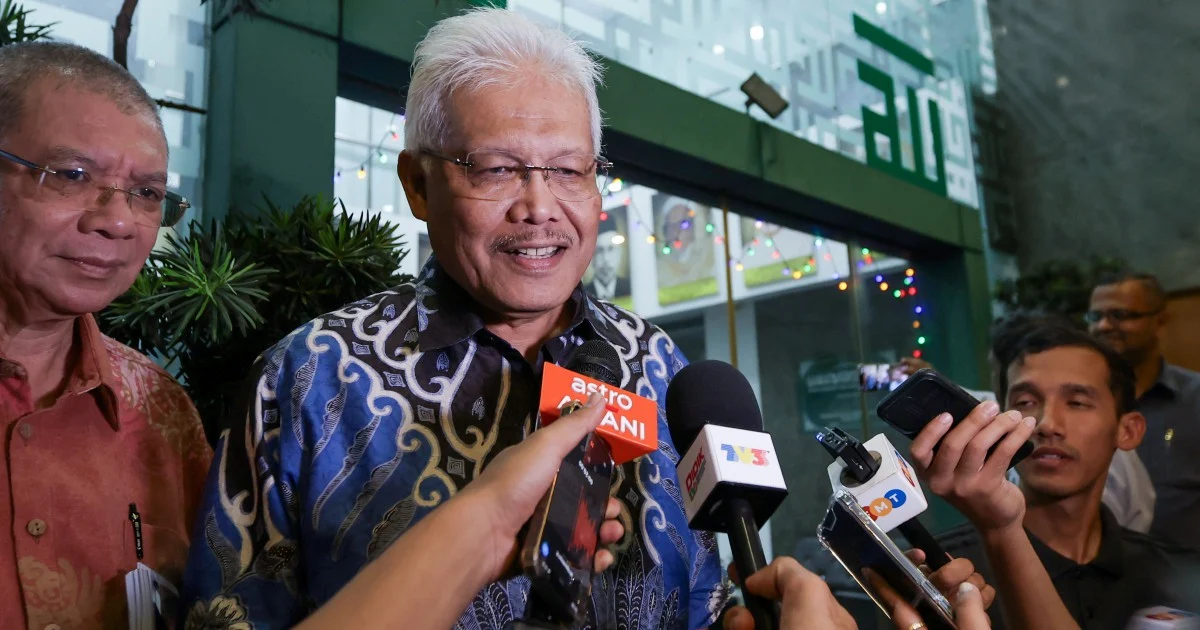
Perikatan Nasional has taken a formal step to consolidate its parliamentary standing by officially notifying the Dewan Rakyat of Datuk Seri Hamzah Zainudin's reappointment as opposition leader. The notification, submitted by PN chief whip Datuk Seri Takiyuddin Hassan to the office of the Speaker, represents a procedural affirmation of the coalition's leadership structure as it enters a critical phase of Malaysia's political cycle.
The move underscores the continued central role Hamzah plays within Perikatan Nasional's governance and parliamentary strategy. As opposition leader, Hamzah carries responsibility for coordinating the coalition's legislative responses, managing internal discipline among opposition lawmakers, and representing the alternative voice to the government in Parliament. His reappointment signals stability within the PN leadership despite the intense pressures and competition that characterise Malaysian parliamentary politics.
Official notification through proper parliamentary channels carries symbolic weight beyond mere administrative formality. By submitting the documentation to the Speaker's office, Perikatan Nasional formally establishes Hamzah's status in the parliamentary record, ensuring transparency and clarity regarding who commands the opposition benches. This procedural step also reinforces the coalition's commitment to constitutional norms and parliamentary protocol, distinguishing it from rival political formations.
For Malaysian politics, the significance of this notification reflects deeper currents in the nation's political landscape. Perikatan Nasional has evolved from a relative newcomer on the national stage to a substantial parliamentary force, commanding sufficient seats to credibly present itself as a government-in-waiting. Hamzah's reappointment consolidates the coalition's positioning as a unified entity capable of mounting coherent parliamentary opposition and policy alternatives to the current administration.
Hamzah Zainudin himself has emerged as a politician of considerable parliamentary skill and strategic acumen. His appointment and reappointment suggest that Perikatan Nasional values his ability to command respect across coalition partners and maintain discipline among opposition members. In a political environment where alliances prove fragile and lawmakers frequently cross over between camps, maintaining such cohesion within the opposition ranks demands considerable diplomatic and organisational talent.
The notification comes at a juncture when Malaysian politics faces substantial uncertainty regarding future electoral timelines and potential realignments. Government coalitions have historically proven vulnerable to defection and fragmentation, and opposition coalitions must demonstrate internal solidarity and clear leadership to capitalise on any governmental weakness. Hamzah's reappointment serves partly as a public reaffirmation that Perikatan Nasional maintains the internal consensus and organisational clarity necessary to function as an effective alternative power centre.
Takiyuddin Hassan's role as chief whip in submitting this notification reflects the structured hierarchy within Perikatan Nasional. As the official responsible for parliamentary discipline and coalition management, his direct involvement in this formal notification demonstrates that the coalition's leadership has collectively endorsed Hamzah's continued tenure. This coordination ensures that the opposition's internal structures remain clear to all stakeholders, including government members and independent observers tracking parliamentary dynamics.
For Southeast Asian observers and international commentators following Malaysian politics, this notification illustrates the continued institutionalisation of Malaysia's opposition forces. Rather than remaining a loose alliance of competing interests, Perikatan Nasional has developed formal structures and procedures that mirror those of government coalitions. This institutional maturation strengthens the coalition's credibility and suggests its members view their alliance as potentially durable beyond the next election cycle.
The timing and execution of this reappointment notification also merit consideration within the broader context of parliamentary protocol. In Malaysian politics, such formal procedures often precede substantive political developments. Opposition coalitions typically undertake such exercises to signal unity and readiness, either in anticipation of broader political shifts or to preempt challenges to their authority from internal rivals. Hamzah's reappointment notification may thus foreshadow more significant moves by Perikatan Nasional in coming months.
Regional implications deserve attention as well. Malaysia's opposition dynamics influence perceptions of democratic vitality and competitive political contestation throughout Southeast Asia. A well-organised opposition with clear leadership structures and formal protocols demonstrates that democratic institutions can survive and adapt even when power structures shift. Hamzah's reappointment, processed through proper parliamentary channels, contributes to this broader narrative of institutional resilience.
Moving forward, Hamzah's formal status as opposition leader positions him centrally in any potential government formation discussions, parliamentary negotiations, or electoral campaigns that Malaysia may face. His reappointment notification essentially locks in his position at the apex of the opposition hierarchy, making him the primary point of contact for government negotiations and the principal voice articulating opposition policy positions. This formality reduces ambiguity and establishes clear lines of accountability within the parliamentary system.