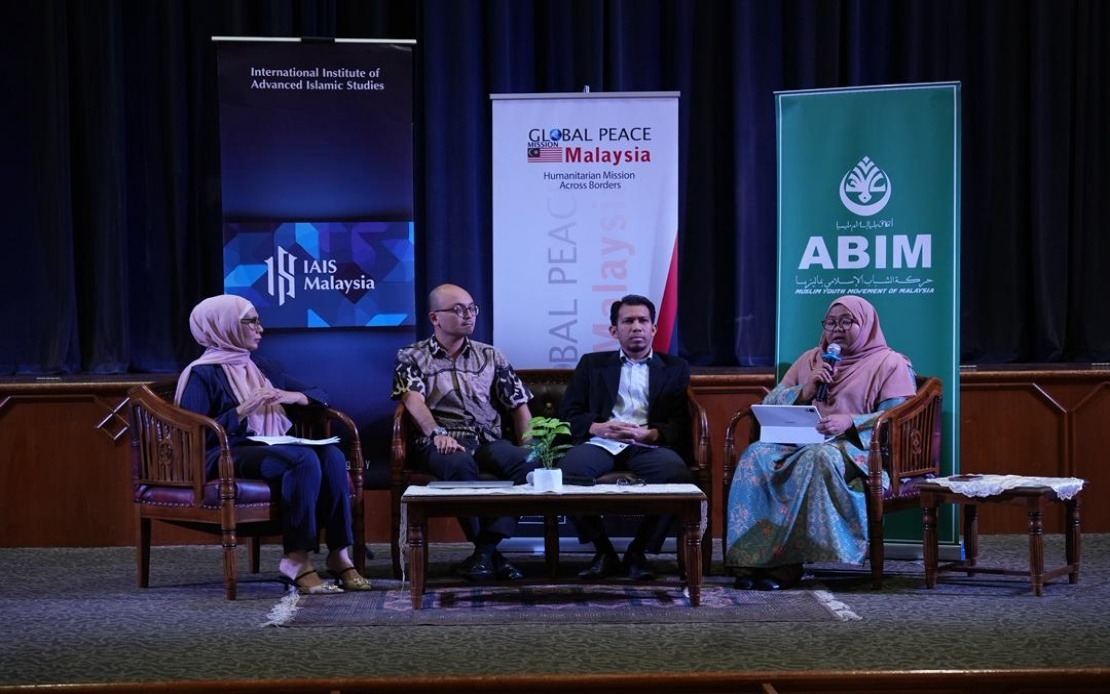
A major refugee solidarity conference in Kuala Lumpur has produced a 10-point declaration aimed at reshaping how Malaysia approaches the complex challenge of accommodating displaced persons while managing legitimate public concerns. The Kuala Lumpur: Solidarity with Refugees Conference, convened on June 20 in conjunction with World Refugee Day, brought together civil society groups, academics, humanitarian organisations, international bodies and community representatives at the International Institute of Advanced Islamic Studies (IAIS) Malaysia. The gathering underscores growing recognition among Malaysian stakeholders that the refugee question requires nuanced policymaking rather than polarised rhetoric.
ABIM president Ahmad Fahmi Mohd Samsudin, speaking after the event, emphasised that the adopted resolutions represent authentic grassroots perspectives from non-governmental organisations engaged directly with refugee populations. Rather than abstract theorising, the resolutions emerge from organisations that navigate daily challenges in supporting displaced communities while working within Malaysia's socio-political constraints. Samsudin indicated that these recommendations will be formally communicated to Members of Parliament and distributed among relevant government agencies to stimulate substantive dialogue on refugee policy reform.
Central to the conference's mandate is addressing what organisers characterise as widespread misconceptions and anti-refugee sentiment in Malaysia. Samsudin articulated a concerning trajectory in public discourse, arguing that if xenophobic attitudes toward refugees remain unchallenged, such hostility risks metastasising into discrimination against other vulnerable groups within Malaysian society. The conference thus positions itself as attempting to reclaim middle ground in an increasingly polarised debate, moving beyond simplistic narratives that either demonise refugee populations or ignore legitimate community concerns about resource allocation, security protocols and social integration.
Malaysia's approach to refugee management carries particular historical significance that distinguishes it from many neighbouring countries. Although Malaysia has never ratified the 1951 Refugee Convention—the international legal framework binding most countries—it has accumulated substantial practical experience managing refugee populations fleeing conflicts in Vietnam, Syria, Bosnia and Palestine. This institutional memory positions Malaysia uniquely within Southeast Asia, yet the country's non-signatory status creates legal ambiguities that complicate humanitarian responses and create policy gaps that the conference implicitly seeks to address.
Among the ten resolutions adopted, paramount is categorical rejection of hatred, discrimination and dehumanisation directed toward refugees and asylum seekers, coupled with recognition that public anxieties concerning security, law enforcement, community wellbeing and social harmony deserve serious, evidence-based examination rather than dismissal. This formulation attempts to bridge divides between those prioritising humanitarian concerns and those emphasising domestic stability—a balance critical for generating political buy-in necessary for meaningful policy implementation in Malaysia's context.
A second major resolution supports collaborative efforts between the Malaysian government and the United Nations High Commissioner for Refugees (UNHCR) to enhance data collection, refugee registration and documentation systems. Currently, Malaysia's refugee management operates with significant information gaps that impede evidence-based policymaking and perpetuate public uncertainty about refugee populations' size, composition and activities. Improved registration protocols would create transparency benefiting both administrators and communities while simultaneously addressing security concerns that fuel anti-refugee sentiment.
The conference emphasised that public education, media literacy and coordinated responses to misinformation represent critical components of constructive refugee policy. The resolutions specifically target xenophobic narratives and hate speech that circulate widely through social media platforms, recognising that digital amplification of unverified claims substantially shapes public opinion on refugee issues. This diagnostic aligns with established research showing that misinformation, rather than factual knowledge, drives anti-refugee attitudes in diverse contexts including Southeast Asia.
Additionally, the resolutions call for establishing institutional mechanisms enabling non-governmental organisations and humanitarian workers to respond to social media attacks, defamation campaigns and coordinated disinformation efforts targeting refugee advocates. This protection mechanism acknowledges the reality that individuals defending refugee rights in Malaysia face organised online harassment that discourages continued advocacy and contributes to a chilling effect on public discourse. Supporting defensive infrastructure for civil society represents an indirect strategy for maintaining space for nuanced refugee conversations.
The conference was jointly organised by Global Peace Mission (GPM) Malaysia, ABIM and IAIS Malaysia, positioning it within Malaysia's Islamic civil society ecosystem. This institutional positioning reflects how refugee advocacy in Malaysia increasingly draws upon Islamic humanitarian traditions and values, contrasting with Western-centric human rights framings that sometimes alienate conservative audiences. By anchoring refugee advocacy within indigenous Malaysian and Islamic institutional frameworks, organisers potentially broaden political acceptability for refugee-focused initiatives.
Samsudin disclosed intentions to pursue follow-up discussions specifically with the Home Ministry and the National Security Council (MKN), indicating that conference organisers recognise these agencies hold decisive influence over refugee policy implementation. This strategic engagement reflects sophisticated understanding that lasting policy change requires navigating Malaysia's security-oriented administrative structures and demonstrating alignment with national security frameworks. Framing humanitarian obligations as compatible with security imperatives, rather than in tension with them, represents essential reframing for generating governmental receptiveness.
The conference's timing on World Refugee Day, observed annually on June 20, connects Malaysia's refugee discussions to global solidarity movements while maintaining focus on local specificities. This dual positioning enables Malaysian stakeholders to learn from international best practices while developing contextually appropriate responses reflecting Malaysia's distinctive historical experiences, constitutional frameworks and demographic composition. The declaration thus potentially positions Malaysia as contributing distinctive Asian perspectives to global refugee governance conversations often dominated by Western nations.
Looking forward, the resolutions' effectiveness depends substantially upon sustained engagement with government agencies and political commitment to implementing recommendations. Malaysia's track record accommodating refugee populations demonstrates both humanitarian capacity and ongoing implementation challenges. Whether the Kuala Lumpur conference catalyses meaningful policy evolution or becomes another well-intentioned statement shelved within ministry offices remains contingent upon civil society's ability to maintain pressure and government's political will to navigate the sensitive intersection of humanitarian obligation and domestic political constraints.