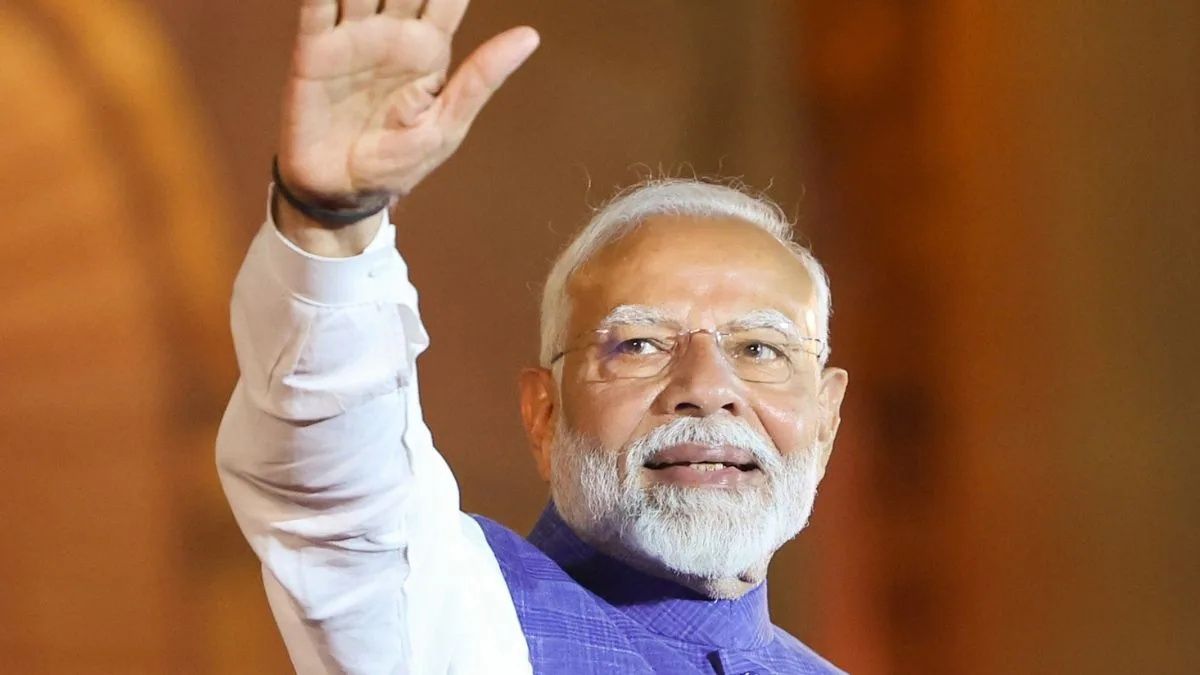
Prime Minister Narendra Modi will take the lead in conducting India's 12th International Day of Yoga (IDY) celebrations from Kolkata's Red Road on Sunday, June 21, underscoring his personal commitment to promoting wellness through the philosophy of "Healthy Body, Healthy Mind." The high-profile gathering will commence in early morning hours on one of the city's most recognisable public spaces, drawing thousands of participants including senior government officials and citizens who will perform the Common Yoga Protocol in a mass demonstration of India's ancient wellness practices.
The choice of Kolkata as the primary venue carries substantial political significance for the Modi administration. The decision arrives shortly after the Bharatiya Janata Party's decisive victory in West Bengal's recent Assembly elections, which displaced the Trinamool Congress from power after 34 years of continuous rule. Senior BJP leadership has signalled unambiguously that the state will receive heightened attention from the central government in coming years, with senior party officials already stating that development funding will flow more swiftly to a region that they characterise as having been "poorly managed over the years." By hosting the nation's marquee yoga event in Kolkata, the Modi administration effectively combines a major wellness initiative with a statement of political intent towards its newly won territory.
Red Road itself carries profound symbolic weight for the occasion. Beyond merely serving as a logistical choice, the historic thoroughfare represents Kolkata's role as a space where civil assemblies occur, where military heritage is preserved, and where ecological innovation finds expression. The venue's cultural significance enhances the messaging around yoga as more than exercise but as an instrument for comprehensive social and personal transformation. Organisers anticipate unprecedented turnout at Sunday's proceedings, suggesting they expect the event to become a benchmark for future IDY celebrations.
The 12th IDY operates under the thematic framework of "Yoga for Healthy Ageing," a concept increasingly relevant across Asia's rapidly ageing societies, including Malaysia. This particular emphasis addresses a mounting global reality: while average human lifespans have extended considerably, ensuring that additional years constitute healthy, active, and purposeful living remains a genuine challenge for healthcare systems and individuals alike. According to Union Minister of State for Ayush and Health Prataprao Jadhav, yoga presents a "time-tested and holistic pathway" toward this objective, simultaneously strengthening physical capacity, nurturing mental equilibrium, and enhancing overall life satisfaction.
The scale of this year's mobilisation demonstrates unprecedented enthusiasm for yoga among Indian institutions and communities. The Ministry of Ayush's Yoga Sangam Portal has registered approximately 600,000 organisations nationwide, a figure reflecting extraordinary collective engagement with the wellness initiative. These registered entities span educational institutions, corporate offices, government agencies, and community groups, all committed to simultaneous yoga practice across their respective locations while Modi leads proceedings from Kolkata. This decentralised yet synchronised approach transforms IDY from a single-venue ceremony into a nationwide movement, embodying yoga's democratising potential.
International participation further underscores yoga's globalisation under Modi's stewardship. Around 2,500 organised events will transpire worldwide, with 211 Indian missions stationed across different countries mobilising their respective diaspora communities and local partners. This international footprint reflects India's successful positioning of yoga not merely as a national pursuit but as a universal wellness practice with cross-cultural resonance. For Malaysia, where Indian diaspora communities remain significant and interest in traditional wellness practices continues expanding, such international yoga celebrations offer opportunities for cultural engagement and health promotion simultaneously.
Culturally, the Ministry of Culture's parallel initiative will activate yoga programming at 100 iconic locations throughout India, deliberately interweaving the nation's heritage traditions with contemporary wellness movements. This approach acknowledges that yoga functions not as an isolated physical practice but as an expression of India's philosophical and spiritual patrimony. By organising events at heritage sites, the government signals that yoga represents continuity between ancient Indian civilisation and modern wellness consciousness, a narrative particularly resonant given renewed global interest in non-Western health systems.
Preceding Sunday's main celebration, Kolkata has witnessed escalating engagement through initiatives like "Daud Se Dhyan 2026 – From Movement to Stillness," organised under the Swachhata Se Swagat Programme. This preliminary campaign integrated health promotion, environmental cleanliness, and civic responsibility, establishing a holistic foundation for the main event. Such preparatory programming extends IDY beyond a singular occasion into a sustained movement, cultivating community involvement incrementally.
At the state administration level, West Bengal has mandated IDY participation for all government employees, requiring attendance at designated venues including Red Road, Milan Mela grounds, or workplace and residential locations. This top-down approach ensures state machinery mobilisation alongside grassroots participation, amplifying both official presence and public visibility. For Southeast Asian governments contemplating public health initiatives, such integrated deployment of administrative resources alongside voluntary participation offers a replicable model.
Minister Jadhav's articulation of the healthy ageing theme addresses contemporary demographic trends affecting India and much of Asia. As life expectancies increase across the region—a marker of development success—societies confront novel challenges regarding maintaining vitality, independence, and purposefulness in extended post-retirement years. Yoga's emphasis on flexibility, balance, strength maintenance, and mental clarity directly addresses these preoccupations, positioning the ancient discipline as a practical response to 21st-century ageing concerns rather than merely a spiritual exercise.
The event's scale, organisation, and political symbolism suggest the Modi government views yoga promotion as integral to both its domestic wellness agenda and its international cultural diplomacy. By anchoring the nation's premier yoga celebration in newly conquered electoral territory while simultaneously mobilising the diaspora and international missions, New Delhi advances yoga as a soft power instrument while promoting tangible health outcomes. For Malaysia's policymakers observing yoga's expansion throughout the Indian subcontinent and beyond, such multifaceted initiatives demonstrate how traditional wellness practices can simultaneously serve health, cultural, and diplomatic objectives within contemporary governance frameworks.
%22%2F%3E%3C%2Fpattern%3E%3C%2Fdefs%3E%3Crect%20width%3D%22100%25%22%20height%3D%22100%25%22%20fill%3D%22url(%23ph4c0smg)%22%2F%3E%3Crect%20width%3D%22100%25%22%20height%3D%22100%25%22%20fill%3D%22url(%23ph4c0smp)%22%2F%3E%3Ctext%20x%3D%2250%25%22%20y%3D%2250%25%22%20text-anchor%3D%22middle%22%20dominant-baseline%3D%22central%22%20fill%3D%22rgba(255%2C255%2C255%2C0.95)%22%20font-family%3D%22Georgia%2C%20'Times%20New%20Roman'%2C%20serif%22%20font-weight%3D%22700%22%20font-size%3D%22272%22%20letter-spacing%3D%22-0.02em%22%3EAnwar%3C%2Ftext%3E%3C%2Fsvg%3E)