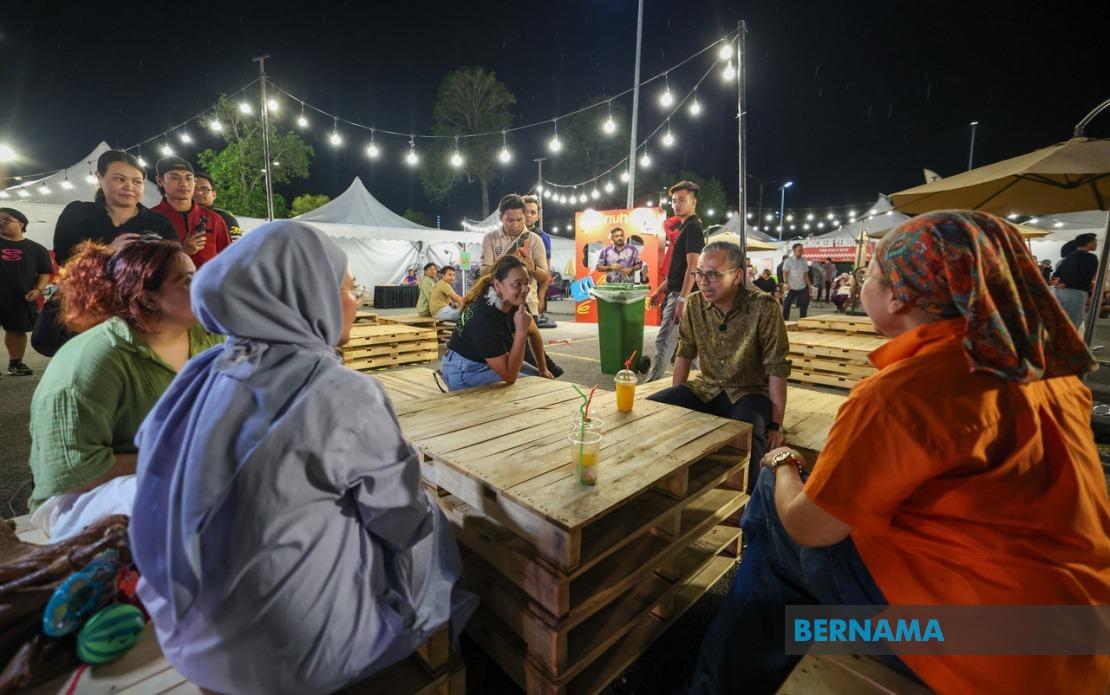
Communications Minister Datuk Fahmi Fadzil voiced his satisfaction with the reception accorded to the RIUH Pi HAWANA carnival during its run in Butterworth, highlighting its significance as a venue for elevating homegrown creative industries and entrepreneurial ventures. Speaking at the event held at the PICCA Convention Centre @ Butterworth Arena, Fahmi commended both the quality of organisation and the enthusiastic response from members of the public, suggesting the carnival had successfully delivered on its core mission to connect audiences with diverse artistic talent spanning multiple generations.
The carnival, which coincides with the National Journalists' Day (HAWANA) 2026 celebrations, represents a deliberate effort to merge cultural celebration with economic opportunity. The integration of entertainment programming alongside a marketplace for local creators and small businesses demonstrates how government-backed cultural initiatives can serve dual purposes: enriching community life while providing tangible platforms for entrepreneurs seeking to expand their market reach. This approach aligns with broader Malaysian efforts to bolster the creative economy as a driver of sustainable growth.
Fahmi emphasised the particular value of the event in presenting established and emerging artists on the same stage. He specifically referenced the presence of acts such as Exists, noting that such programming decisions ensure both veteran performers and younger talent receive meaningful exposure. This intergenerational approach helps address a persistent challenge in Malaysia's entertainment sector: ensuring that emerging artists can build audiences and establish careers without being entirely eclipsed by established acts.
The minister extended his appeal directly to residents of Penang and surrounding regions, urging them to visit the carnival before its conclusion on Sunday. His public endorsement carries weight in signalling government backing for the event, which may encourage greater attendance among those who might otherwise remain unaware of the programme's existence or scope. For Penang specifically, the carnival represents an opportunity to position the state as a destination for cultural experiences beyond its better-known heritage tourism offerings.
The carnival's scale reflects genuine ambition in its conception and execution. Organised by MyCreative Ventures, the event brings together more than 24 local creative brands, providing small businesses and independent creators with premium visibility. The inclusion of 20 food and beverage vendors extends the carnival's appeal beyond arts and entertainment, creating a more comprehensive leisure experience that encourages longer visits and higher spending. This ecosystem approach—blending performance, retail, and dining—has become standard practice for successful cultural events across Southeast Asia.
Interactive workshops constitute another significant component of the carnival's value proposition. By offering visitors hands-on opportunities to explore creative activities, the event moves beyond passive consumption and invites direct engagement. Such programming serves educational functions as well, potentially inspiring visitors to explore creative pursuits independently. In Malaysia's context, where awareness of local creative industries sometimes lags consumer enthusiasm for international entertainment, these workshops help demystify the creative process and build appreciation for local talent.
The musical performances scheduled across the carnival's duration span styles and appeal broadly. Acts including Bunkface, Masdo, Sakura Band, Fugo, Budak Nakal Hujung Simpang and Chelsia Ng represent diverse genres and audience demographics. This programming strategy ensures the carnival attracts multiple demographic groups rather than appealing narrowly to specific subcultures, broadening both attendance numbers and commercial potential for participating vendors.
Fahmi's suggestion that the carnival become a fixture of future HAWANA celebrations carries significant implications for long-term cultural programming in Malaysia. Institutionalising the carnival as an annual or recurring event would provide creative industries with predictable opportunities for market engagement and would establish HAWANA as a multi-faceted celebration rather than solely a professional journalists' observance. This expansion reflects evolving thinking about what national days can accomplish—moving beyond ceremonial reflection toward tangible economic and cultural benefit.
The involvement of Bernama, the Malaysian National News Agency, in implementing HAWANA underscores the formal status of the celebration within Malaysia's institutional framework. The connection between journalism advocacy and creative industry promotion may initially appear tangential, but reflects recognition that journalism and creative industries operate within related ecosystems of content creation, audience engagement, and expression. This partnership potentially positions media institutions as stakeholders in supporting broader creative sectors.
For visitors and vendors, the carnival represents more than a commercial opportunity; it embodies an implicit statement about Malaysia's commitment to fostering creative economies at the regional level. As Malaysia competes with Thailand, Indonesia, and Singapore in attracting creative talent and establishing thriving cultural industries, events like RIUH Pi HAWANA serve as visible demonstrations of official support. Fahmi's public enthusiasm reinforces this signal, suggesting that creative entrepreneurship enjoys ministerial backing.
The success of events like this depends heavily on word-of-mouth amplification and repeat visits. Fahmi's appeal to Penang residents to attend before the carnival closes provides an opportunity for those initially unaware of the event to make final-hour decisions to participate. The continued promotion through the final days remains critical for maximising total attendance and vendor revenue.
Looking forward, the apparent success of RIUH Pi HAWANA in its current iteration establishes a template that other states and cities might replicate. The combination of live performance, retail opportunity, experiential workshops, and dining creates a comprehensive offering that justifies the investment required from both organisers and participants. Should Fahmi's vision of recurring carnivals materialise, Malaysia's creative industries would gain a valuable ongoing promotional platform.