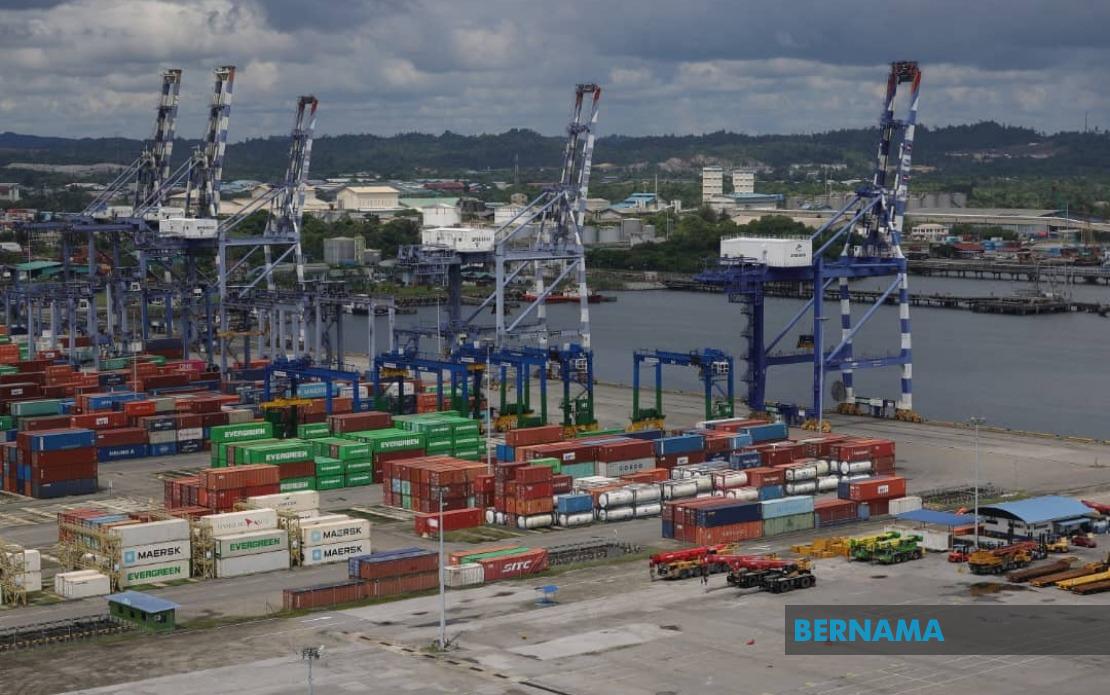
The transfer of Bintulu Port's regulatory authority to Sarawak has been heralded as a watershed moment in implementing the Malaysia Agreement 1963, underscoring the federal government's commitment to honouring commitments made to the nation's founding states. Datuk Mustapha Sakmud, the Minister in the Prime Minister's Department overseeing Sabah and Sarawak affairs, framed the transition as validation of Sarawak's constitutional standing and as tangible evidence that cooperative federalism can yield outcomes benefiting all parties involved. A formal ceremony in Bintulu, attended by Prime Minister Datuk Seri Anwar Ibrahim and Sarawak Premier Tan Sri Abang Johari Tun Openg, marked the reclassification of the port from federal to state jurisdiction, signalling a deliberate recalibration of power-sharing arrangements within the Malaysian federation.
The strategic significance of this handover extends well beyond administrative restructuring. Bintulu Port has evolved substantially from its origins as primarily a liquefied natural gas export terminal into a diversified industrial and logistics facility with growing importance for regional trade patterns. The port's role in Malaysia's energy exports has long been critical, but Mustapha's comments suggest the state government's vision encompasses far broader economic ambitions. By assuming direct control, Sarawak gains the authority to shape port development strategy, set competitive tariffs, and attract investment aligned with state priorities rather than being constrained by federal directives.
Central to the state's positioning is an explicit strategy to leverage Sarawak's abundant renewable energy assets, particularly hydroelectric capacity, to attract manufacturing and industrial operations seeking to decarbonise their supply chains. This convergence of port infrastructure and clean energy resources creates a compelling proposition for multinational corporations under mounting pressure from investors and consumers to reduce carbon footprints. Companies considering relocation or expansion of production facilities increasingly evaluate destinations partly on the availability of renewable power, making Sarawak's combination of deep-water port access and hydroelectric abundance potentially transformative for industrial competitiveness in Southeast Asia.
The MA63 implementation framework has long remained contentious within Malaysian politics, with Sarawak and Sabah frequently asserting that the original 1963 agreement had been systematically diluted through legislative and administrative measures over decades. This port transfer represents concrete recognition of historical grievances, though observers note it comes within a broader pattern of incremental rather than comprehensive restoration of the states' envisioned autonomy. Mustapha's framing deliberately positions the transition not as federal retreat but as strengthening the federation through acknowledging the foundational role Sabah and Sarawak played in Malaysia's formation, a rhetorical approach designed to counter perceptions of power loss in Kuala Lumpur.
The implications for Malaysian manufacturing are considerable. Sarawak has increasingly positioned itself as an alternative investment destination to peninsular states, emphasizing lower operating costs, strategic location, and untapped industrial capacity. With control over a major port facility and ready access to hydroelectric power, the state can now offer integrated infrastructure solutions that appeal to global supply chains increasingly seeking to diversify beyond traditional Southeast Asian hubs like Thailand and Vietnam. This could accelerate manufacturing relocation from peninsula Malaysia, creating competitive dynamics within the federation that may reshape industrial geography across the region.
Green energy industries represent a particular opportunity. Sarawak's hydroelectric generation capacity, combined with port infrastructure suitable for handling large equipment and components, positions it well for manufacturing renewable energy equipment, battery storage systems, and other clean technology products destined for Asian markets. As demand for renewable energy components accelerates across Southeast Asia and beyond, early-mover advantages in establishing production facilities could translate into sustained competitive advantage. The port handover effectively removes a potential bureaucratic barrier to such development, allowing state planners to move more swiftly in pursuing industrial opportunities.
International investors monitoring Malaysian political stability view the port transfer as a positive signal. Executing significant constitutional commitments without political acrimony demonstrates institutional maturity and reduces perceived risk for companies considering long-term capital deployment in the country. Sarawak's track record of political stability, combined with its natural resource endowments and now enhanced control over key infrastructure, creates a compelling investment narrative that state authorities are actively promoting to potential partners in Japan, South Korea, and Europe.
The broader MA63 context remains important for understanding this development's significance. The agreement established specific arrangements for Sabah and Sarawak's integration into Malaysia, including revenue-sharing provisions, religious autonomy, and control over certain sectors. Systematic erosion of these arrangements through administrative practice drove considerable resentment in both states. This port transfer addresses one specific grievance while leaving many others unresolved, suggesting the implementation process will continue incrementally rather than through wholesale constitutional reordering. This piecemeal approach may eventually satisfy accumulated demands or alternatively create frustration if progress stalls.
For Southeast Asia more broadly, Sarawak's emerging role as a green industrial hub carries regional implications. If the state successfully attracts significant manufacturing investment through its renewable energy advantages, it could influence regional competition patterns and investment flows. Other regional states lacking similar hydroelectric resources might face pressure to develop alternative competitive advantages, potentially accelerating green infrastructure investment across Southeast Asia. Conversely, if Sarawak's advantages fail to translate into substantial new investment, it may reflect broader structural limitations affecting the region's industrial development prospects.
The timing of this handover also reflects current global economic currents. Heightened focus on supply chain resilience and decarbonisation in developed economies creates windows of opportunity for countries and states that can present themselves as stable, renewable-powered manufacturing alternatives to existing hubs. Sarawak's political decision-makers appear to be recognizing and acting on these opportunities. Whether the state's governance structures and human capital can effectively capitalize on these advantages remains an open question, but the port transfer removes at least one structural impediment to attempting such positioning.
Looking ahead, the success of this MA63 implementation will likely be measured not merely by the administrative transfer itself but by demonstrable economic outcomes. If Sarawak achieves substantial new industrial investment and employment creation through its enhanced control over critical infrastructure and strategic alignment with renewable energy resources, the port handover will be retrospectively viewed as transformative. If tangible benefits prove elusive, it may instead become regarded as symbolic gesture that fell short of expectations, potentially deepening frustrations about the pace and substance of MA63 implementation more broadly.