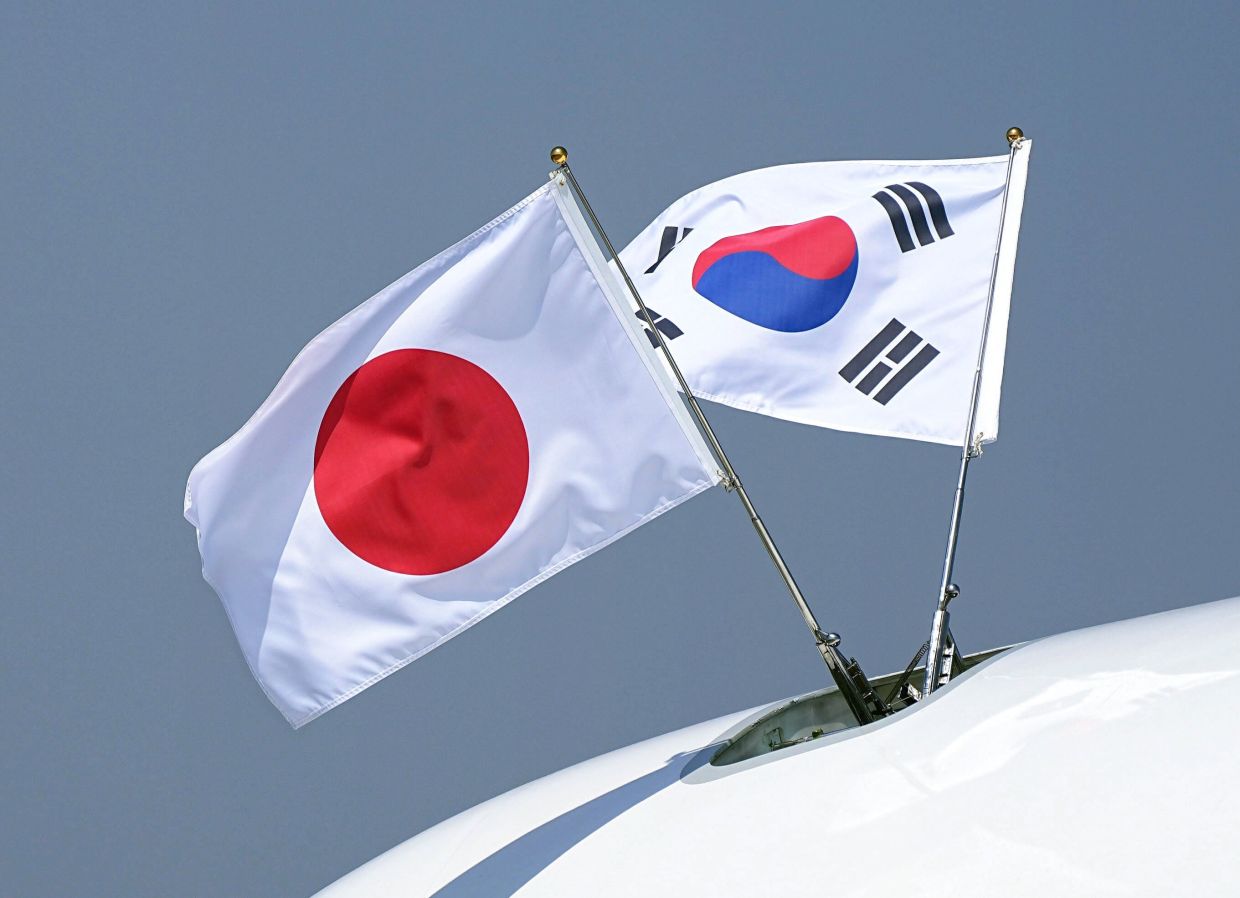
A comprehensive study of strategic decision-makers in Japan and South Korea reveals a precarious consensus against nuclear weapons that could unravel within months if either neighbour abandons restraint. The survey, conducted by the Centre for Strategic and International Studies and published this week, exposes a potentially volatile dynamic in northeast Asia where official caution masks underlying anxieties about regional security and American commitment. What makes these findings particularly significant for Malaysia and the broader Indo-Pacific is how they illuminate the tipping point where nuclear proliferation could accelerate across Asia, fundamentally reshaping the region's strategic landscape.
The numbers initially suggest stability. Three-quarters of South Korea's elite respondents and roughly 80 per cent of Japan's expressed opposition to or reservations about their countries pursuing atomic weapons. These proportions would normally indicate firm policy anchoring against proliferation. Yet the surveyors—led by Victor Cha, who chairs the geopolitics and foreign policy department at CSIS, alongside senior adviser Kristi Govella—discovered something far more unsettling beneath the surface. The real vulnerability lies not in current attitudes but in how rapidly they could shift if either nation perceives the other moving toward nuclear capability. CSIS experts delivering the findings emphasised that such a cascade effect could destabilise northeast Asia more profoundly than even a reduction in American military presence, suggesting that nuclear development in one country becomes almost self-fulfilling once initiated.
This elite consensus masks a deeper public appetite for nuclear weapons in South Korea that presents particular policy challenges for Seoul. A 2024 poll conducted by Gallup for the Chey Institute for Advanced Studies showed that over 72 per cent of ordinary South Koreans support their country acquiring nuclear weapons. This 50-point gap between elite opinion and public sentiment reveals extraordinary tension within South Korean society. The public's enthusiasm stems primarily from fears about North Korea's expanding arsenal and the perceived inadequacy of existing security arrangements. By contrast, Japan exhibits far greater alignment between its strategic elites and general population, both groups rejecting nuclear weapons at roughly 80 per cent rates. Japanese media coverage has sometimes exaggerated momentum toward nuclear armament within policy circles, according to CSIS analysts, though this narrative disconnect itself could eventually influence decision-making if politicians face mounting electoral pressure.
The survey identified distinct motivations for the minority supporting nuclear weapons in each country. South Korean advocates focus overwhelmingly on deterring North Korea, viewing atomic weapons as the ultimate guarantee against Pyongyang's aggressive capabilities. Japanese supporters, conversely, harbour deeper concerns about the durability of America's security umbrella. This distinction matters profoundly because it suggests different trigger points for policy reversal. South Korean willingness to pursue nuclear weapons could escalate if North Korea conducts particularly provocative tests, whilst Japan's calculus depends increasingly on signals—real or perceived—regarding American willingness to defend Tokyo. For Malaysia and other Southeast Asian nations dependent on American security commitments, these shifting perceptions in northeast Asia have direct implications for broader Indo-Pacific stability.
The timing of this survey gains urgency from simultaneous developments in nuclear diplomacy. The United States conducted bilateral meetings in Seoul earlier this month to advance nuclear cooperation initiatives with South Korea, followed by extended deterrence dialogue in Tokyo with Japan. These consultations represent Washington's effort to reassure allies whilst maintaining the non-proliferation architecture. However, China has seized on these discussions to accuse Tokyo of pursuing remilitarisation, including alleged nuclear weapons ambitions—rhetoric that feeds Japanese anxieties about being isolated and abandoned should American commitment waver. This vicious cycle, where regional suspicions become self-reinforcing, operates precisely as the CSIS survey suggests possible proliferation cascades would function.
Simultaneously, the Biden administration is dramatically accelerating its own nuclear arsenal modernisation. Brandon Williams, the Department of Energy's under secretary for nuclear security, announced Thursday that the agency would invest US$600 million in artificial intelligence this year to revolutionise nuclear weapons design and production. The administration aims to compress the development timeline from the current 10- to 15-year cycle to something substantially faster. This aggressive modernisation strategy, whilst directed at China, sends complicated messages to American allies. Williams' commitment to expanding American nuclear strike options theoretically reassures Tokyo and Seoul of Washington's capability to defend them. Yet the underlying rationale—that China now poses such a threat that American nuclear forces must be fundamentally restructured—underscores precisely the great-power competition anxieties that drive allied leaders to question whether America's extended deterrent can sustain them indefinitely.
An emerging debate within American strategic circles now concerns whether hypersonic weapons should carry nuclear warheads rather than remaining exclusively conventional. Heather Williams, director of the nuclear issues project at CSIS, argues that nuclear hypersonic weapons belong firmly in America's arsenal to complicate adversaries' calculations and maintain strategic optionality. From one perspective, a more credible and diversified American nuclear force should theoretically reassure Tokyo and Seoul. Yet paradoxically, as Williams herself noted, the logic cuts both ways—assured allies remain committed to restraint, but the very anxiety prompting questions about American nuclear sufficiency suggests allies may no longer feel adequately assured. This explains why the CSIS survey found such latent support for independent capabilities despite current elite opposition. The reassurance paradox operates in northeast Asia, where neither expanded American nuclear capability nor apparent confidence in extended deterrence fully resolves underlying doubts.
Washington has been pressing Beijing to join nuclear arms control negotiations, so far without success. China has consistently rejected participation in agreements governing strategic weapons, maintaining that as a smaller nuclear power it cannot bind itself to parity-based arrangements. This Chinese refusal to engage leaves the United States negotiating extended deterrence relationships with Japan and South Korea whilst simultaneously modernising its arsenal against a nuclear peer competitor that refuses to accept mutual restraint frameworks. Japan and South Korea find themselves caught between America's expanding nuclear commitments to them and uncertainties about American intentions toward Beijing. This strategic triangle, with China refusing constraint whilst the US expands options and allies question long-term American attachment, creates precisely the conditions where the CSIS survey suggests elite consensus could rapidly evaporate.
For Malaysia and other Southeast Asian nations, the implications extend beyond northeast Asia's specific dynamics. A nuclear-armed South Korea or Japan would transform the entire regional balance. It would create new deterrent relationships unmoored from existing alliances, potentially drawing the region into complex nuclear standoffs divorced from American management. Southeast Asian nations maintain careful diplomatic balances with Washington, Beijing, and regional powers; proliferation in northeast Asia introduces unpredictable nuclear variables into calculations across the Indo-Pacific. Moreover, if the CSIS survey's warning about cascade effects proves prescient, the precedent of one democracy acquiring nuclear weapons could encourage others across Asia to reconsider restraint commitments.
The stability that has characterised Japan and South Korea's non-nuclear policies for decades rests on remarkably thin foundations. The CSIS survey quantifies what many analysts have long suspected: that elite consensus against nuclear weapons depends almost entirely on confidence in the American security guarantee and perceptions that rivals pose manageable threats. Simultaneously modernise American nuclear forces, suggest through strategic ambiguity whether those forces will deploy for alliance protection, allow China to expand its arsenal without constraint, and watch how rapidly the 75-80 per cent opposition margins evaporate. The survey's most important finding may be less about current attitudes than about how vulnerable those attitudes have become. In an era of great-power competition, the nuclear restraint that has anchored northeast Asian security cannot survive much longer without either much stronger reassurance from Washington or fundamental changes in how China approaches arms control. Malaysia and the broader region should monitor these developments closely, recognising that northeast Asian nuclear decisions could reshape the strategic environment affecting all Indo-Pacific nations.