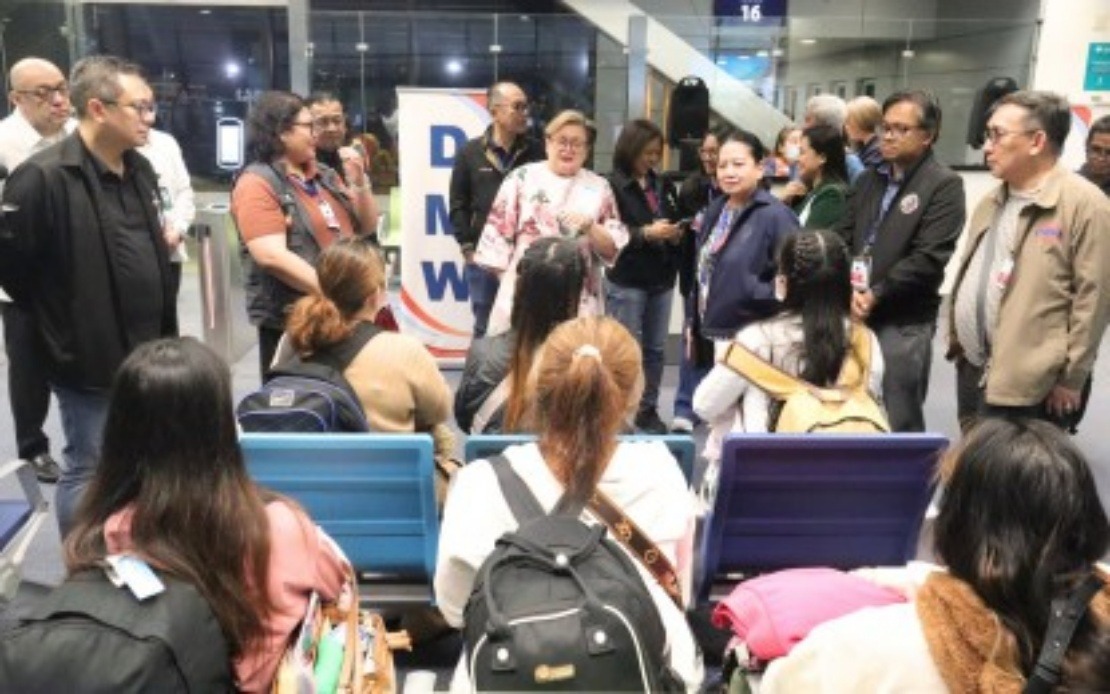
Twenty-four Filipinos who had spent approximately nine months in Russian detention touched down at Manila's Ninoy Aquino International Airport early Sunday morning, marking a significant diplomatic achievement for the Philippine government. The returning workers arrived in two batches via Bangkok, Thailand, following a bilateral meeting between President Ferdinand R. Marcos Jr and Russian President Vladimir Putin at the ASEAN-Russia Commemorative Summit held in Kazan during the preceding week. Six detainees disembarked from Philippine Airlines Flight PR737 shortly after midnight, while the remaining 18 arrived on PAL Flight PR733 in the early morning hours.
The successful repatriation underscores the effectiveness of high-level diplomatic engagement in resolving transnational labour disputes. Marcos had personally raised the issue during his one-on-one discussions with Putin, demonstrating the administration's commitment to protecting Filipino workers abroad—a core constituency given that millions of Filipinos depend on overseas employment. The president subsequently expressed gratitude to Putin and the Russian government for facilitating the detainees' release, highlighting the collaborative approach that enabled their safe passage home despite the significant geopolitical tensions that have characterised Philippine-Russian relations in recent years.
The 24 individuals had been held in Irkutsk, a major city in southeastern Siberia, without formal criminal charges being filed against them. According to Philippine government officials, preliminary investigations suggest these workers became ensnared in illegal recruitment schemes—a persistent problem across Southeast Asia where unscrupulous agents promise lucrative overseas employment only to abandon victims once they arrive in destination countries. The detainees were subsequently taken into custody by Russian authorities on suspicion of immigration-related violations, though the lack of formal charges indicates the ambiguity surrounding their actual legal status during confinement.
The involvement of multiple Philippine government agencies in the repatriation operation reflects the complexity of managing overseas Filipino worker crises. Foreign Affairs Secretary Maria Theresa Lazaro and Migrant Workers Secretary Hans Cacdac personally welcomed the returning nationals at the airport, signalling the government's recognition of the case's importance. The Department of Foreign Affairs coordinated directly with Russian authorities to arrange the release and transport, while the Department of Migrant Workers and the Overseas Workers Welfare Administration provided logistical support throughout the process, ensuring a smooth transition for individuals who had endured extended detention far from home.
The case illustrates a broader vulnerability affecting Filipino migrant workers across multiple countries. Illegal recruitment remains endemic throughout the region, with criminal syndicates exploiting information asymmetries and economic desperation to lure workers into precarious situations. Workers from the Philippines, Indonesia, and other labour-exporting nations frequently encounter conditions starkly different from their employment contracts—whether reduced wages, excessive working hours, document confiscation, or outright trafficking. The Irkutsk detention represents an extreme manifestation of these risks, where individuals faced months of confinement without transparent legal proceedings.
Prevention and accountability mechanisms remain underdeveloped across Southeast Asia's overseas worker ecosystem. While the Philippine government has strengthened its pre-deployment orientation programmes and licensing requirements for recruitment agencies, enforcement remains inconsistent. Many illegal recruiters operate with impunity, sometimes in coordination with unscrupulous overseas employers seeking to exploit regulatory gaps. The repatriation of these 24 individuals provides an opportunity for authorities to investigate the recruitment pipeline and identify the agents who facilitated their movement to Russia under false pretences.
The returning workers will receive comprehensive reintegration support as determined by the government's social protection framework. Assistance programmes typically encompass immediate needs such as medical screening, psychological counselling, and livelihood training or capital. Many returnees face significant reintegration challenges, including trauma from detention, disrupted family relationships, lost savings, and difficulty securing new employment given their interrupted work records. The extended detention in Russia would have intensified these psychological and economic burdens, making targeted support essential for successful reintegration.
The incident also carries implications for bilateral relations between Manila and Moscow. Despite geopolitical differences, both governments demonstrated willingness to engage constructively on humanitarian matters affecting their respective citizens. This pragmatic cooperation contrasts with Cold War-era dynamics and reflects contemporary diplomatic norms where labour disputes transcend ideological boundaries. For the Philippines, maintaining cordial working relationships with major powers—even those with whom Manila has policy disagreements—remains strategically important given the dispersed nature of its migrant worker population.
The diplomatic intervention by Marcos represents a departure from previous administrations' relative passivity regarding overseas workers' challenges. His direct engagement with Putin, rather than relying solely on bureaucratic channels, accelerated resolution and demonstrated that presidential attention can unlock solutions to apparently intractable situations. This approach may establish expectations for future presidential involvement in high-profile cases, though the logistics of individual advocacy on behalf of dispersed workers present practical limitations.
Moving forward, Philippine authorities must intensify investigation into how these 24 individuals were recruited and what networks facilitated their transportation to Russia. Identifying and prosecuting recruitment ring organisers could disrupt operations that continue endangering workers. Simultaneously, coordination with Russian immigration authorities to establish clearer protocols for handling detention cases involving foreign nationals would prevent future incidents where individuals remain in legal limbo for extended periods.
The safe return of these 24 Filipinos provides temporary relief but should catalyse broader systemic reforms. Southeast Asian governments must strengthen information-sharing mechanisms to identify predatory recruiters operating across borders. Employers in receiving countries require stronger accountability mechanisms for labour violations. And vulnerable workers need enhanced access to legal representation and advocacy resources before departing their home countries. While this particular case concludes positively, thousands of migrant workers remain at risk of similar exploitation across the region.
%22%2F%3E%3C%2Fpattern%3E%3C%2Fdefs%3E%3Crect%20width%3D%22100%25%22%20height%3D%22100%25%22%20fill%3D%22url(%23ph40xibg)%22%2F%3E%3Crect%20width%3D%22100%25%22%20height%3D%22100%25%22%20fill%3D%22url(%23ph40xibp)%22%2F%3E%3Ctext%20x%3D%2250%25%22%20y%3D%2250%25%22%20text-anchor%3D%22middle%22%20dominant-baseline%3D%22central%22%20fill%3D%22rgba(255%2C255%2C255%2C0.95)%22%20font-family%3D%22Georgia%2C%20'Times%20New%20Roman'%2C%20serif%22%20font-weight%3D%22700%22%20font-size%3D%22272%22%20letter-spacing%3D%22-0.02em%22%3EMITRA%3C%2Ftext%3E%3C%2Fsvg%3E)