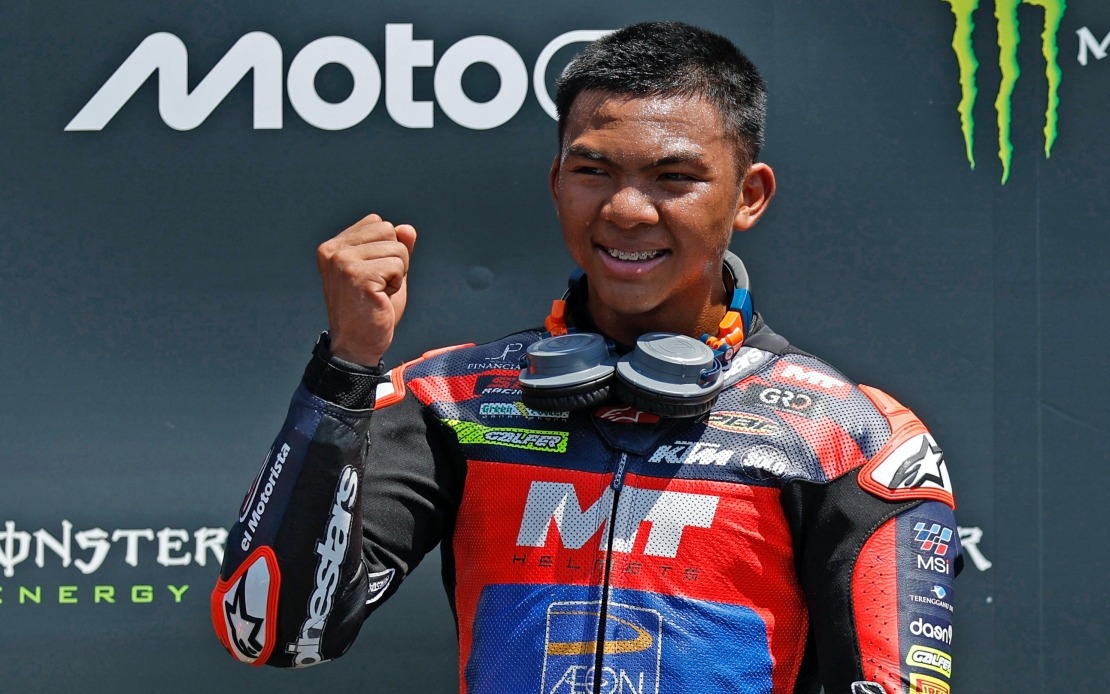
Prime Minister Datuk Seri Anwar Ibrahim extended his congratulations to Moto3 rider Hakim Danish Ramli following the teenager's victory at the Czech Grand Prix held at Brno Circuit on June 21, marking a significant milestone for Malaysian motorsport. Through a post on social media platform X, Anwar encouraged the young rider to build on his success, stating that while the journey ahead remains demanding, continued victories should follow. The gesture underscores the national significance of Hakim Danish's achievement and reflects high-level governmental recognition of sporting accomplishments on the international stage.
The 18-year-old competitor, representing AEON Credit-MT Helmets-MSi, has delivered a watershed moment for Malaysian motorsports after an extended period without success at this level of competition. His triumph at the historic Brno circuit represents far more than a single race victory; it punctuates a ten-year gap since Malaysia last claimed victory in the Moto3 category on the international Grand Prix calendar. The significance of this achievement resonates throughout the Malaysian sporting community, as the nation has long sought to reclaim its presence in motorcycle racing's developmental tier, a category that serves as a crucial pathway to higher competitive echelons.
Hakim Danish's performance at Brno built upon an already respectable campaign this season, which had already yielded a third-place finish at the Italian Grand Prix held at Mugello the previous month. This podium appearance had already demonstrated his competitive credentials and suggested potential for stronger results as the season progressed. The consecutive top-three finishes illustrate a consistent upward trajectory for the young rider, suggesting that his Czech triumph was not a solitary flash of brilliance but rather the culmination of improving form and racecraft developed through the demanding Moto3 series.
The last Malaysian competitor to capture victory in the Moto3 category was Khairul Idham Pawi, who achieved consecutive wins during the 2016 season, triumphing at both the Argentina Grand Prix and the German Grand Prix. Pawi's accomplishments eight years earlier had represented a golden period for Malaysian involvement at this competitive level, and subsequent seasons witnessed a noticeable absence of Malaysian victors in this crucial developmental category. The gap between Pawi's last success and Hakim Danish's win underscores the challenges facing younger Malaysian riders in establishing themselves within the increasingly competitive international motorcycle racing landscape.
The Moto3 category represents a critical stepping stone within motorcycle racing's professional hierarchy, serving as the entry point for aspiring riders seeking to progress toward the higher-tier Moto2 and MotoGP championships. Success at this level requires not merely raw speed but sophisticated race management, technical understanding, and the ability to perform consistently across diverse circuits and weather conditions. Hakim Danish's victory demonstrates that Malaysian talent continues to emerge within this crucible, suggesting potential pathways for continued national representation at elite levels of international motorsport.
The teenager's achievement carries implications extending beyond individual sporting glory, potentially inspiring other young Malaysian riders to pursue competitive motorcycle racing at the highest amateur and professional levels. With established pathways through the FIM CEV Repsol European Championship and direct entry into Moto3 through various satellite teams, Malaysian motorsports administrators and private sponsors may view Hakim Danish's success as validation for continued investment in junior talent development programmes. The visibility of a Malaysian rider competing prominently in World Championship events can significantly enhance the sport's profile domestically and encourage grassroots participation.
Geographically, Hakim Danish's victory at Brno places Malaysian motorsport within the ongoing narrative of Southeast Asian emergence in international competition. Regional riders from Thailand, Indonesia, and Vietnam have increasingly appeared in Grand Prix paddocks across various categories, reflecting broader regional development in motorcycle racing infrastructure and talent identification systems. Malaysia's continued presence through competitors like Hakim Danish ensures the nation remains visible within this increasingly competitive regional sporting landscape, where several countries maintain systematic development academies and manufacturer-backed training programmes.
The AEON Credit-MT Helmets-MSi team, which runs Hakim Danish, represents a collaboration between Malaysian financial services entities and European racing operations, exemplifying the increasingly globalised nature of professional motorcycle racing partnerships. Such arrangements enable Malaysian talent to access world-class coaching, engineering expertise, and competitive equipment while maintaining national representation within international championships. The team's success in developing Hakim Danish's capabilities suggests the viability of continued Malaysian involvement through similarly structured partnerships.
Hakim Danish's age, at merely eighteen years old, positions him well within the developmental arc expected for riders aspiring toward elite professional motorcycling careers. Competitors who achieve significant success at this age typically retain several seasons within the Moto3 category to consolidate skills before progressing upward, suggesting potential for further accomplishments and continued Malaysian representation within World Championship racing. The teenager's early prominence may also attract manufacturer attention and sponsorship backing essential for sustaining a professional racing career through the expensive intermediate categories toward ultimate MotoGP aspirations.
%22%2F%3E%3C%2Fpattern%3E%3C%2Fdefs%3E%3Crect%20width%3D%22100%25%22%20height%3D%22100%25%22%20fill%3D%22url(%23ph40xibg)%22%2F%3E%3Crect%20width%3D%22100%25%22%20height%3D%22100%25%22%20fill%3D%22url(%23ph40xibp)%22%2F%3E%3Ctext%20x%3D%2250%25%22%20y%3D%2250%25%22%20text-anchor%3D%22middle%22%20dominant-baseline%3D%22central%22%20fill%3D%22rgba(255%2C255%2C255%2C0.95)%22%20font-family%3D%22Georgia%2C%20'Times%20New%20Roman'%2C%20serif%22%20font-weight%3D%22700%22%20font-size%3D%22272%22%20letter-spacing%3D%22-0.02em%22%3EMITRA%3C%2Ftext%3E%3C%2Fsvg%3E)