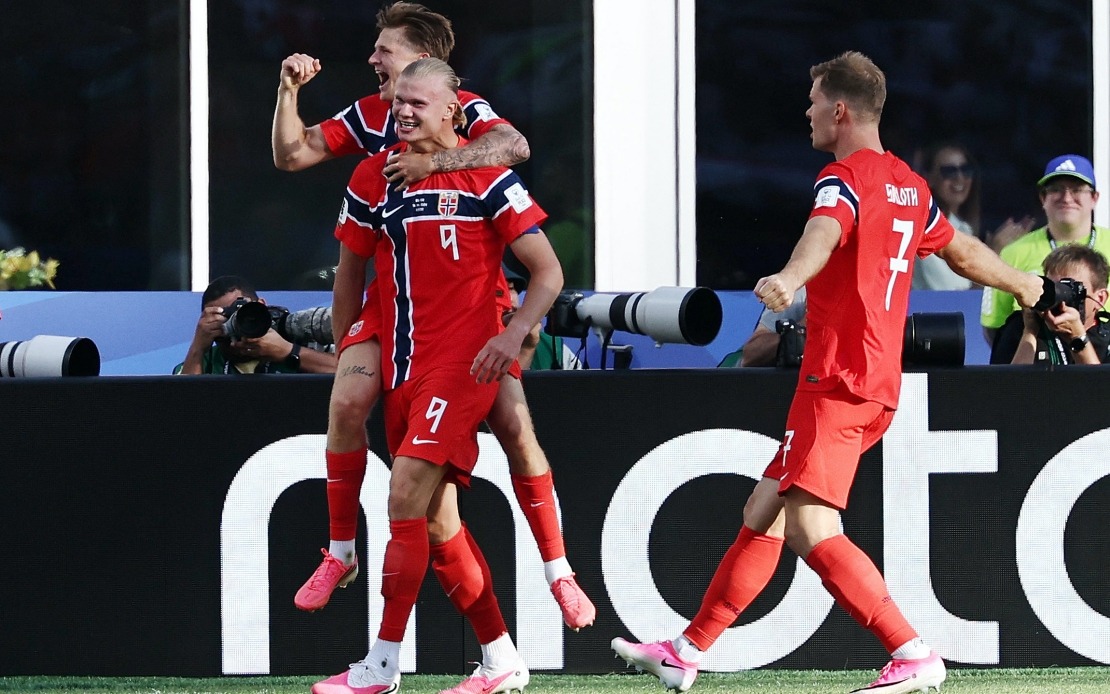
Norway's World Cup campaign has taken on a deeply personal dimension, with three key players carrying the unfinished business of their fathers into this tournament. Erling Haaland, Alexander Sørloth, and Kristian Thorstvedt represent a rare convergence of athletic lineage and competitive drive, each motivated by the knowledge that their fathers—Alf-Inge "Alfie" Haaland, Gøran Sørloth, and Erik Thorstvedt respectively—represented their nation three decades ago only to be eliminated during the group stage of the 1994 World Cup held in the United States.
Norway's exceptional opening performance, a commanding 4-1 victory over Iraq, has already positioned the squad favourably within their group and reignited hopes of progressing further than the 1994 side managed. The symbolic weight of this achievement cannot be understated for the trio now wearing the national colours. For Haaland in particular, the contrast between his father's era and his own is striking. When shown photographs from the 1994 tournament, the Manchester City forward found humour in the image of his younger father with his characteristic long hair—a reminder of how much both football and the world have changed in the intervening years. Yet despite the passage of time and the modernisation of the sport, the desire to honour and exceed their predecessors' accomplishments drives these players forward.
The next fixture against Senegal on Monday represents a crucial juncture, with victory potentially securing Norway's passage to the knockout stages and thereby surpassing the 1994 generation's tournament longevity. This encounter will be watched intently by Norwegian supporters back home, but it will also carry profound personal significance for the three players connected to the previous generation. The stakes extend beyond mere sporting achievement; these matches provide an opportunity for the sons to write their own chapter in Norwegian football history whilst simultaneously validating their fathers' legacy by taking the national team further than circumstances allowed thirty years ago.
Haaland's prominence within the Norwegian setup ensures he commands the greatest media attention and expectation, but his teammates Sørloth and Thorstvedt are equally integral to their nation's prospects. Sørloth, plying his trade with Atletico Madrid in Spain's La Liga, has spoken openly about the emotional resonance of following his father's path. He recently described the experience of participating in a World Cup as "simply great," whilst acknowledging that his father "has taught me everything I know about football." This tribute speaks to a deeper connection than mere genetic inheritance; it reflects the tangible influence that first-generation players can exert upon their successors, transmitting tactical knowledge, psychological resilience, and an understanding of what it demands to represent one's country on football's grandest stage.
Interestingly, Sørloth's earliest recollection of World Cup football traces back to 2002, when the tournament took place in Japan and South Korea. During a family holiday in Denmark, the young player watched the matches alongside his father, absorbing not just the tactical elements but also the cultural significance and shared joy that surrounds international football. These formative memories, shaped by his father's presence and commentary, have clearly left an indelible mark. Now, as a fully developed professional athlete, Sørloth carries those childhood moments forward, infusing them with maturity and skill. This continuity of experience across generations speaks to how sport transcends individual achievement and becomes woven into family narratives and national identity.
The broader Norwegian context adds another layer to this narrative. Within the Scandinavian nation, the World Cup has assumed almost cultural significance that extends beyond the sporting arena. Even Norway's parliament has embraced the team's campaign, with Members of Parliament from across the political spectrum participating in displays of support on Thursday. This cross-party endorsement reflects how national football teams can temporarily transcend partisan divisions and unite a population around shared pride and aspiration.
Royal patronage further underscores the significance of this tournament for Norway. Hereditary Princess Ingrid Alexandra and Prince Sverre Magnus, the children of Crown Prince Haakon and Crown Princess Mette-Marit, are expected to attend Monday's match against Senegal in New Jersey. The presence of members of the Norwegian royal family at a World Cup fixture illustrates the elevated status of the tournament within the nation's consciousness and the symbolic importance of international football as a sphere where national prestige is contested and celebrated.
The cultural traditions surrounding Norwegian football support also merit attention. The rowing routine employed by Norwegian fans, which draws inspiration from Viking ancestry and maritime heritage, has become sufficiently distinctive that it has spread beyond stadiums and into the parliamentary chamber itself. This fusion of historical symbolism with contemporary sport reveals how nations often project elements of their cultural identity through their athletic representatives. For players like Haaland, Sørloth, and Thorstvedt, carrying forward their fathers' legacy also means representing this broader cultural narrative to a global audience.
As Norway progresses through the tournament, the intergenerational dimension will undoubtedly persist as a motivating force. The completion of the group stage against France, one of the tournament's perennial contenders, will test whether this Norwegian squad possesses the quality to achieve what their predecessors could not. Victory against Senegal on Monday would represent a significant step towards that goal, whilst simultaneously moving the conversation beyond the symbolic and into the realm of genuine competitive achievement. For Haaland, Sørloth, and Thorstvedt, the opportunity to advance beyond their fathers' 1994 experience remains within reach, making the forthcoming matches not merely sporting contests but opportunities to create their own enduring legacy.
%22%2F%3E%3C%2Fpattern%3E%3C%2Fdefs%3E%3Crect%20width%3D%22100%25%22%20height%3D%22100%25%22%20fill%3D%22url(%23ph2aayug)%22%2F%3E%3Crect%20width%3D%22100%25%22%20height%3D%22100%25%22%20fill%3D%22url(%23ph2aayup)%22%2F%3E%3Ctext%20x%3D%2250%25%22%20y%3D%2250%25%22%20text-anchor%3D%22middle%22%20dominant-baseline%3D%22central%22%20fill%3D%22rgba(255%2C255%2C255%2C0.95)%22%20font-family%3D%22Georgia%2C%20'Times%20New%20Roman'%2C%20serif%22%20font-weight%3D%22700%22%20font-size%3D%22320%22%20letter-spacing%3D%22-0.02em%22%3ERim%3C%2Ftext%3E%3C%2Fsvg%3E)