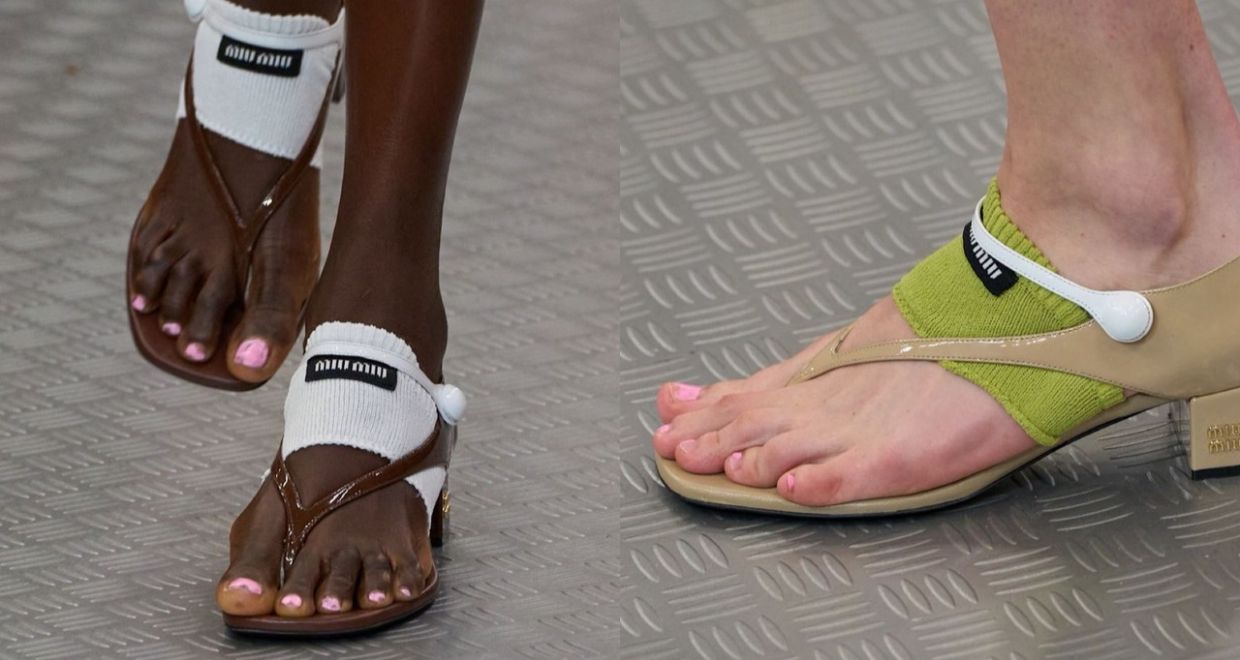
Fashion retailers across East Asia are championing an unlikely summer accessory that splits the difference between bare feet and traditional socks: open-toe socks that expose the toes while covering the midfoot and arch. This hybrid garment is gaining unexpected traction as temperatures rise and consumers seek alternatives that feel neither too minimal nor too warm for the season.
The momentum behind open-toe socks reflects a broader shift in how designers and retailers are thinking about comfort during warm months. Rather than defaulting to barefoot sandal looks, contemporary fashion increasingly embraces playful combinations that prioritise both practicality and aesthetic interest. Recent data from South Korean style commerce platforms demonstrates the surge: transaction values for flip-flop socks jumped 1,664 percent between mid-May and mid-June, while search interest climbed 3,227 percent during the same period. Summer footwear categories more broadly—including mules, slides, and flip-flops—experienced an 80 percent sales increase year-on-year, indicating consumers are actively shopping for warm-weather shoes.
The trend's origins trace to luxury fashion houses pushing boundaries with unconventional designs. Miu Miu's 2025 Spring/Summer collection featured socks that wrapped only around the arch rather than covering the entire foot, a departure from conventional styling that caught the attention of fashion influencers and style editors. Celebrity endorsement followed, with actors like Cha Jung-won sharing social media posts pairing colourful flip-flops with lightweight knit leg warmers, demonstrating how the look translates to real-world styling.
For Malaysian and Southeast Asian readers accustomed to year-round humidity and monsoon seasons, the practical dimensions of this trend deserve particular attention. Unlike traditional winter leg warmers designed purely for warmth, contemporary versions utilise sheer, mesh, and loosely knitted fabrics that prioritise breathability. This construction allows air circulation while still providing a layer between foot and footwear, meaningfully reducing friction and chafing caused by flip-flop and sandal straps—a chronic irritation during extended wear in tropical climates.
Retailers describe open-toe socks as a "summer cheat code" for elevating otherwise basic footwear combinations. The accessory functions as a styling tool that introduces colour, texture, and visual layering to simple shoes that might otherwise feel underdeveloped. A plain black flip-flop transforms when paired with a grey or patterned sock, creating visual interest without requiring a complete outfit overhaul. Fashion platforms like 29CM note that the appeal intensifies as consumers become accustomed to the unconventional silhouette, suggesting that what initially reads as quirky quickly normalises into an accepted aesthetic.
For those experimenting with the trend for the first time, neutral tones offer a gentle entry point. Black, grey, or white socks work seamlessly with standard summer basics like denim, Bermuda shorts, and simple t-shirts. More adventurous wearers gravitate toward saturated colours including bright yellow, hot pink, or sky blue, which create intentional contrast against neutral shoe choices. The current fashion consensus suggests that deliberate mismatching—pairing unexpectedly different sock and shoe colours—reads as intentionally cool rather than accidental.
The monsoon season brings additional practical benefits that resonate specifically in Southeast Asia's climate context. Worn with rain boots during heavy downpours, open-toe socks reduce the skin irritation and maceration that occur when feet remain in prolonged contact with wet rubber. This application transforms the accessory from purely aesthetic statement into functional wardrobe solution, addressing a genuine seasonal discomfort.
Styling guidance from fashion professionals emphasises restraint in surrounding elements. Because open-toe socks and shoes already command visual attention, expert recommendations suggest keeping the remainder of the outfit deliberately understated. A tucked-in t-shirt, simple skirt, or straightforward shirt provides visual balance without competing for attention. Patterns work particularly well when introduced through the socks themselves—polka dots or floral designs on the sock fabric create interest at eye level while anchoring the overall composition.
The cultural implications of this trend reflect evolving attitudes toward visibility and intentionality in fashion. Historically, socks represented functional undergarments meant to remain hidden. Modern styling inverts this convention, celebrating socks as deliberate design elements worthy of visual prominence. This philosophical shift extends beyond footwear into broader conversations about authenticity and intentional styling in an age of algorithmic fashion recommendations and algorithm-driven trends.
Southeast Asian retailers and fashion platforms have begun acknowledging this emerging preference, though adoption remains earlier-stage than in North Asian markets. The trend's growth trajectory suggests that as retailers stock more options and fashion influencers in the region feature the look, open-toe socks will likely transition from novelty curiosity to accepted summer staple. For consumers navigating the perpetual heat and humidity of tropical climates, the combination of style flexibility, practical benefits, and visual possibility positions open-toe socks as a genuinely useful addition to seasonal wardrobes.
The broader lesson extends beyond this single trend: fashion's future increasingly involves creative solutions that challenge conventional categories. Open-toe socks succeed precisely because they refuse to choose between established options, instead creating something new that serves practical needs while delivering aesthetic satisfaction. In regions where weather extremes and moisture challenge conventional clothing choices, such hybrid approaches may prove increasingly relevant.