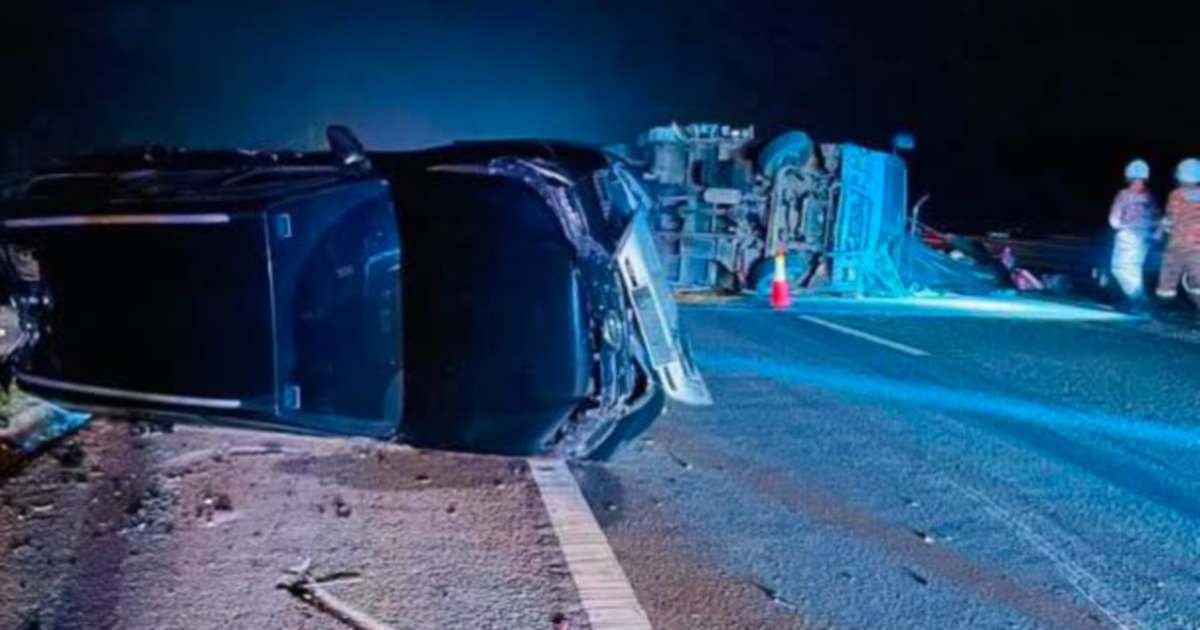
Three media personnel assigned to Deputy Prime Minister Datuk Seri Dr Ahmad Zahid Hamidi were among seven individuals injured when three vehicles collided on the East Coast Expressway (LPT) near Maran in the early hours of the day. The accident, which occurred at the Km144 stretch of the major north-south arterial route, resulted in injuries that officials described as not serious, prompting relief from the Deputy Prime Minister's office.
The East Coast Expressway, which stretches nearly 650 kilometres from Kuala Lumpur to Terengganu, serves as a critical transport corridor for Malaysia's east coast region. Traffic incidents along this highway frequently draw attention due to the volume of commercial and private traffic it handles daily, making accident prevention and road safety ongoing concerns for authorities. The Maran area, situated in Pahang, experiences considerable vehicular movement, particularly involving longhaul vehicles and commuter traffic heading between the Klang Valley and eastern states.
The three media officers were travelling as part of their professional duties when the collision occurred. While details regarding the specific circumstances leading to the multi-vehicle impact were not immediately disclosed, accidents involving three or more vehicles typically indicate complex chain-reaction scenarios where initial contact triggers secondary collisions. The involvement of government personnel and their security or support entourage drew official documentation of the incident, ensuring proper records were maintained by traffic authorities.
The remaining four individuals injured in the crash were not directly identified in initial reports, though they were presumed to be other vehicle occupants or passengers at the scene. Combined with the three media officers, the seven-person injury toll reflected the severity of impact across the vehicles involved. Emergency response teams accessed the scene and provided immediate medical attention, with casualties transported to nearby medical facilities for assessment and treatment.
Road safety along federal expressways remains a persistent challenge for Malaysia's transport infrastructure. The East Coast Expressway, like other major routes, experiences varying traffic densities throughout the day and night, with early morning hours sometimes presenting reduced visibility and driver fatigue-related risks. Authorities regularly conduct awareness campaigns targeting expressway users, emphasising proper following distances, speed management, and vehicle maintenance as fundamental accident prevention measures.
The incident underscores the vulnerability of all road users to sudden traffic emergencies, regardless of their professional status or official duties. Media personnel, like journalists and communications staff, often travel between locations for coverage and official functions, exposing them to the same traffic risks as ordinary commuters. The outcome—that none of the seven injured sustained serious harm—represented a fortunate conclusion given the potential for severe consequences in multi-vehicle expressway collisions.
Government offices routinely coordinate transportation logistics for officials and their support staff, incorporating travel safety protocols and vehicle maintenance standards. However, unexpected road incidents can occur despite preventive measures, reminding authorities and the public of the unpredictable nature of traffic environments. The Deputy Prime Minister's office would have assessed the circumstances to determine whether procedural adjustments were necessary for future travel arrangements.
Expressway accidents typically trigger immediate investigations by traffic police, who document scene conditions, vehicle damage patterns, and witness statements to establish causation and responsibility. Such investigations support both immediate incident management and longer-term safety analysis, helping identify trend patterns or infrastructure-related factors that may require intervention. The Maran stretch of the East Coast Expressway, like other high-traffic sections, falls under regular monitoring by highway authorities.
The experience of the three media officers serves as a practical reminder of road safety relevance across Malaysian society. Whether travelling for professional reasons or leisure, all individuals sharing expressways face similar risks and benefit from consistent adherence to safe driving practices. The outcome of this particular incident—manageable injuries rather than critical harm—reflected elements of fortune combined with responsive emergency services and modern vehicle safety features.
As Malaysia continues developing its transport infrastructure and modernising vehicle fleets, road safety remains an ongoing priority requiring coordinated effort from authorities, vehicle manufacturers, and individual drivers. The East Coast Expressway continues serving its essential role connecting regions, and incidents like the Maran collision provide opportunities for reviewing and reinforcing safety protocols across both public and private transportation operations.

%22%2F%3E%3C%2Fpattern%3E%3C%2Fdefs%3E%3Crect%20width%3D%22100%25%22%20height%3D%22100%25%22%20fill%3D%22url(%23ph523ndg)%22%2F%3E%3Crect%20width%3D%22100%25%22%20height%3D%22100%25%22%20fill%3D%22url(%23ph523ndp)%22%2F%3E%3Ctext%20x%3D%2250%25%22%20y%3D%2250%25%22%20text-anchor%3D%22middle%22%20dominant-baseline%3D%22central%22%20fill%3D%22rgba(255%2C255%2C255%2C0.95)%22%20font-family%3D%22Georgia%2C%20'Times%20New%20Roman'%2C%20serif%22%20font-weight%3D%22700%22%20font-size%3D%22272%22%20letter-spacing%3D%22-0.02em%22%3EAnwar%3C%2Ftext%3E%3C%2Fsvg%3E)