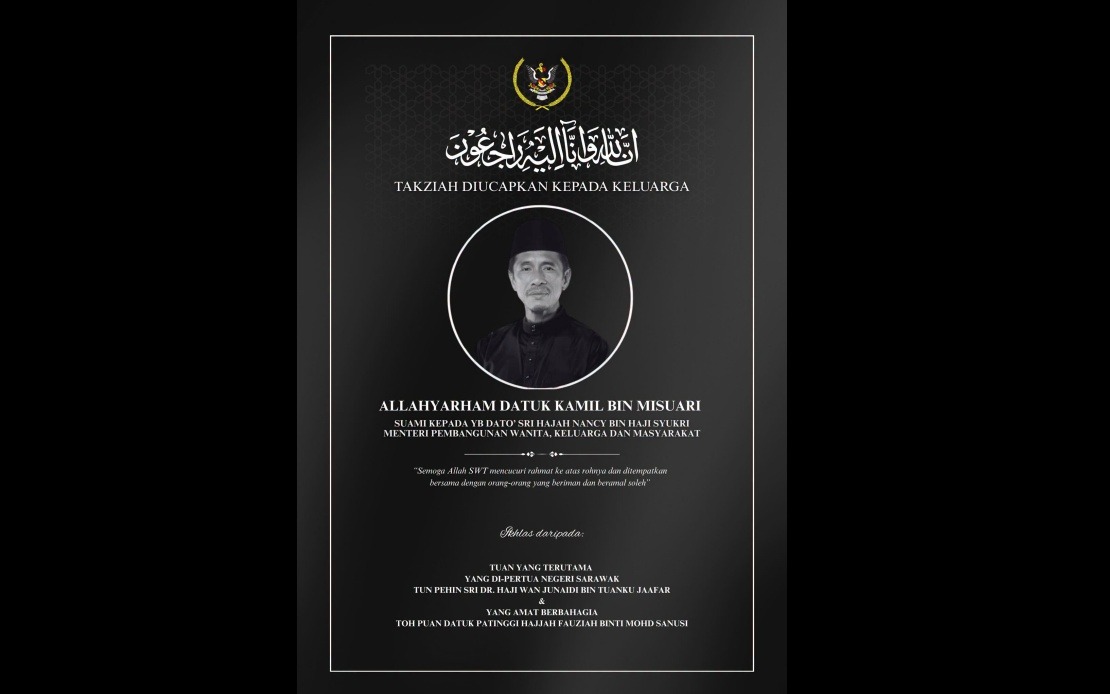
The Yang Dipertua Negeri Sarawak, Tun Dr Wan Junaidi Tuanku Jaafar, has conveyed his sympathies to Women, Family and Community Development Minister Datuk Seri Nancy Shukri following the death of her husband, Datuk Kamil Misuari, who passed away at a hospital in Kuala Lumpur on June 18. The senior state official and his wife, Toh Puan Fauziah Mohd Sanusi, issued formal condolences through Astana Sarawak, offering prayers for the departed soul.
In the statement released by the Sarawak Yang Dipertua Negeri's office, Tun Wan Junaidi and his wife expressed their hope that Allah SWT would bestow divine mercy upon Kamil, grant acceptance of his righteous deeds during his lifetime, and place him among the righteous in the afterlife. The couple's gesture reflects the customary response by senior political figures to the loss of prominent personalities within Malaysian public and political circles.
Beyond spiritual supplications, the statement also conveyed prayers for the bereaved family during this challenging period. Tun Wan Junaidi and Toh Puan Fauziah specifically petitioned for Nancy Shukri and her extended family to receive the strength, resolve, and patience necessary to navigate their grief and come to terms with their loss. Such expressions from high-ranking officials serve as important moments of national solidarity during times of personal tragedy affecting government ministers and their families.
The passing of Datuk Kamil Misuari marks the end of a nearly four-decade marriage with Nancy Shukri. The couple was united in 1985 and their union produced three children together, forming a family deeply rooted within Malaysia's political landscape. Kamil's age of 65 at the time of his death suggests he had spent most of his adult years supporting his wife's career in public service and government administration.
Following established funeral protocols for prominent citizens in Sarawak, Kamil's remains were scheduled to be transported to Kuching on June 19, the day following his death. This homecoming to Sarawak reflects family ties and the significant administrative and cultural connections to the state. The late Datuk would ultimately be laid to rest at Samariang Muslim Cemetery, a significant burial ground in Sarawak's capital, ensuring his final resting place within his home state.
Nancy Shukri's role as Women, Family and Community Development Minister places her among the federal cabinet's most visible members, with direct responsibility for portfolio areas touching the lives of Malaysian families nationwide. Her public duties require extensive engagement with issues ranging from women's empowerment and family welfare to community social development initiatives. The loss of a life partner represents a profound personal challenge alongside her demanding ministerial responsibilities, a situation that undoubtedly prompted the formal expressions of concern and support from senior colleagues and state leadership.
The timing of this bereavement during active government service adds a dimension of poignancy to Shukri's circumstances. Cabinet ministers in Malaysia must continue their official functions and public commitments even while managing personal grief, a reality that demands considerable emotional fortitude and professional dedication. The formal acknowledgement from Tun Wan Junaidi and other state and federal figures provides important institutional recognition of the minister's loss.
Such moments of condolence and public mourning, while personal in nature, also reflect the interconnected nature of Malaysia's political establishment and the protocols surrounding official life. The involvement of Astana Sarawak in issuing a formal statement demonstrates the significance accorded to expressions of sympathy from the highest state offices. These gestures, while ceremonial in some respects, embody cultural and religious values deeply embedded within Malaysian society, particularly the Islamic principles of compassion and communal support during bereavement.
For Southeast Asian observers and international observers of Malaysian politics, the passing illustrates the human dimensions beneath government office and policy-making. The event also underscores the continued importance of family structures and relationships within the context of public service, reminding constituents and colleagues alike that those in ministerial positions maintain personal lives subject to the same vulnerabilities and sorrows affecting ordinary citizens. Nancy Shukri's position as a female minister of cabinet rank has already positioned her as a significant figure in Malaysia's political development; this personal loss adds depth to her public narrative.

%22%2F%3E%3C%2Fpattern%3E%3C%2Fdefs%3E%3Crect%20width%3D%22100%25%22%20height%3D%22100%25%22%20fill%3D%22url(%23ph523ndg)%22%2F%3E%3Crect%20width%3D%22100%25%22%20height%3D%22100%25%22%20fill%3D%22url(%23ph523ndp)%22%2F%3E%3Ctext%20x%3D%2250%25%22%20y%3D%2250%25%22%20text-anchor%3D%22middle%22%20dominant-baseline%3D%22central%22%20fill%3D%22rgba(255%2C255%2C255%2C0.95)%22%20font-family%3D%22Georgia%2C%20'Times%20New%20Roman'%2C%20serif%22%20font-weight%3D%22700%22%20font-size%3D%22272%22%20letter-spacing%3D%22-0.02em%22%3EAnwar%3C%2Ftext%3E%3C%2Fsvg%3E)