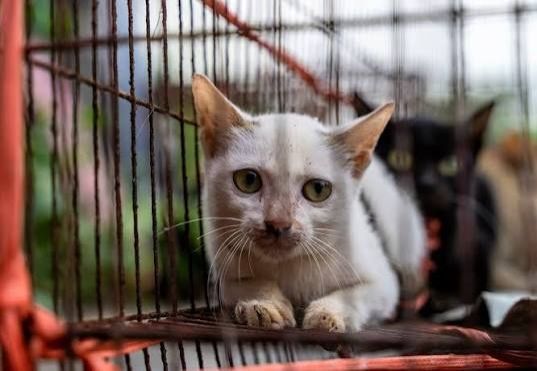
Vietnamese police have broken up an organised pet-theft operation in Ho Chi Minh City, leading to the recovery of more than 400 live cats and the reunion of at least 40 animals with their original owners. The crackdown, announced through the official police newspaper, resulted in nine arrests connected to a sophisticated ring that authorities characterise as a "criminal group specialising in stealing and collecting cats". The suspects allegedly operated across southern Vietnam over a three-year period, systematically targeting domestic felines for resale to food vendors.
The scale of the operation became apparent when police conducted raids on facilities connected to the suspects. Officers recovered more than 400 living cats alongside 80 carcasses preserved on ice, indicating that the network maintained significant stockpiles of animals in various stages of processing. Additional confiscations included 21 more cats seized from a separate location, pointing to a geographically dispersed infrastructure designed to handle high volumes of stolen pets. The discovery underscores how organised crime has infiltrated even the pet trade, treating beloved household animals as commodities for systematic exploitation.
The breakthrough followed mounting complaints from Ho Chi Minh City residents about pet disappearances. Police launched their investigation in response to this surge in thefts, recognising a pattern of coordinated activity rather than isolated incidents. Interrogations revealed that the nine suspects had refined their methods over years, developing reliable techniques for luring and trapping cats across densely populated urban and surrounding areas. The confessions provide authorities with a comprehensive understanding of how the network operated and may help identify additional victims yet to come forward.
While cat and dog consumption remains legal in Vietnam, the country maintains regulations intended to ensure transparency in the meat supply chain. Vendors and restaurants are permitted to serve feline meat openly, with some establishments explicitly marketing it to customers. However, regulations require vendors to possess documentation proving the legitimate origin of animals sold for consumption. The theft ring's operations directly circumvented these requirements, sourcing animals illegally and selling them without proper certification, constituting not merely animal cruelty but also regulatory violations that undermine food-safety frameworks.
The humanitarian dimension of the case emerged through efforts to reunite the rescued cats with their families. Humane World for Animals, an international animal welfare organisation, has been coordinating identification and return of stolen pets, successfully locating owners for over 40 animals. The organisation's involvement signals growing international concern about animal trafficking networks in Southeast Asia, where enforcement of animal welfare standards remains inconsistent. The successful reunions provide some positive resolution for pet owners who had lost their companions to theft.
Yet the operation has highlighted troubling welfare consequences for animals caught in trafficking systems. Approximately 100 of the rescued cats died following their ordeal, according to animal advocates, succumbing to conditions experienced during capture, confinement, and transport. The loss underscores the profound trauma that animals endure when subjected to organised theft operations, with mortality rates reflecting both the physical stress of capture and the inadequate conditions in which trafficked animals are held. The deaths represent not merely statistical losses but individual suffering that could have been prevented through stronger initial enforcement.
The remaining rescued cats present ongoing challenges for authorities and animal welfare groups. Roughly 100 animals remain in police custody, retained as evidence for the prosecution of the nine suspects. Their extended institutional confinement raises animal welfare concerns, as police facilities are not designed to provide long-term care for large numbers of domestic animals. Humane World for Animals has actively sought to improve conditions, donating food supplies and arranging delivery of cooling equipment to mitigate heat stress for the confined animals during detention.
The case demonstrates how criminal organisations can exploit legal grey zones and weak enforcement mechanisms to profit from animal exploitation. Although cat meat consumption is lawful in Vietnam, the absence of rigorous supply-chain verification creates opportunities for traffickers to source animals illicitly. The price differential between stolen pets and legitimately sourced animals provides strong financial incentive for criminal activity. Without comprehensive traceability systems comparable to those used in livestock agriculture, pet theft and illegal food supply networks will likely persist as profitable criminal ventures.
The investigation and arrests signal a shift in police prioritisation of animal-related crimes in Ho Chi Minh City. For years, pet theft received limited law enforcement attention, regarded as a civil matter rather than serious criminal activity warranting major investigative resources. This operation demonstrates that institutional commitment and adequate resourcing can uncover large-scale networks and hold perpetrators accountable. The decisive police action, praised by international animal advocates, suggests that Southeast Asian authorities are beginning to treat organised animal trafficking with greater seriousness, reflecting evolving public attitudes toward companion animal protection in the region.