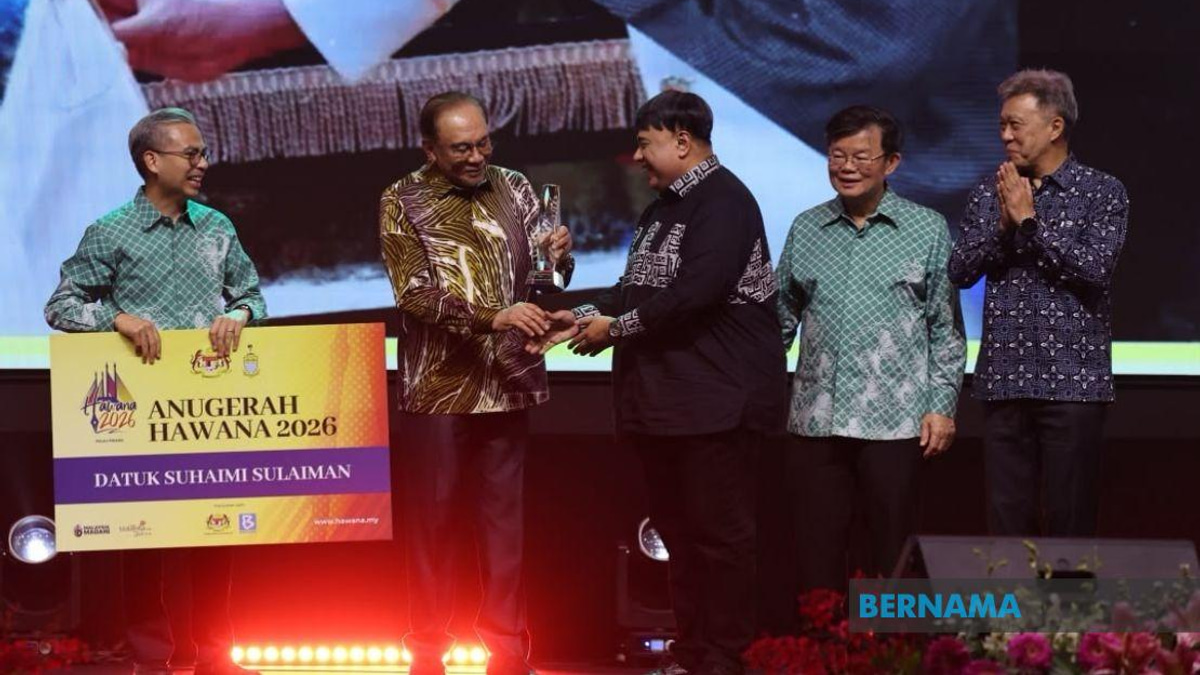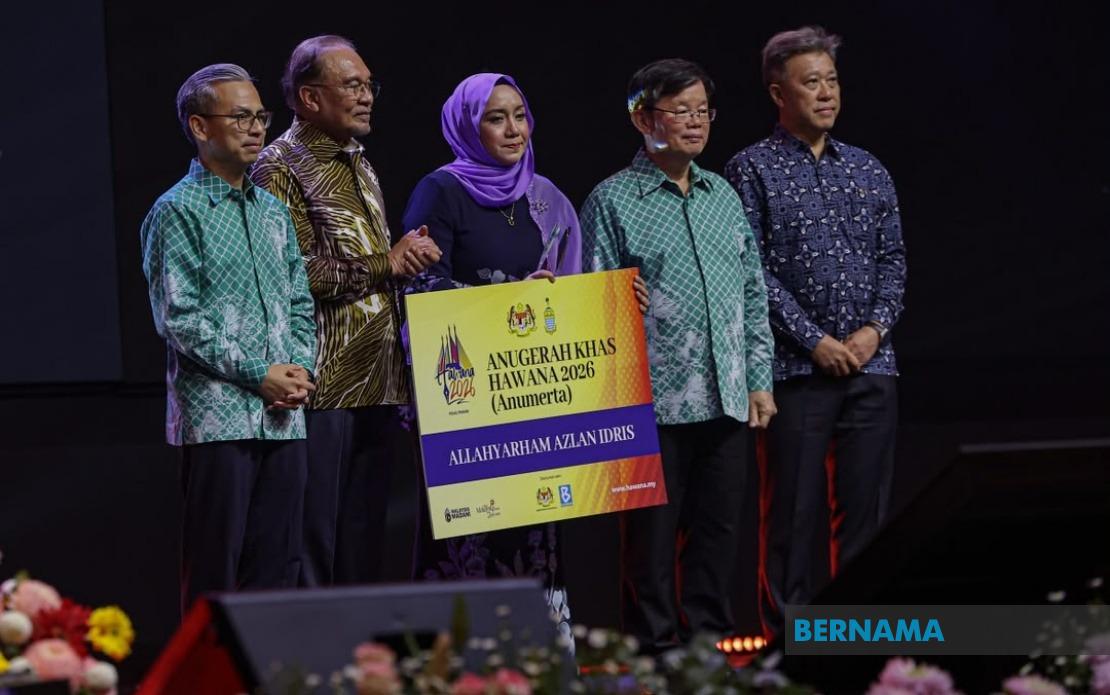
Prime Minister Datuk Seri Anwar Ibrahim presented the HAWANA 2026 Special Award to the family of Azlan Idris during the National Journalists' Day celebrations at the PICCA@Arena Butterworth Convention Centre on June 20. The award was accepted by Azlan's wife, Wan Syahrina Wan Abdul Rahman, in recognition of his extensive contributions to Malaysian broadcasting and journalism. The ceremony brought together senior government officials, including Penang Chief Minister Chow Kon Yeow and Communications Minister Datuk Fahmi Fadzil, underscoring the significance of the recognition.
Azlan Idris passed away on January 15 at the age of 57, leaving behind a legacy spanning multiple decades in Malaysia's broadcasting sector. His career trajectory reflected the evolution of local media, having worked across several prominent television networks including TV3, NTV7, and Channel 9 before his most notable role at Bernama Radio. His appointment to leadership positions at these organisations demonstrated the trust placed in him by industry peers and executives who recognised his editorial vision and professional acumen.
The trajectory of Azlan's career at Bernama Radio proved particularly formative for the national news organisation. When Bernama Radio launched in 2007, Azlan assumed a central role in establishing its operations and editorial direction. Over the subsequent years, he became instrumental in developing the station's news gathering capabilities, broadcast standards, and audience engagement strategies. His work helped position Bernama Radio as a credible voice in Malaysia's media landscape during a period of significant technological and industry transformation.
Beyond his day-to-day broadcasting responsibilities, Azlan demonstrated commitment to the journalism profession through his involvement in organising the annual HAWANA celebrations. Beginning with the 2022 event in Melaka, he served as chairman of the main celebration committee, a role he maintained through subsequent years. This responsibility required coordinating with media organisations nationwide, liaising with government officials, and ensuring the events reflected the values and achievements of the Malaysian journalism community. His stewardship of these celebrations earned him recognition for his organisational abilities and his dedication to honouring the profession.
The recognition through the HAWANA 2026 Special Award reflects Malaysian journalism's tradition of acknowledging individuals whose contributions have meaningfully shaped the industry. These awards serve an important function in the profession by preserving institutional memory and recognising those who have advanced standards of reporting and broadcast excellence. For colleagues and industry observers, the award underscores the importance of sustained professional commitment over an entire career rather than isolated achievements.
Azlan's death represented a significant loss to Bernama and the broader Malaysian broadcasting community. Those who worked alongside him noted his dedication to mentoring younger journalists and his insistence on maintaining editorial standards even amid the pressures of continuous news cycles. His experience across multiple broadcast platforms provided him with insights into different approaches to news delivery and audience communication, knowledge he frequently shared with colleagues seeking to develop their professional skills.
The HAWANA celebrations, of which Azlan was a key organiser in recent years, serve as important occasions for the Malaysian journalism fraternity to reflect on professional standards and celebrate achievements. These gatherings bring together reporters, editors, producers, and news executives from across the country's media landscape. They also provide platforms for discussing industry challenges and emerging trends, from digital transformation to the struggle against misinformation. Azlan's involvement in orchestrating these events positioned him as someone concerned not merely with his own organisation's success but with the health of journalism as a whole.
Bernama's involvement in honouring Azlan through this award reflects the importance of institutional memory within Malaysia's premier news agency. As the national news organisation, Bernama carries responsibility for maintaining professional standards across the industry and recognising those who have contributed substantially to these efforts. The presence of Bernama chairman Datuk Seri Wong Chun Wai and CEO Datin Paduka Nur-ul Afida Kamaludin at the ceremony underscored the organisation's commitment to acknowledging Azlan's legacy.
For Malaysian journalism more broadly, recognising figures like Azlan Idris carries particular significance in an era when media credibility faces challenges from multiple directions. Azlan's career demonstrated a commitment to the foundational principles of the profession: accurate reporting, ethical sourcing, and public service. His work across different broadcast formats and organisations showed adaptability to changing media landscapes while maintaining core professional values. These qualities become increasingly valuable as Malaysian newsrooms navigate the complexities of digital platforms, audience fragmentation, and information warfare.
The award also holds meaning for Bernama Radio specifically, which continues to operate in a competitive media environment. Azlan's foundational contributions to the station during its formative years established operational and editorial frameworks that persist to the present day. His influence on the station's culture and standards continues to shape how current staff approach their work. The recognition of his contributions serves as both a tribute to his individual efforts and an affirmation of the institutional values he helped embed.
Government recognition of journalism through such awards reflects broader policy perspectives on media's role in Malaysian society. The presence of the Prime Minister and multiple cabinet ministers at the ceremony indicated government acknowledgment of journalism's importance to national discourse. This positioning of journalists as worthy of formal state recognition, while sometimes contentious, reflects an understanding that healthy media institutions contribute to transparent governance and informed public participation.