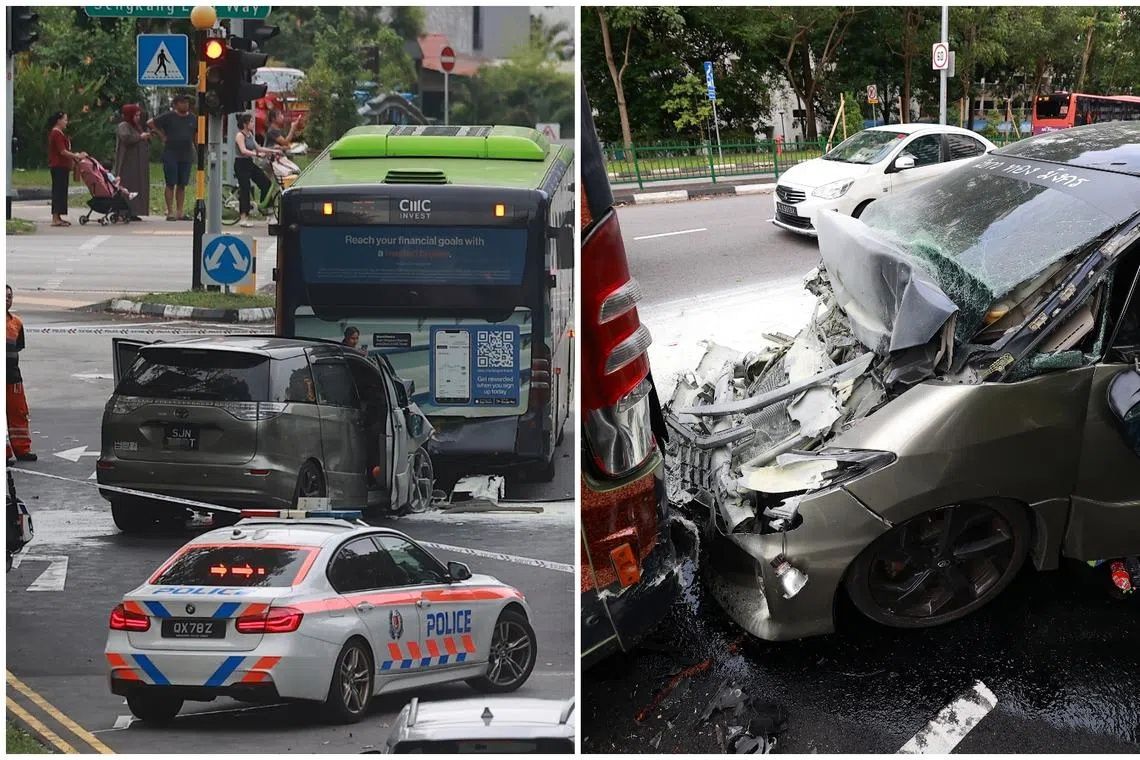
A troubling pattern is emerging on Singapore's roads: within just 12 days in June, law enforcement charged three separate drivers with operating vehicles while under the influence of illicit substances. Two of these individuals had consumed methamphetamine, commonly known as "Ice," while behind the wheel. The third case introduced a more insidious threat—a synthetic anaesthetic called etomidate that has entered recreational circulation through vaporiser devices marketed as Kpods. These three incidents, though seemingly isolated, represent part of a far larger and increasingly dangerous phenomenon reshaping traffic safety across the island nation.
The escalation has drawn alarm from medical professionals on the frontlines of emergency care. Jonathan Tang, a clinical toxicologist at the National University Hospital's Emergency Medicine Department, has personally treated multiple trauma patients whose road accidents were precipitated by etomidate consumption. His clinical observations underscore a critical public health blind spot: many road users and policymakers remain unaware that etomidate-laced vapes produce driving impairments comparable to alcohol intoxication. The drug compromises the fundamental cognitive and motor skills required for safe vehicle operation, creating hazards not only for the impaired driver but for every other person sharing the road.
Parliamentary scrutiny has brought these dangers into sharper focus. In February, Member of Parliament Valerie Lee raised questions about whether Singapore's Traffic Police apply standardised protocols to test accident-involved motorists for substance impairment. The government's response, delivered by Coordinating Minister for National Security K. Shanmugam, revealed sobering statistics: between 2023 and 2025, authorities documented 38 traffic accidents definitively linked to drug and etomidate use. Nineteen of these 38 collisions proved fatal. The breakdown is particularly striking: ten fatalities involved conventional drugs, while nine involved etomidate alone. These numbers represent not abstract policy failures but preventable deaths and life-altering injuries.
The concentration of incidents in 2025 suggests an accelerating trend rather than a stable problem. Of the 38 documented accidents spanning three years, 29 occurred within the single year of 2025. Among these 2025 incidents, eighteen involved etomidate exclusively, with a further seven involving combined drug and etomidate use. This clustering indicates that etomidate's availability and recreational adoption have intensified markedly, transforming what might have been a marginal concern into a pressing traffic safety crisis. The compound's emergence in accessible vaporiser form—disguised as ordinary vaping devices—has likely facilitated its proliferation among drivers who may not fully understand the substance's incapacitating properties.
Dr Tang's medical expertise illuminates the specific physiological mechanisms through which etomidate undermines driving safety. Beyond general impairment, the drug induces delayed reaction times, severely compromises hazard perception, and causes sudden loss of vehicle control. For trained emergency physicians accustomed to managing trauma, these pharmacological effects represent predictable pathways to multi-vehicle collisions and pedestrian injuries. The anaesthetic's impact extends beyond acute intoxication; accumulating evidence suggests that regular etomidate use triggers psychiatric complications including depressed mood, heightened aggression, and impulse control dysfunction. Users experiencing these psychological states face compounded risks, as the combination of chemical impairment and emotional instability creates volatile conditions for catastrophic road incidents.
The human toll materialises starkly when examining individual cases brought before Singapore's courts. A May 13, 2025 collision in Punggol exemplifies the lethal consequences of etomidate-impaired driving. A vehicle driven by a man with a female passenger struck a bus; police subsequently recovered 42 vaporiser devices and more than 1,200 etomidate-containing pods from the wreckage. The 28-year-old female passenger died from injuries sustained in the crash. Toxicology confirmed etomidate presence in both the driver's and victim's bloodstreams, raising questions about the driver's consent and culpability given the victim's involuntary exposure to secondhand intoxication risk. This single incident crystallises the collateral damage inherent in drug-impaired driving—innocents become casualties in incidents they did not initiate.
June court appearances brought forward additional prosecutions reflecting the scale of enforcement activity. Mohamed Firdouz Mohamed Akram, aged 36, faced multiple charges stemming from a Kallang collision where Ice consumption impaired his judgment, resulting in a taxi driver and passenger sustaining injuries. His subsequent flight from the accident scene and the discovery of drugs and weapons in his vehicle paint a portrait of compounding irresponsibility. Similarly, 34-year-old Puah Zhe Cong confronted charges of dangerous driving causing death, having operated a vehicle under etomidate's influence and left the scene rather than render assistance to victims. Even more reckless was 32-year-old Sivakandesh, whose methamphetamine-induced loss of control sent his Mercedes-Benz careening into bollards, parked vehicles, and a rubbish chute on Yishun Street, with the driver subsequently removing the vehicle's registration plates.
Singapore's broader traffic mortality statistics contextualise these drug-related incidents within a generalised crisis. The year 2025 witnessed 149 fatalities on roads—the highest toll in a decade, surpassing 2016's 141 deaths and 2024's 142 deaths. Injuries similarly escalated, with 9,955 people hurt in 2025 compared to 9,342 in 2024. While drug-impaired driving accounts for a measurable proportion of these casualties, the overall trajectory suggests multifactorial deterioration in road safety culture, enforcement, and perhaps infrastructure adequacy. Nevertheless, the concentration of drug-related fatalities—19 deaths from just 38 incidents—indicates that substance-impaired driving carries disproportionately severe consequences relative to other collision categories.
Legal consequences for drug-impaired driving in Singapore remain modest relative to the harms inflicted. First-time offenders convicted of driving under the influence of intoxicating substances face up to one year imprisonment, a S$10,000 fine, or both. Repeat offenders encounter stricter penalties: up to two years imprisonment and fines reaching S$20,000. For context, these penalties are comparable to mid-range traffic offences rather than reflecting the severe consequences these decisions impose on victims and families. Prosecutors and judges may exercise discretion in sentencing, particularly when fatalities result, but the statutory framework itself suggests legislative ambivalence about the seriousness with which substance-impaired driving merits punishment.
The emergence of etomidate as a drug-driving threat represents a particular challenge for public health messaging and enforcement. Unlike methamphetamine or heroin, which carry substantial cultural stigma, etomidate arrives packaged as vaporiser technology that superficially resembles nicotine vaping devices. This disguise permits easier concealment and normalisation, particularly among younger users who may not recognise the substance's anaesthetic potency. Education campaigns have historically focused on alcohol and conventional illicit drugs; etomidate's novelty means many drivers lack baseline knowledge about its impairment profile. The Traffic Police's capacity to detect such substances during roadside screening remains unclear from public statements, suggesting potential enforcement gaps.
For Malaysian readers and policymakers, Singapore's experience offers urgent cautionary lessons. Drug-impaired driving remains largely underreported and under-prosecuted in many Southeast Asian jurisdictions, yet the region's expanding illicit pharmaceutical markets and vaporiser availability mirror Singapore's trajectory. Malaysia's road fatality rates already rank among the world's highest; introducing effective countermeasures against substance-impaired driving becomes increasingly critical before similar clusters of preventable deaths materialise. Enhanced roadside testing protocols, greater public awareness of emerging synthetic drugs' driving risks, and cross-border intelligence sharing about pharmaceutical diversion could prove invaluable preventive investments.
Singapore's police statement characterised drug-impaired driving as "extremely dangerous and irresponsible," a declaration that understates the moral culpability involved. Individuals who operate vehicles while chemically incapacitated knowingly impose lethal risks on unwilling participants—passengers, other drivers, cyclists, and pedestrians. The 28-year-old woman who died in the Punggol crash, the taxi driver injured in Kallang, the pedestrians narrowly avoiding Sivakandesh's careening vehicle—these individuals never consented to the hazard imposed upon them. As etomidate vaporisers proliferate and social norms around their consumption evolve, enforcement and public education must accelerate proportionally. The alternative—accepting mounting road deaths as an unavoidable cost of modern urban life—remains fundamentally unacceptable.
%22%2F%3E%3C%2Fpattern%3E%3C%2Fdefs%3E%3Crect%20width%3D%22100%25%22%20height%3D%22100%25%22%20fill%3D%22url(%23ph4xpndg)%22%2F%3E%3Crect%20width%3D%22100%25%22%20height%3D%22100%25%22%20fill%3D%22url(%23ph4xpndp)%22%2F%3E%3Ctext%20x%3D%2250%25%22%20y%3D%2250%25%22%20text-anchor%3D%22middle%22%20dominant-baseline%3D%22central%22%20fill%3D%22rgba(255%2C255%2C255%2C0.95)%22%20font-family%3D%22Georgia%2C%20'Times%20New%20Roman'%2C%20serif%22%20font-weight%3D%22700%22%20font-size%3D%22320%22%20letter-spacing%3D%22-0.02em%22%3ETV3%3C%2Ftext%3E%3C%2Fsvg%3E)
%22%2F%3E%3C%2Fpattern%3E%3C%2Fdefs%3E%3Crect%20width%3D%22100%25%22%20height%3D%22100%25%22%20fill%3D%22url(%23ph4p6tog)%22%2F%3E%3Crect%20width%3D%22100%25%22%20height%3D%22100%25%22%20fill%3D%22url(%23ph4p6top)%22%2F%3E%3Ctext%20x%3D%2250%25%22%20y%3D%2250%25%22%20text-anchor%3D%22middle%22%20dominant-baseline%3D%22central%22%20fill%3D%22rgba(255%2C255%2C255%2C0.95)%22%20font-family%3D%22Georgia%2C%20'Times%20New%20Roman'%2C%20serif%22%20font-weight%3D%22700%22%20font-size%3D%22170%22%20letter-spacing%3D%22-0.02em%22%3EMalaysia%3C%2Ftext%3E%3C%2Fsvg%3E)
%22%2F%3E%3C%2Fpattern%3E%3C%2Fdefs%3E%3Crect%20width%3D%22100%25%22%20height%3D%22100%25%22%20fill%3D%22url(%23ph26rx5g)%22%2F%3E%3Crect%20width%3D%22100%25%22%20height%3D%22100%25%22%20fill%3D%22url(%23ph26rx5p)%22%2F%3E%3Ctext%20x%3D%2250%25%22%20y%3D%2250%25%22%20text-anchor%3D%22middle%22%20dominant-baseline%3D%22central%22%20fill%3D%22rgba(255%2C255%2C255%2C0.95)%22%20font-family%3D%22Georgia%2C%20'Times%20New%20Roman'%2C%20serif%22%20font-weight%3D%22700%22%20font-size%3D%22320%22%20letter-spacing%3D%22-0.02em%22%3EPM%3C%2Ftext%3E%3C%2Fsvg%3E)