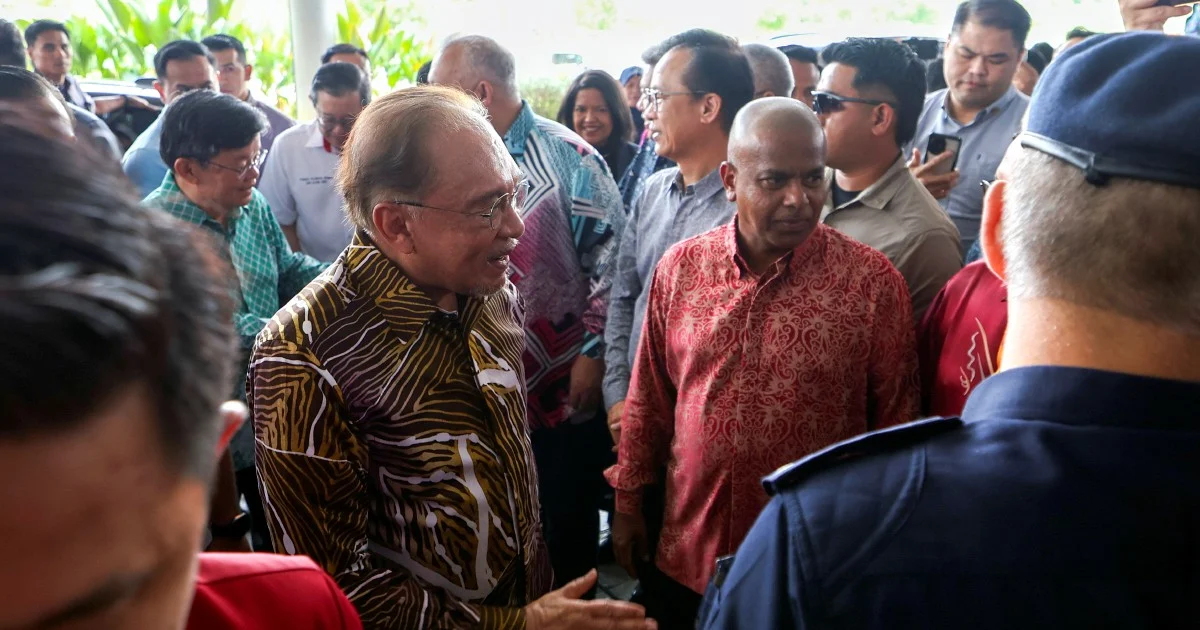
Prime Minister Datuk Seri Anwar Ibrahim has hailed Petronas's successful acquisition of two significant gas fields in Turkmenistan as a watershed moment for the country's energy security outlook. Speaking at his constituency in Permatang Pauh, Anwar underscored the strategic importance of the development, positioning the deal as evidence of Malaysia's growing influence in global energy markets and its capacity to secure critical resources beyond its own borders.
The agreement represents a substantial expansion of Petronas's international footprint and reflects the national oil and gas company's ability to compete successfully for major infrastructure projects in Central Asia. For Malaysia, which relies heavily on hydrocarbons for fiscal revenue and domestic energy supply, diversifying gas procurement sources holds particular significance given the volatile nature of global energy markets and shifting supply patterns across the Asia-Pacific region. The Turkmenistan deal signals that Petronas has retained its standing as a credible operator capable of managing complex projects in challenging geopolitical environments.
Turkmenistan possesses some of the world's largest proven natural gas reserves, though the country has historically faced difficulties attracting investment and maintaining stable partnerships with foreign energy companies. The decision to entrust two major fields to Petronas suggests confidence in the Malaysian company's technical expertise, financial stability, and commitment to long-term development. This outcome also demonstrates Petronas's diplomatic reach and its ability to navigate relationships with Central Asian governments independent of Malaysia's broader foreign policy framework.
For Malaysia's broader economic strategy, the Turkmenistan arrangement carries implications beyond energy security. It strengthens the country's credentials as a reliable energy trader in Asian markets and potentially opens pathways for Malaysian companies to participate in ancillary services and supply chains throughout Central Asia. The deal also reinforces Malaysia's positioning as a significant player in global energy infrastructure at a moment when many nations are reassessing their hydrocarbon dependencies amid climate transition pressures.
The acquisition of gas fields rather than mere trading arrangements or service contracts indicates that Petronas will assume operational responsibility for exploration, development, and production activities. This depth of involvement requires substantial capital investment, technical personnel deployment, and long-term management commitments. For Malaysia, such deep involvement in foreign energy projects creates downstream opportunities in financing, engineering procurement and construction services, and skilled employment that extends throughout the Malaysian economy.
From a geopolitical perspective, the Petronas deal illustrates how Malaysian companies can expand influence through commercial engagement in regions traditionally dominated by larger global powers. Central Asia remains strategically important given its proximity to major markets in China, India, and Southeast Asia, and its role as a potential alternative supply corridor to Middle Eastern energy sources. Petronas's presence in Turkmenistan positions Malaysia as a participant in shaping energy dynamics across this consequential region.
Turkmenistan faces its own energy security challenges despite vast reserves, with export infrastructure often constrained by regional politics and competition from larger producers. By partnering with Petronas, Turkmenistan potentially gains access to Malaysian expertise in offshore gas production, liquefaction technology, and international marketing capabilities. This mutual benefit framework typically underpins long-lasting partnerships that can withstand short-term market fluctuations or political transitions.
The timing of the deal warrants consideration in the context of Malaysia's broader energy transition policies. As the government pursues renewable energy expansion and sustainability objectives, maintaining strong hydrocarbon assets abroad ensures Malaysia continues generating fiscal revenue from fossil fuel operations while gradually shifting its domestic energy mix. This pragmatic dual approach allows Malaysia to fund the transition itself through continued hydrocarbon revenues while progressively reducing its long-term dependence on carbon-intensive energy sources.
For Petronas shareholders and Malaysian taxpayers, the successful completion of due diligence and contract negotiations in Turkmenistan represents value creation that extends across the 2030s and potentially beyond. Gas field developments typically operate on two-to-three decade timelines, meaning this investment will contribute to government revenue streams throughout the medium and long term. The returns generated can support Malaysia's fiscal position as other sectors face structural headwinds from technological disruption and global economic uncertainty.
Market observers will now focus on implementation timelines and how quickly Petronas can mobilize resources to begin development work on the two fields. Success will depend on navigating local regulatory frameworks, recruiting qualified personnel with Central Asian experience, and establishing reliable supply chain relationships. Any obstacles encountered during the development phase could signal broader challenges affecting foreign investment confidence in the region.
The Petronas deal also carries subtle messaging for Malaysian audiences regarding the government's commitment to maintaining the national oil and gas company's prominence during an era of energy transition. By celebrating major international acquisitions, the administration signals that it views Petronas as a strategic national asset worthy of sustained investment and political support, despite global headwinds facing the hydrocarbon sector. This backing could prove essential as Petronas navigates the complex capital allocation decisions that energy companies increasingly face.
%22%2F%3E%3C%2Fpattern%3E%3C%2Fdefs%3E%3Crect%20width%3D%22100%25%22%20height%3D%22100%25%22%20fill%3D%22url(%23ph4xpndg)%22%2F%3E%3Crect%20width%3D%22100%25%22%20height%3D%22100%25%22%20fill%3D%22url(%23ph4xpndp)%22%2F%3E%3Ctext%20x%3D%2250%25%22%20y%3D%2250%25%22%20text-anchor%3D%22middle%22%20dominant-baseline%3D%22central%22%20fill%3D%22rgba(255%2C255%2C255%2C0.95)%22%20font-family%3D%22Georgia%2C%20'Times%20New%20Roman'%2C%20serif%22%20font-weight%3D%22700%22%20font-size%3D%22320%22%20letter-spacing%3D%22-0.02em%22%3ETV3%3C%2Ftext%3E%3C%2Fsvg%3E)
%22%2F%3E%3C%2Fpattern%3E%3C%2Fdefs%3E%3Crect%20width%3D%22100%25%22%20height%3D%22100%25%22%20fill%3D%22url(%23ph4p6tog)%22%2F%3E%3Crect%20width%3D%22100%25%22%20height%3D%22100%25%22%20fill%3D%22url(%23ph4p6top)%22%2F%3E%3Ctext%20x%3D%2250%25%22%20y%3D%2250%25%22%20text-anchor%3D%22middle%22%20dominant-baseline%3D%22central%22%20fill%3D%22rgba(255%2C255%2C255%2C0.95)%22%20font-family%3D%22Georgia%2C%20'Times%20New%20Roman'%2C%20serif%22%20font-weight%3D%22700%22%20font-size%3D%22170%22%20letter-spacing%3D%22-0.02em%22%3EMalaysia%3C%2Ftext%3E%3C%2Fsvg%3E)
%22%2F%3E%3C%2Fpattern%3E%3C%2Fdefs%3E%3Crect%20width%3D%22100%25%22%20height%3D%22100%25%22%20fill%3D%22url(%23ph26rx5g)%22%2F%3E%3Crect%20width%3D%22100%25%22%20height%3D%22100%25%22%20fill%3D%22url(%23ph26rx5p)%22%2F%3E%3Ctext%20x%3D%2250%25%22%20y%3D%2250%25%22%20text-anchor%3D%22middle%22%20dominant-baseline%3D%22central%22%20fill%3D%22rgba(255%2C255%2C255%2C0.95)%22%20font-family%3D%22Georgia%2C%20'Times%20New%20Roman'%2C%20serif%22%20font-weight%3D%22700%22%20font-size%3D%22320%22%20letter-spacing%3D%22-0.02em%22%3EPM%3C%2Ftext%3E%3C%2Fsvg%3E)