Vietnam is joining a growing number of Asian jurisdictions implementing mandatory passenger compensation frameworks, with the government's newly issued Decree No. 208 establishing comprehensive rules that will reshape how carriers handle flight disruptions from next month onwards. The regulation, which details provisions previously outlined in broader civil aviation legislation, represents a significant step toward passenger rights protection in a region where such protections have historically lagged behind European and North American standards.
Under the new framework, Vietnamese carriers must recognize any departure delay exceeding 15 minutes beyond the scheduled time as compensable, with particularly stringent obligations triggering for what the decree terms "long delays" of four hours or more. This tiered approach acknowledges that passenger inconvenience scales with disruption duration, and it creates clear benchmarks that airlines cannot dispute or interpret subjectively. The definition itself carries implications for regional airline scheduling practices, as carriers operating across Southeast Asia will need to harmonize their policies across markets with differing regulatory requirements.
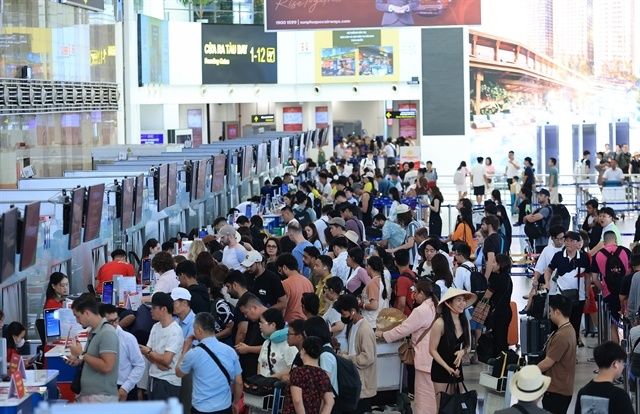
Immediately upon discovering a potential delay, airlines face obligations to communicate transparently with affected passengers, providing not only an apology but a clear explanation of causation. Crucially, carriers must supply airport operators and terminal service providers with continuously updated departure estimates, mandating that revised information appear on flight information displays at minimum every half hour. This requirement addresses a persistent frustration for travelers throughout Southeast Asia, where outdated or missing flight information compounds the stress of unexpected delays.
For delays stretching two hours or longer, the decree mandates that carriers provide either complimentary drinking water or cash-equivalent vouchers to passengers. While seemingly modest, this provision establishes a baseline standard of care that many Southeast Asian carriers have not consistently offered. The provision becomes more substantial when combined with reboarding obligations: airlines must rebook passengers on alternative flights or reroute them to final destinations at no additional cost, a requirement that demands operational flexibility and prevents carriers from profiting through forced ticket changes.
The timing of delays determines accommodation obligations, reflecting recognition that passenger needs differ across hours. For disruptions occurring between 7am and 10pm, carriers must arrange rest facilities appropriate to local airport conditions. However, overnight delays—occurring between 10pm and 7am—trigger more generous provisions requiring actual sleeping or resting accommodation suited to local standards, or an alternative arrangement acceptable to the passenger. This distinction acknowledges that nocturnal delays impose substantially greater hardship, as passengers cannot simply wait out the disruption during normal business hours.
Schedule changes, distinct from unplanned delays, receive separate regulatory treatment under the decree. When carriers deliberately alter departure times by five or more hours, they must not only notify passengers but offer a menu of remedies: full ticket refunds, rebooking on alternative itineraries with adjusted timing, or placement on substitute flights within 72 hours at passenger request. Notably, changes of four hours or less earlier than scheduled, or 15 minutes or less later, fall outside these protections and remain subject to individual airline policies. This framework prevents carriers from using minor schedule adjustments as vehicles for operational optimization at passenger expense.
Cancellations trigger the decree's strongest protections, defined as any flight marketed under a specific number that fails to operate despite at least one passenger holding a confirmed, ticketed seat. Upon cancellation, carriers must immediately notify passengers, apologize, and explain circumstances. If the airline bears responsibility for the cancellation, passengers gain rights to rebooking on suitable alternative itineraries, full fare refunds, or reimbursement of unused ticket portions. Carriers cannot impose surcharges or enforce routing restrictions when they themselves caused the disruption, a principle that fundamentally reallocates financial burden from passengers to airlines.
The Vietnamese regulation notably delegates authority to the Minister of Construction for establishing specific compensation amounts, payment procedures, and timelines for advance compensation claims. This administrative flexibility allows the government to calibrate compensation levels with economic conditions and industry capacity, rather than embedding rigid figures that may become outdated or unworkable. The requirement that carriers publish information and report disruptions creates transparency mechanisms enabling government oversight and passenger awareness of compliance patterns across airlines.
For Malaysian and broader Southeast Asian readers, Vietnam's decree signals accelerating regional momentum toward passenger protection standards. As Vietnam, the region's third-largest economy and home to major carriers like Vietnam Airlines, implements these requirements, competitive dynamics will pressure neighboring airlines to match protections or risk passenger defection. Malaysia's own regulatory framework for passenger rights, while existing, faces periodic calls for strengthening, and Vietnam's example may generate domestic pressure for enhancement.
The decree's effectiveness will ultimately depend on implementation rigor and passenger awareness. Vietnamese travelers must understand their rights, and regulators must monitor airline compliance through audits and complaint investigation. The decree's success or struggles in Vietnam will provide valuable lessons for other Southeast Asian jurisdictions considering similar frameworks, particularly regarding the balance between passenger protection, airline operational flexibility, and market competitiveness.
Implementation beginning next month means Vietnamese carriers have limited time to reprogram booking systems, train personnel, and develop processes for calculating and disbursing compensation. International carriers operating Vietnamese routes must similarly adapt, likely leading to some operational disruption during the transition period. However, once systems stabilize, the decree promises to establish clearer expectations and reduce dispute-driven litigation between passengers and carriers. The regulation ultimately reflects Vietnam's policy choice to prioritize passenger welfare over airline convenience—a stance with implications extending throughout Southeast Asia's increasingly interconnected aviation market.