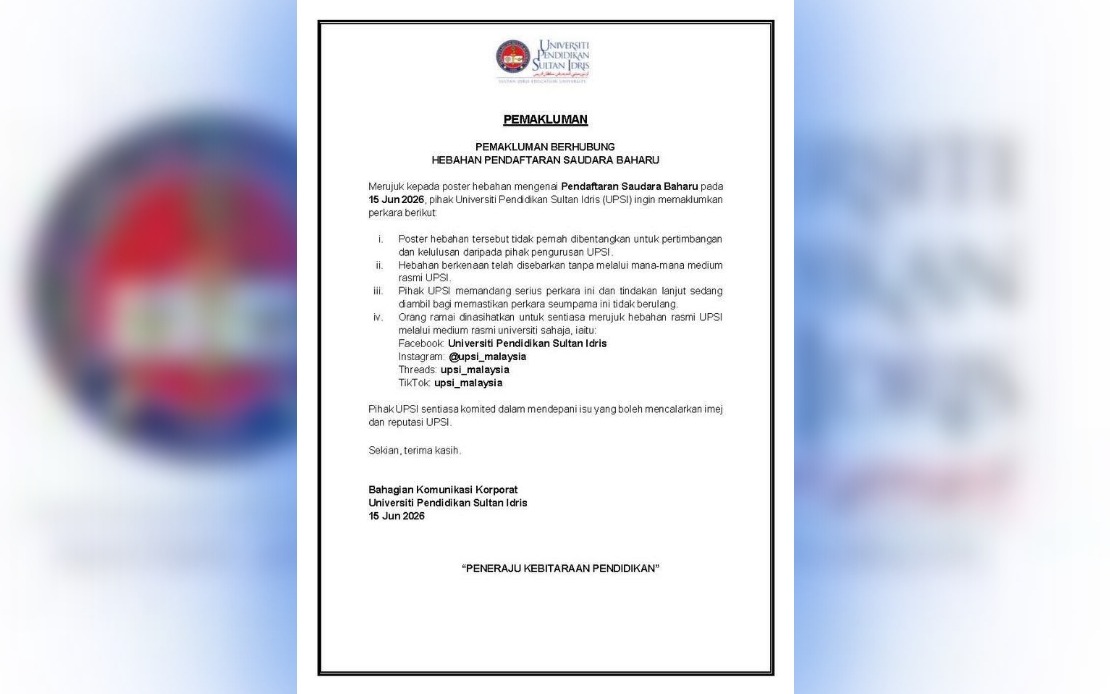
Universiti Pendidikan Sultan Idris (UPSI) has moved to distance itself from a poster concerning the registration of 'saudara baharu' or newly converted Muslims that garnered significant attention across social media platforms in recent days. The university issued a formal clarification through its official social media accounts to address public concerns and misinformation surrounding the matter.
The institution emphasised that the poster, dated June 15, never received formal submission to UPSI's administration for review or endorsement. According to the university's statement, the material circulated through informal channels without utilising any of UPSI's recognised official communication platforms, suggesting it was distributed by unauthorised parties claiming association with the institution.
UPSI's response reflects growing concerns among Malaysian universities about the misuse of their names and institutional credibility in digital spaces. The proliferation of misinformation and unverified content linked to educational institutions has become increasingly problematic, as online users frequently share materials without verifying their authenticity or official sanction. For universities with substantial alumni networks and student populations, such viral content can rapidly damage institutional reputation if left unaddressed.
The university indicated that it views the unauthorised dissemination of materials bearing its name as a serious breach of protocol and institutional integrity. Management committed to investigating how the poster came to be attributed to UPSI and to implementing measures that would prevent similar occurrences in future. The statement underscores the importance of institutional gatekeeping in an era where social media enables rapid, uncontrolled spread of information.
UPSI's clarification serves as a reminder to the Malaysian public of the necessity to verify information through official channels before accepting or sharing content purporting to come from government agencies or educational institutions. The university specifically advised the public to consult only UPSI's authorised announcement mediums when seeking authentic institutional communications, recognising that digital literacy and source verification remain critical skills in navigating contemporary information environments.
The incident also highlights vulnerabilities in how institutional names and logos can be appropriated in digital spaces. The ease with which social media enables the creation and distribution of material that superficially resembles official communications means that universities and government bodies must remain vigilant in monitoring their digital presence and responding swiftly to misattributed content. UPSI's prompt response demonstrates institutional awareness of the need for active reputation management.
For Malaysian universities more broadly, this episode underscores the importance of establishing clear protocols for staff communication and content approval. When unofficial materials circulate with an institution's apparent endorsement, it can confuse stakeholders and erode public trust in genuine institutional announcements. The challenge is particularly acute in Malaysia's diverse social and religious context, where sensitive topics relating to religious conversion require careful, thoughtful institutional handling.
The timing and nature of the viral poster suggest it may have been created by individuals seeking to leverage UPSI's institutional credibility for their own purposes. This represents a broader phenomenon whereby educational institutions become targets for those wishing to lend false authority to their initiatives. UPSI's swift denial and public clarification represent best practice in institutional crisis communication.
Moving forward, UPSI indicated its intention to strengthen internal mechanisms for monitoring and preventing unauthorised use of its name and branding. The university also reaffirmed its commitment to maintaining institutional integrity and protecting its reputation against both accidental misattribution and deliberate attempts at institutional impersonation. Such measures are increasingly necessary as social media platforms continue to enable rapid viral spread of unverified content.