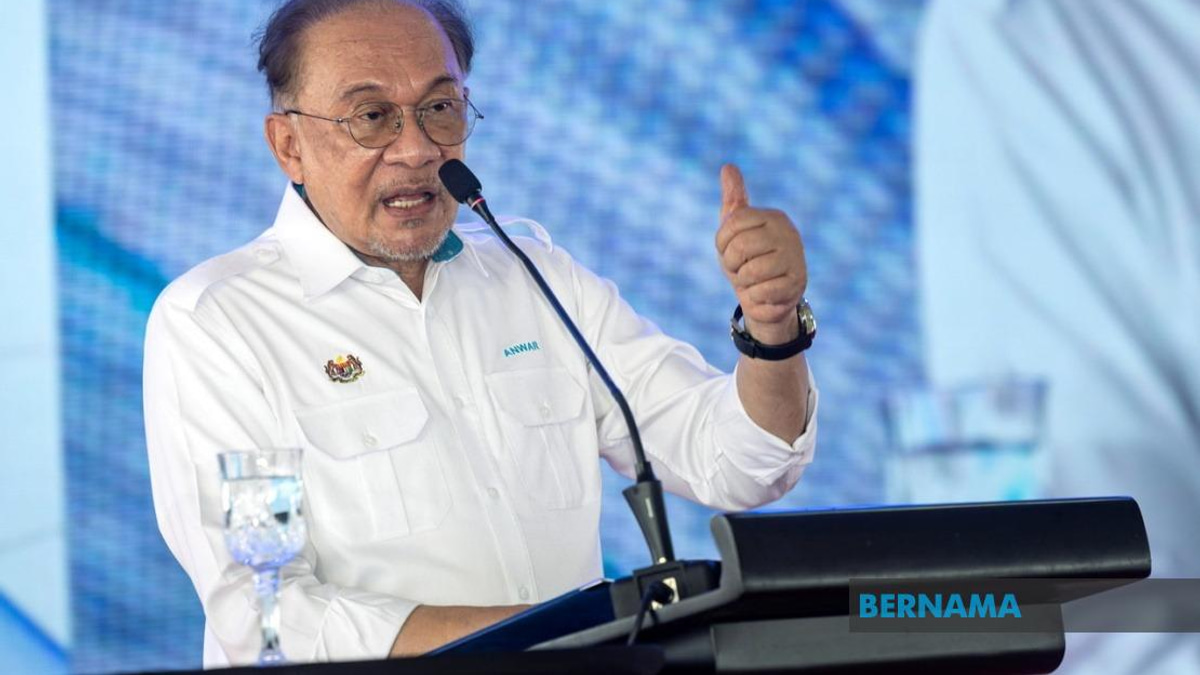
The United Kinabalu Progressive Organisation (UPKO) has formally joined the Gabungan Rakyat Sabah (GRS) coalition, marking a significant consolidation of local political forces in East Malaysia's largest state. The move, confirmed by UPKO president and Sabah Deputy Chief Minister Datuk Ewon Benedick, represents the party's commitment to advancing state governance under the leadership of Chief Minister Datuk Seri Hajiji Noor. With this accession, GRS now commands six component parties, positioning the coalition as the dominant political vehicle for Sabah-based interests in regional governance.
Ewon's statement emphasising UPKO's role in strengthening the coalition reflects deeper strategic calculations within Sabah's complex political ecosystem. By joining GRS, UPKO signals confidence in the administration's direction while simultaneously consolidating its own influence within the state framework. The Deputy Chief Minister's public appreciation toward Hajiji as GRS chairman underscores the collaborative approach necessary in managing coalition politics in a state where multiple local parties compete for relevance and resources. This choreography of formal acceptance and gratitude serves to legitimise both UPKO's entry and the broader coalition's governance mandate.
The significance of UPKO's move extends beyond simple arithmetic in party membership. Ewon articulated a distinctly localist vision, emphasising that GRS represents "the only coalition of local parties in Sabah" and positioning this characteristic as inherently superior to any broader national coalition arrangement. This rhetoric carries particular weight given Sabah's historical relationship with peninsular Malaysian politics, where concerns about adequate representation and protection of state interests have long animated local political discourse. By framing GRS as the "real home" for Sabah parties, Ewon appeals to a sense of regional identity and autonomy that resonates with voters concerned about the state's development trajectory.
The invocation of the Malaysia Agreement 1963 in Ewon's statement carries historical and constitutional significance that Malaysian readers, particularly those familiar with Sabah and Sarawak politics, will recognise immediately. The agreement, which established the terms under which Sabah joined the Malaysian federation, remains a foundational reference point for discussions about state autonomy and developmental rights in East Malaysia. By anchoring GRS's political platform in this historical document, the coalition frames its agenda as rooted in legitimate, constitutionally-grounded claims rather than mere partisan advantage. This approach appeals to a nationalist sentiment within Sabah that prioritises state-level interests within the broader Malaysian context.
GRS's expansion to six component parties demonstrates the coalition's capacity to attract smaller, regionally-focused political organisations. The existing membership—Parti Gagasan Rakyat Sabah, Parti Bersatu Sabah, Parti Liberal Demokratik, Parti Harapan Rakyat Sabah, and Parti Cinta Sabah—comprises parties with varying historical trajectories and bases of support within Sabah society. UPKO's addition to this constellation suggests that the coalition is successfully consolidating fragmented local political interests that might otherwise scatter across competing alliances. This consolidation carries implications for electoral competition in Sabah, where the ability to maintain coalition discipline and manage internal party dynamics directly influences governmental stability.
The vision that Ewon articulated—"Sabah First, Sabah Prosper, Sabah United"—represents a deliberately crafted political message designed to transcend factional divisions within the state. This tripartite formulation addresses economic aspirations, political cohesion, and regional pride simultaneously. For voters concerned with Sabah's developmental pace relative to peninsular states, the emphasis on prosperity carries tangible appeal. The insistence on unity serves as an implicit critique of opposition fragmentation while positioning GRS as the responsible steward of state interests. Such messaging resonates particularly in a state where infrastructural development and economic opportunity have historically lagged behind more developed regions of Malaysia.
From a broader Southeast Asian perspective, UPKO's move reflects wider trends in regional politics whereby local parties seek to maintain autonomy while integrating into larger coalitional structures. This pattern appears across Malaysia, Thailand, and the Philippines, where subnational political units negotiate complex relationships with national-level power structures. Sabah's experience demonstrates how geographically peripheral regions employ coalition politics to enhance bargaining power while preserving distinctive political identities. The success or failure of arrangements like GRS carries implications for how other regional powers within Malaysia manage centre-periphery relationships.
The timing of UPKO's formal acceptance also merits consideration within Sabah's electoral and political calendar. Coalition consolidation typically precedes competitive elections or serves to strengthen positions ahead of political uncertainty. By formalising UPKO's membership, GRS leadership may be preparing for future electoral challenges or positioning the coalition to weather potential internal dissensions. The formal acceptance process, rather than occurring ad hoc, suggests deliberate institutional development within GRS designed to ensure stability and coherence.
For Malaysian political observers tracking the evolution of Sabah governance, UPKO's integration into GRS represents a meaningful data point in understanding how state-level coalitions function. Unlike peninsular Malaysian politics, where national parties dominate state politics, Sabah's system allows greater space for genuinely local political organisations to exercise influence. This distinctive feature creates opportunities for regional parties to punch above their numerical weight, provided they navigate coalition dynamics effectively. UPKO's decision to formally join GRS, rather than maintain an informal alliance, suggests confidence in the coalition's institutional capacity to protect its interests while advancing state-level objectives.
The broader implications extend to questions about democratic representation and political competition in Malaysian states. When numerous small parties consolidate into larger coalitions, voters face simplified but potentially less diverse choices. Conversely, coalition consolidation can enhance governmental stability and reduce legislative fragmentation. In Sabah's context, where multi-party politics has historically produced frequent government changes and uncertainty, the GRS model represents an attempt to create more durable political structures. Whether this approach ultimately strengthens or constrains democratic contestation remains an open question that will become clearer as the coalition faces electoral tests.
Ewon's emphasis on UPKO's continued commitment to strengthening GRS suggests that party leaders view coalition membership as a long-term strategic partnership rather than temporary convenience. This orientation contrasts with the fluid coalition dynamics that have sometimes characterised Malaysian state politics, where parties shift allegiances with relative frequency. If GRS successfully maintains internal cohesion and delivers on its developmental promises, UPKO's entry may become a model for how other Sabah-based parties might consolidate around state-focused governance agendas. Conversely, if the coalition experiences internal strains or fails to advance Sabah's interests effectively, UPKO leaders may face pressure to reconsider their commitment, illustrating the conditional nature of coalition politics in Malaysia's distinctive regional contexts.

%22%2F%3E%3C%2Fpattern%3E%3C%2Fdefs%3E%3Crect%20width%3D%22100%25%22%20height%3D%22100%25%22%20fill%3D%22url(%23ph523ndg)%22%2F%3E%3Crect%20width%3D%22100%25%22%20height%3D%22100%25%22%20fill%3D%22url(%23ph523ndp)%22%2F%3E%3Ctext%20x%3D%2250%25%22%20y%3D%2250%25%22%20text-anchor%3D%22middle%22%20dominant-baseline%3D%22central%22%20fill%3D%22rgba(255%2C255%2C255%2C0.95)%22%20font-family%3D%22Georgia%2C%20'Times%20New%20Roman'%2C%20serif%22%20font-weight%3D%22700%22%20font-size%3D%22272%22%20letter-spacing%3D%22-0.02em%22%3EAnwar%3C%2Ftext%3E%3C%2Fsvg%3E)