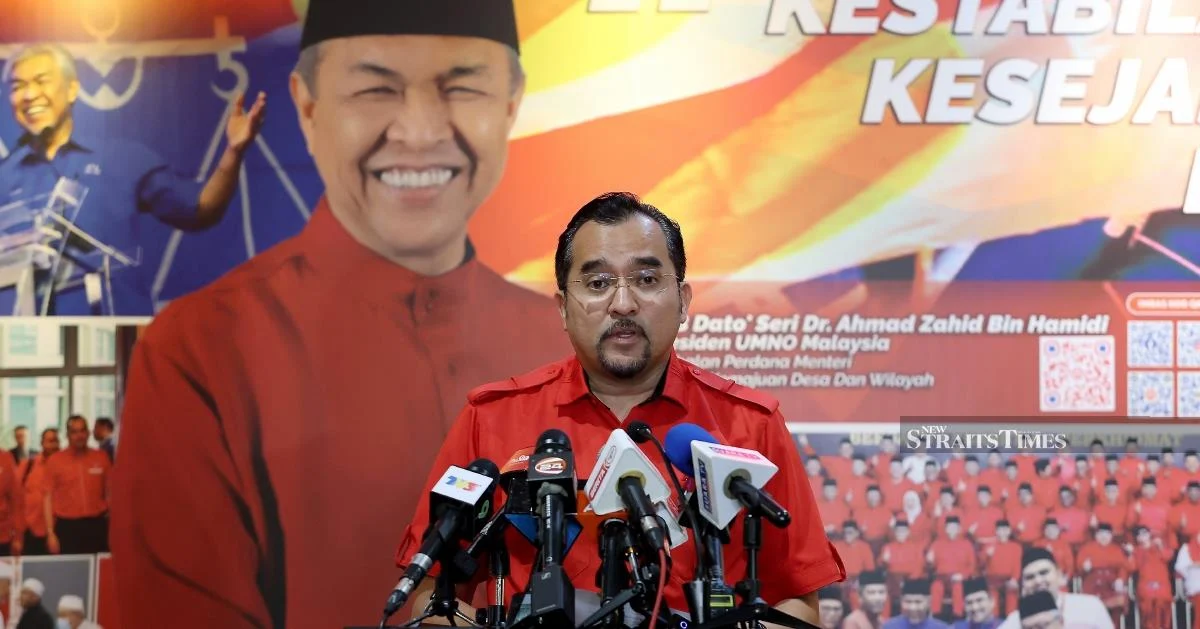
The Malaysia-focused wing of the Barisan Nasional coalition has signalled a shift towards substantive political discourse ahead of the closely-watched regional contests in Johor and Negri Sembilan, moving away from the character attacks that have increasingly defined recent electoral cycles across the country. Datuk Dr Asyraf Wajdi Dusuki, holding the influential position of party secretary-general, articulated this strategic repositioning during a statement in Kuala Lumpur, establishing a clear benchmark for how Umno intends to conduct its engagement with voters in these two states over the coming campaign period.
The pledge represents a notable commitment in Malaysia's contemporary political landscape, where divisive rhetoric and personal accusations have frequently dominated campaign messaging. By anchoring their approach to policy substance rather than personal attacks, Umno appears to be responding to voter fatigue with negative campaigning and attempting to rebuild public confidence in institutional politics. This tactical recalibration comes as the party seeks to consolidate its traditional voter base whilst potentially attracting swing voters who may have grown disillusioned with aggressive partisan posturing across the political spectrum.
For Johor, Malaysia's second-largest state and historically a crucial component of Barisan Nasional strength, the emphasis on deliverable policies carries particular weight. The state has experienced significant economic challenges in recent years, with local industries facing restructuring pressures and communities grappling with cost-of-living concerns. Umno's positioning of policy-focused messaging appears designed to address these tangible grievances head-on, offering concrete proposals rather than dwelling on opposition weaknesses or personal controversies surrounding rival politicians.
Negri Sembilan similarly represents a testing ground for this campaign methodology. The state has proven competitive in recent electoral cycles, with various coalitions demonstrating the capacity to mobilise support effectively. By concentrating on how Umno's governance approach and policy frameworks can substantively improve residents' living standards, the party is attempting to reframe electoral competition around achievement and vision rather than character assassination or past political controversies.
The strategic decision carries implications that extend beyond these two states. Malaysian politics has suffered from persistent concerns about institutional degradation and public cynicism, particularly following scandals and political upheaval that dominated the national conversation over the past decade. When major parties embrace more constructive campaign practices, they contribute incrementally towards restoring public perception of the political system itself as worthy of serious engagement rather than something to be approached with suspicion or disdain.
Umno's commitment to avoiding mudslinging also reflects recognition that younger voters, in particular, increasingly demand substance over spectacle. Digital-native populations have demonstrated lower tolerance for traditional negative campaigning tactics, preferring instead to engage with issues directly affecting their economic prospects, career opportunities, and quality of life. A campaign centred on policy offerings and tangible benefits provides a more compelling narrative for attracting these demographic segments than attacks on opposition figures.
The practical implementation of this pledge will require discipline across Umno's extensive party machinery and grassroots networks. Party members at all levels must internalise the emphasis on constructive messaging and resist the temptation to resort to personal attacks when confronted with opposition criticism. This represents a genuine test of institutional coherence and messaging consistency, particularly given the decentralised nature of Malaysian political parties and the difficulty in enforcing uniform communication standards across diverse membership bases.
Within the broader context of Malaysian federalism, these state elections carry significance for national political trajectories. Both Johor and Negri Sembilan constitute component parts of the national political firmament, and electoral results here will provide crucial signals regarding voter sentiment towards Barisan Nasional's current direction, the viability of opposition alternatives, and the electorate's receptiveness to different campaign styles and policy frameworks. Success with positive messaging in these contests could influence how other political actors approach future electoral engagements.
The timing of Umno's announcement suggests strategic calculation regarding public mood and expectations. As voters become increasingly saturated with negative messaging across media platforms and social networks, embracing a cleaner campaign approach positions Umno as the party willing to engage voters as mature citizens capable of understanding complex policy tradeoffs rather than the object of emotional manipulation. This rebranding carries potential electoral benefit by creating clear differentiation if opposition parties continue with more aggressive tactics.
Implementation challenges remain significant, however. Umno's extensive history in national governance provides ample material for opposition scrutiny and criticism, and maintaining discipline when faced with pointed questions about past performance requires strategic messaging sophistication. The party must develop substantive policy articulations that address local concerns whilst avoiding defensive posturing when confronted with legitimate criticisms of previous record or current capacity.
The broader implications for Malaysian democracy merit attention. When major parties commit to elevating campaign standards and centring discussion on governance questions rather than personal attacks, the entire political ecosystem benefits from improved institutional health. Such commitments, when credibly implemented, can gradually shift cultural expectations around political discourse and restore public confidence in the democratic process as a mechanism for constructive problem-solving rather than factional warfare.