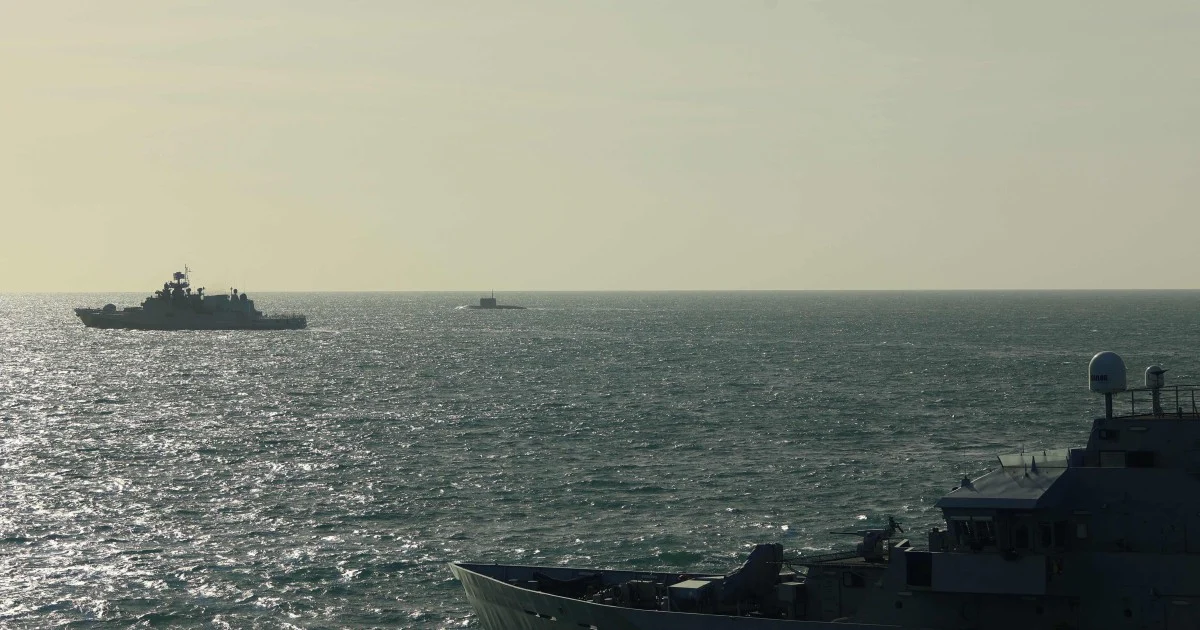
British Prime Minister Keir Starmer has characterised a Russian warship's firing of warning shots near a private yacht in the English Channel as reckless rather than a deliberately hostile act, offering a measured assessment of an incident that highlights the persistent friction between London and Moscow over maritime activities. The Prime Minister's comments on Wednesday represent an attempt to contextualise the episode within a broader pattern of concerning behaviour while stopping short of labelling it as a deliberate escalation tactic.
The distinction Starmer drew between recklessness and sinister intent carries significant implications for how Britain frames its relationship with Russia during a period of heightened geopolitical tension. By emphasising the former characterisation, the government signals that it views the incident as stemming from aggressive operational conduct rather than a calculated move to provoke confrontation. This calibrated response reflects the diplomatic balancing act required when addressing maritime incidents that could otherwise spiral into more serious diplomatic confrontations between nuclear-armed adversaries.
The English Channel remains one of the world's busiest shipping lanes and has become an increasingly contested space for naval power projection between Russia and Western nations. The incident involving the Russian warship and the yacht underscores the vulnerability of civilian vessels navigating these waters, where military assets from different nations frequently operate in close proximity. For Malaysian and regional observers, such events demonstrate how even in distant European theatres, the management of maritime disputes between major powers sets precedents that influence international norms regarding naval conduct and civilian ship safety.
Russia has maintained a consistent presence in the English Channel and surrounding waters over recent years, conducting both military exercises and routine naval movements that Western nations view with increasing concern. These operations have accelerated since Moscow's full-scale invasion of Ukraine in 2022, with Russian vessels frequently testing the boundaries of international maritime law and Britain's naval response capabilities. The pattern of warning shots and aggressive manoeuvres represents part of a broader Russian strategy to assert maritime claims and challenge Western naval dominance in waters they consider strategically significant.
The choice of language by Starmer reflects the broader British government strategy of documenting Russian behaviour while avoiding rhetoric that could be construed as provocative. Rather than using inflammatory terminology, the Prime Minister positioned the incident within a framework that acknowledges seriousness without implying intentional escalation. This approach allows Britain to register formal complaints through diplomatic channels while preserving opportunities for dialogue and reducing the risk of unintended miscalculation that could result from mutual misinterpretation of military actions.
From a regional perspective, the incident carries relevance for Southeast Asian nations that navigate their own complex maritime relationships with major powers. Malaysia and its neighbours understand intimately the challenges of managing shipping routes and maritime zones where geopolitical tensions can manifest through naval operations. The principles of restraint and calibrated response that Britain attempts to demonstrate, despite the obvious frustration with Russian conduct, offer lessons in maintaining stability even amid serious underlying disputes.
Warning shots fired at civilian vessels represent a particularly concerning escalatory tool because they blur the line between routine military operations and acts that could be construed as aggressive under international maritime law. The fact that the Russian warship chose to fire warning shots rather than simply altering course or issuing radio warnings suggests a deliberate decision to create a high-tension encounter. However, Starmer's characterisation as reckless rather than sinister implicitly acknowledges that the Russians stopped short of actually targeting the vessel or attempting to damage it.
The incident must be situated within the context of ongoing British military support for Ukraine and NATO's expanding presence in the Baltic and North Seas. Russia perceives these developments as encroachment on its sphere of influence, and maritime provocations represent one means through which Moscow can signal dissatisfaction and assert its capacity to impose costs on Western naval operations. The warning shots fired near the English Channel yacht fit into this pattern of behaviour, serving as both a tactical manoeuvre and a political message.
London faces pressure from various quarters to respond more forcefully to Russian provocations, yet Starmer's measured language suggests the government believes that escalatory rhetoric or military responses would prove counterproductive. The balance between demonstrating resolve and avoiding unnecessary confrontation remains delicate, particularly when civilian vessels could become casualties of miscalculation. Britain's approach therefore attempts to document incidents thoroughly while pursuing diplomatic remedies through established international channels.
For the broader international community observing Anglo-Russian relations, the incident illustrates how despite profound disagreements and military tensions, even adversaries maintain unwritten rules regarding the threshold beyond which confrontation should not proceed. The Russian warship's decision to fire warning shots rather than escalate further, combined with Britain's refusal to characterise the action as sinister, suggests both sides retain some investment in preventing open military conflict. These unspoken restraints become increasingly important as the Ukraine war drags on and mutual suspicion deepens.
The implications for maritime security in the English Channel and surrounding waters remain concerning. Commercial shipping companies and private vessel operators must now contemplate the genuine risks posed by Russian naval assets in European waters. The incident serves as a reminder that geographical distance from Asian waters does not make European maritime security crises irrelevant to countries like Malaysia, which depend on maintaining freedom of navigation and predictable maritime conduct from all powers throughout international waters.
Government officials in London are expected to lodge formal protests through appropriate diplomatic channels, documenting the incident as part of a growing record of Russian maritime aggression that could ultimately influence defence policy and alliance relationships. The measured response announced by Starmer nonetheless signals that despite frustration and legitimate security concerns, Britain continues to distinguish between genuinely reckless behaviour and behaviour that crosses into deliberate hostility, a distinction that preserves diplomatic space for future de-escalation if circumstances change.