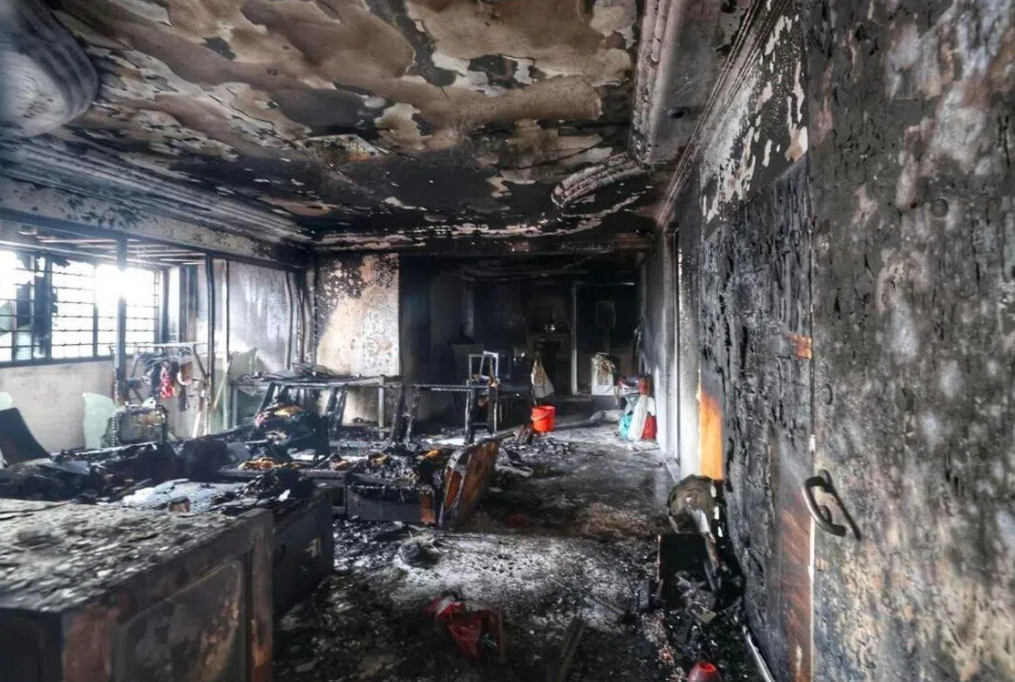
A residential fire in Singapore's Jurong West district in the pre-dawn hours of June 17 required emergency intervention to save two occupants from a high-rise flat, highlighting the persistent risks posed by electrical hazards in densely-populated public housing. The Singapore Civil Defence Force (SCDF) received its emergency call at approximately 3.35am that morning, dispatching crews to Block 842 Jurong West Street 81, where thick smoke was already billowing from a 13th-storey unit. Upon reaching the scene, firefighters discovered the living room engulfed in flames and immediately entered the smoke-filled space to combat the blaze, ultimately extinguishing it using a high-pressure water jet.
The fire's origins appear rooted in an electrical malfunction within the unit's living room, according to preliminary investigations conducted by the fire safety authorities. This finding underscores a recurring concern across Singapore's HDB estates, where aging electrical infrastructure and the proliferation of household appliances create vulnerability to such incidents. The affected family of four, which included the two individuals who required rescue, were all conveyed to Singapore General Hospital for medical treatment. Beyond the primary victims, approximately 40 other residents living in neighbouring units were evacuated as a protective measure, disrupting their early morning and forcing temporary displacement from their homes.
The incident unfolded in darkness while the family slept, leaving them particularly vulnerable to the rapidly spreading smoke and flames. It was an 18-year-old student residing directly above the burning unit who proved instrumental in preventing a potentially more catastrophic outcome. The teenager, still awake and engaged in gaming at that pre-dawn hour, detected an unusual smell and noticed smoke seeping upward through the floor and windows of the unit below. Rather than remaining passive, the young man took decisive action, descending to the affected floor and forcefully knocking on doors to arouse sleeping neighbours and signal the urgent need for evacuation.
The student's account provides a visceral picture of the fire's intensity and its impact on residents. He described the door to the burning unit as extremely hot to the touch, a clear danger signal that prompted his increasingly urgent knocking. Upon returning to his own residence to alert his family, the teenager witnessed a woman from the affected unit appearing at his door in distress, her hair singed and face blackened by soot, requesting towels ostensibly to treat injuries. He also observed a man whose back and arms displayed severe burn injuries marked by bright red colouration, evidence of the thermal trauma inflicted by the uncontrolled blaze. The student's mother subsequently contacted police and the SCDF, setting in motion the official emergency response that would ultimately save lives.
The intervention proved timely. By the time SCDF personnel arrived and suppressed the flames, the situation had reached a critical stage where two occupants required rescue from the smoke-filled environment. The building itself bore the scars of the conflagration: when journalists from Lianhe Zaobao visited the location around 4pm that day, the walls and ceiling of the unit remained heavily blackened by soot, and the windows had shattered from the intense heat. A 12th-floor resident corroborated the severity of the response, reporting that at least five fire engines had been positioned outside the block, a deployment level reflecting the gravity with which authorities treated the emergency.
Electrical fires represent a significant and growing challenge within Singapore's residential landscape. The SCDF's statistical data released in February revealed a concerning upward trajectory in fire incidents, with the total number rising 3 per cent from 1,990 incidents in 2024 to 2,050 in 2025. Of particular concern was the concentration of these fires in residential buildings, where 1,051 of the 2,050 fires occurred—more than half of all incidents. This data suggests that the Jurong West fire, while dramatic, reflects a broader pattern of residential fire risk that demands sustained attention and preventive action at both household and systemic levels.
In response to recurring electrical fire incidents, the SCDF has issued comprehensive guidance to the public on mitigating electrical hazards within homes. A primary recommendation centres on the dangers of electrical outlet overloading, a common practice in space-constrained HDB units where multiple appliances compete for limited power points. The agency strongly advocates for the complete disconnection of electrical devices when not in active use, reducing both energy consumption and fire risk. Equally important is the insistence that residents utilise only appliances and electrical components bearing the Safety Mark, a certification credential issued by Singapore's Consumer Product Safety Office that indicates compliance with rigorous safety standards and testing protocols.
Battery and device management practices have emerged as an additional area of concern, particularly as consumer reliance on rechargeable gadgets has expanded dramatically. The SCDF explicitly warns against leaving batteries and electronic devices charging overnight or for extended periods, a habit many residents adopt for convenience but one that significantly elevates fire risk when charging systems malfunction or overheat. These preventive measures, while straightforward, require consistent public awareness and behavioural change across diverse demographic groups with varying levels of fire safety literacy.
For Malaysian readers, the Jurong West incident and the broader Singapore fire statistics carry instructive implications. Malaysia's own high-rise residential sectors, particularly in Kuala Lumpur, Selangor, and other urban centres, face comparable electrical infrastructure challenges and similar patterns of household appliance proliferation. The incident demonstrates the critical value of community vigilance and rapid response protocols—the teenage neighbour's decision to actively warn others rather than dismiss the smoke as a minor concern likely prevented fatalities. Additionally, the fire underscores the importance of regular electrical safety audits within residential buildings, something that should be prioritised by both building management corporations and homeowners' associations throughout Malaysia. The convergence of ageing infrastructure, high population density, and the constant addition of new electrical demands creates conditions where such incidents remain probable, making proactive safety measures not merely advisable but essential for residential security in the region.