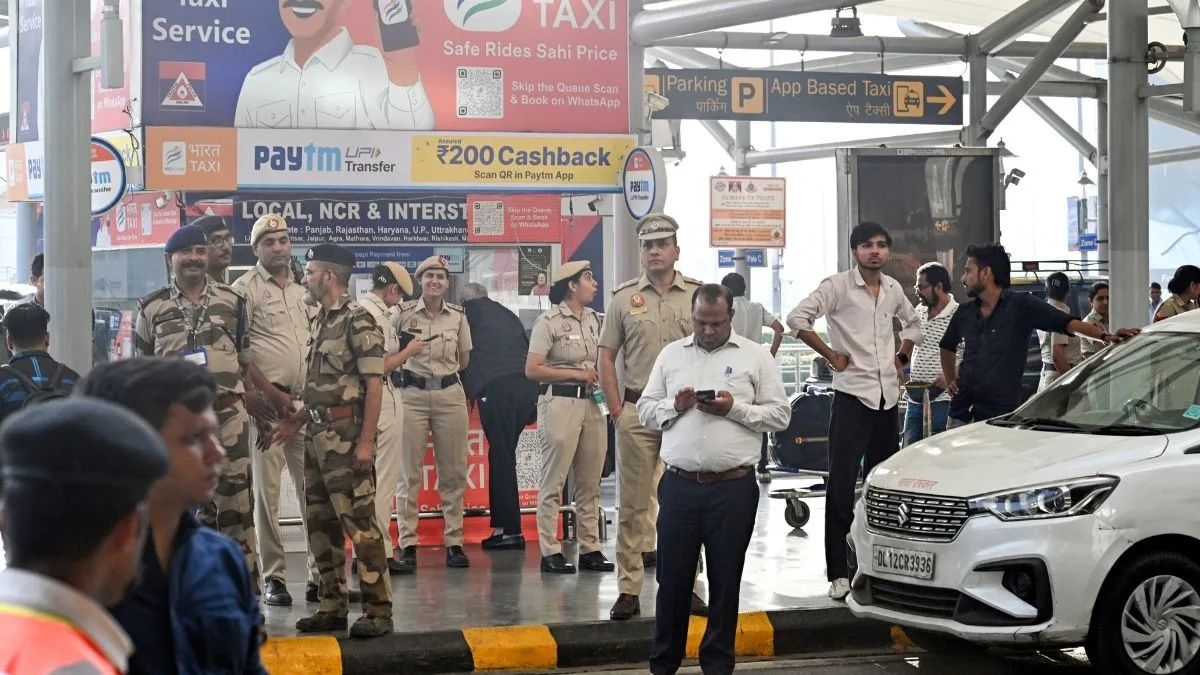
Punjab Police, working jointly with central security agencies and Malaysia's Royal Police Force, has successfully secured the deportation and arrest of two individuals suspected of operating for the banned Khalistan Zindabad Force. The pair was taken into custody upon landing at Delhi's Indira Gandhi International Airport following coordinated action between Indian and Malaysian authorities. The operation underscores growing international cooperation in combating cross-border terror financing and the sophistication of networks attempting to channel funds for destabilising activities in northern India.
According to Punjab's Director General of Police Gaurav Yadav, the action represents a significant breakthrough in dismantling overseas support structures allegedly funnelling resources to terror modules within Punjab. The intelligence-led operation targets what authorities describe as a sprawling network of handlers and financiers positioned across multiple countries to facilitate violent activities. The arrests reveal how terror financing has evolved beyond simple cash transfers to include sophisticated use of foreign banking channels and accounts to obscure the movement of funds.
The two arrested men—Gurvinder Singh from Ambala and Manjit Singh from Patiala—are alleged to have orchestrated financial support and coordinated operational activities for the banned organisation from their base in Malaysia. Investigators claim the duo played a central coordinating role, leveraging their overseas position to maintain communication between financiers abroad and operatives conducting activities within Punjab. Their arrests come after months of financial investigation that traced money flows back to foreign sources, prompting authorities to look beyond state borders for the network's architects.
The investigation into these two men emerged from Punjab Police's broader probe into terror incidents targeting critical infrastructure. In January, an improvised explosive device detonated near Sirhind in Fatehgarh Sahib district, while April witnessed an attempted explosion near Shambhu in Patiala. Both incidents bore hallmarks of coordinated terror activity, prompting authorities to dissect the financial chains sustaining these operations. As investigators worked backwards from these incidents, a complex picture emerged of international involvement in planning and funding such attacks.
The material recovered during searches tells a sobering story of the sophistication available to terror modules. Police seized an RPG launcher, multiple IEDs, quantities of RDX explosive compound, hand grenades, and sophisticated pistols alongside ammunition. The scale and quality of weaponry suggests access to well-funded procurement networks capable of sourcing military-grade equipment. Tracing the financial pathways that enabled acquisition of such arsenals proved instrumental in uncovering the Malaysia connection and identifying Gurvinder Singh and Manjit Singh as key actors in the supply chain.
Financial investigations represent a critical juncture in this case. Police determined that funds flowing to terror operatives in Punjab were routed through foreign channels rather than moving through domestic banking systems where detection would be simpler. This deliberate layering of financial transactions across international borders reflects the operational sophistication of the network. The use of overseas accounts and cross-border money movement created distance between financiers and beneficiaries, complicating law enforcement's ability to establish direct liability. The breakthrough came when authorities managed to connect suspicious fund flows with specific individuals in Malaysia.
The alleged coordination between Malaysia-based handlers and Punjab operatives demonstrates how terror networks have become increasingly globalised and professionalised. Rather than operating as isolated cells, these groups now function as interconnected units with clear division of labour—financiers handling money in one country, coordinators managing communications in another, and field operatives executing attacks in the target location. This international architecture allows for insulation of key financial actors from direct involvement in violent activities, making prosecutions more legally complex while increasing overall network resilience.
For Malaysia, the deportation of these individuals highlights the country's growing role in investigations into South Asian security matters. The Royal Malaysia Police's cooperation demonstrates Kuala Lumpur's willingness to work with New Delhi on counter-terrorism, though the presence of terror suspects in Malaysia also raises questions about enforcement of counter-terrorism provisions and monitoring of financial transactions originating from the country. Malaysia's geographic position as a trading hub and financial centre makes it potentially attractive to networks seeking to route funds through legitimate commercial channels.
Following their arrival in India, both men were produced before a Patiala court, which remanded them into police custody for extended questioning. This custody period will likely focus on extracting details about the wider network structure, identifying other operatives involved in financing or planning, and tracing the full extent of financial transactions. Police are particularly interested in mapping the web of handlers, financiers, and facilitators operating internationally in support of the banned organisation. Each individual connection uncovered potentially opens new investigative pathways.
Punjab Police's statement indicates that investigation into the case extends well beyond these two arrests. Authorities are actively pursuing leads to identify additional network members and trace complete operational chains from financiers through coordinators to field operatives. The investigation has evidently become a multi-layered operation spanning international borders and multiple security agencies. Success in this effort would represent not merely the disruption of one terror-financing pipeline but the mapping of structural vulnerabilities in how terror networks organise themselves internationally.
The broader implications for security in Punjab and the wider region are considerable. That terror operatives can access military-grade weapons and substantial funding while operating from overseas represents an ongoing security challenge. The transnational nature of the network suggests that counter-terrorism strategies focused solely on within-state borders will inevitably prove incomplete. Intelligence sharing arrangements and deportation cooperation between countries become essential, yet also highlight the complexities of prosecuting individuals who may not have physically conducted attacks but facilitated them from abroad.
For Malaysia's government and security establishment, these developments underscore the importance of continued vigilance regarding the use of Malaysian territory for supporting terror activities elsewhere. While cooperation with Indian authorities has resulted in deportations, the underlying question of how such networks established themselves in Malaysia in the first place requires examination. Regional cooperation mechanisms will likely become increasingly important as terror networks continue exploiting geographical advantages and porous financial systems to support cross-border activities.

%22%2F%3E%3C%2Fpattern%3E%3C%2Fdefs%3E%3Crect%20width%3D%22100%25%22%20height%3D%22100%25%22%20fill%3D%22url(%23ph523ndg)%22%2F%3E%3Crect%20width%3D%22100%25%22%20height%3D%22100%25%22%20fill%3D%22url(%23ph523ndp)%22%2F%3E%3Ctext%20x%3D%2250%25%22%20y%3D%2250%25%22%20text-anchor%3D%22middle%22%20dominant-baseline%3D%22central%22%20fill%3D%22rgba(255%2C255%2C255%2C0.95)%22%20font-family%3D%22Georgia%2C%20'Times%20New%20Roman'%2C%20serif%22%20font-weight%3D%22700%22%20font-size%3D%22272%22%20letter-spacing%3D%22-0.02em%22%3EAnwar%3C%2Ftext%3E%3C%2Fsvg%3E)