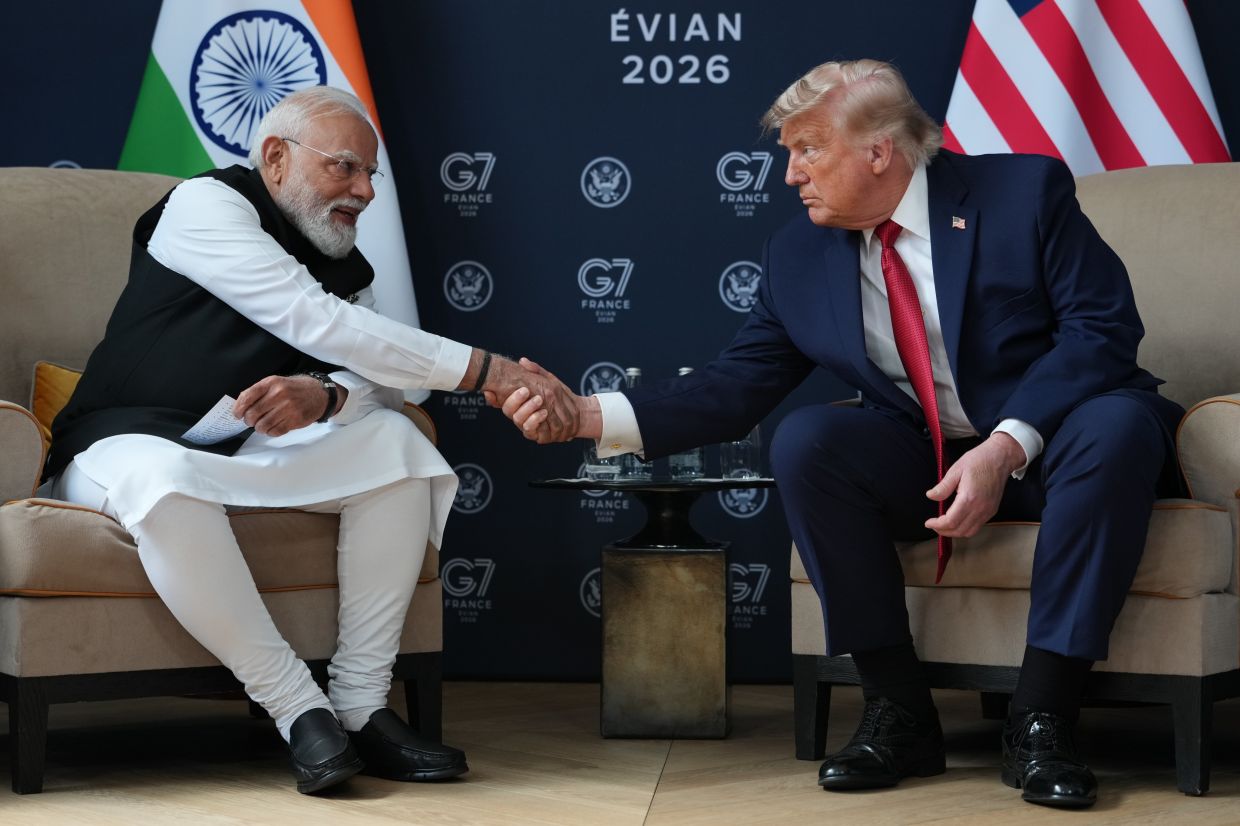
President Trump has declined to offer condolences or express regret regarding the deaths of three Indian sailors following a US military strike on a commercial vessel, instead characterising maritime operations as an inherently hazardous profession. Speaking to journalists after his first bilateral meeting with Prime Minister Narendra Modi in 16 months, Trump acknowledged he was aware of the incident but offered no apology, stating that "this has been happening throughout time" and emphasising that both nations continue to work together on the matter.
The three Indian nationals were killed when American forces fired missiles at the MT Settebello, a Palau-flagged commercial vessel, which US Central Command justified as enforcement of its blockade on Iranian port operations in the Strait of Hormuz. In addition to this fatal strike, US forces targeted two other merchant ships carrying Indian crew members on identical grounds, intensifying diplomatic friction between New Delhi and Washington just as the two countries were attempting to deepen their strategic partnership through trade negotiations.
India's External Affairs Minister Subrahmanyam Jaishankar conveyed strong protest over the killings during a phone conversation with US officials, yet the State Department's official readout of that exchange revealed the underlying tension between the two positions. Rather than acknowledging concerns about civilian casualties, the American side reiterated its position that "violations of the US blockade and the illicit transport of Iranian oil will not be tolerated," effectively doubling down on the rationale for the strikes rather than addressing Indian grievances about the loss of life.
The American stance triggered significant public backlash across India, with grassroots expressions of anger directed at the US administration. Videos circulated online showing auto rickshaw drivers in Delhi removing Trump posters from their vehicles—banners that had been part of the US embassy's promotional campaign featuring birthday wishes for America alongside the president's image. The rapid dismantling of these symbols reflected genuine frustration at what many Indians perceived as an insensitive American response to the deaths of their fellow citizens.
Political opposition within India seized on the incident to challenge Prime Minister Modi's handling of the relationship. Rahul Gandhi, a prominent opposition leader, publicly criticised the government for what he characterised as excessive deference to Washington, posting on social media that "a free country would never tolerate such language." Gandhi accused Modi of being "compromised" and suggested the government was functioning as an "obedient servant" complying with American directives rather than defending Indian interests robustly.
Despite these tensions, Trump sought to minimise the dispute during his press conference, emphasising the strength of the bilateral relationship. He stated that the US and India operate without a formal mutual defence treaty but claimed Washington would nonetheless support New Delhi if attacked, adding that the relationship between himself and Modi had reached unprecedented closeness. The president characterised their connection as the foundation for broader US-India cooperation, suggesting personal chemistry was transcending specific policy disagreements.
The bilateral meeting comes at a critical juncture for trade negotiations between the two countries. Trump and Modi previously met in February 2025 in Washington, where discussions began toward formalising a comprehensive bilateral trade agreement, positioning India among the first nations to enter formal negotiations with the new American administration. Those talks aimed to restructure economic relationships and create a framework reflecting the two countries' strategic interests in the Indo-Pacific region.
Current negotiations focus on finalising an interim trade deal, with discussions continuing under the direction of US Trade Representative officials. Trump took the opportunity during his remarks to praise Modi as both a "tough trader" and a "great guy," suggesting negotiations remained cordial at the leadership level even as the underlying diplomatic crisis festered. He also indicated plans to visit India in the future, signalling that despite the immediate friction, Washington intended to pursue deepening engagement.
Secretary of State Marco Rubio has already visited India separately, characterising the nation as one of America's "most important strategic partners" and attempting to reinforce the bilateral relationship through high-level diplomatic engagement. This parallel diplomatic initiative appeared designed to insulate the broader strategic partnership from the damage caused by the maritime incident, though the timing raised questions about whether such engagement represented genuine commitment or damage control in response to Indian public anger.
The incident exposes underlying tensions within the US-India relationship that transcend the immediate trade negotiations or strategic cooperation frameworks. While both governments appear committed to building closer ties—reflected in discussions about the Quad security arrangement involving Japan, Australia, and India—the willingness of American forces to pursue Iranian oil interdiction operations without regard for Indian casualties suggests Washington prioritises its Middle East strategy over potential collateral impact on Indian interests. For India, navigating this partnership requires balancing genuine strategic benefits against the political costs of appearing subordinate to American military actions.
For regional observers, the episode underscores how superpower relationships operate differently than those among smaller nations, with structural asymmetries often determining outcomes regardless of official statements of partnership. India's capacity to absorb such incidents without fundamentally reorienting its foreign policy reflects its assessment that US cooperation remains strategically valuable despite occasional diplomatic friction. The contrast between Trump's dismissive public comments and the continuation of trade negotiations suggests both sides have calculated that short-term controversy will not derail longer-term objectives, even if such calculations risk eroding public support in India.