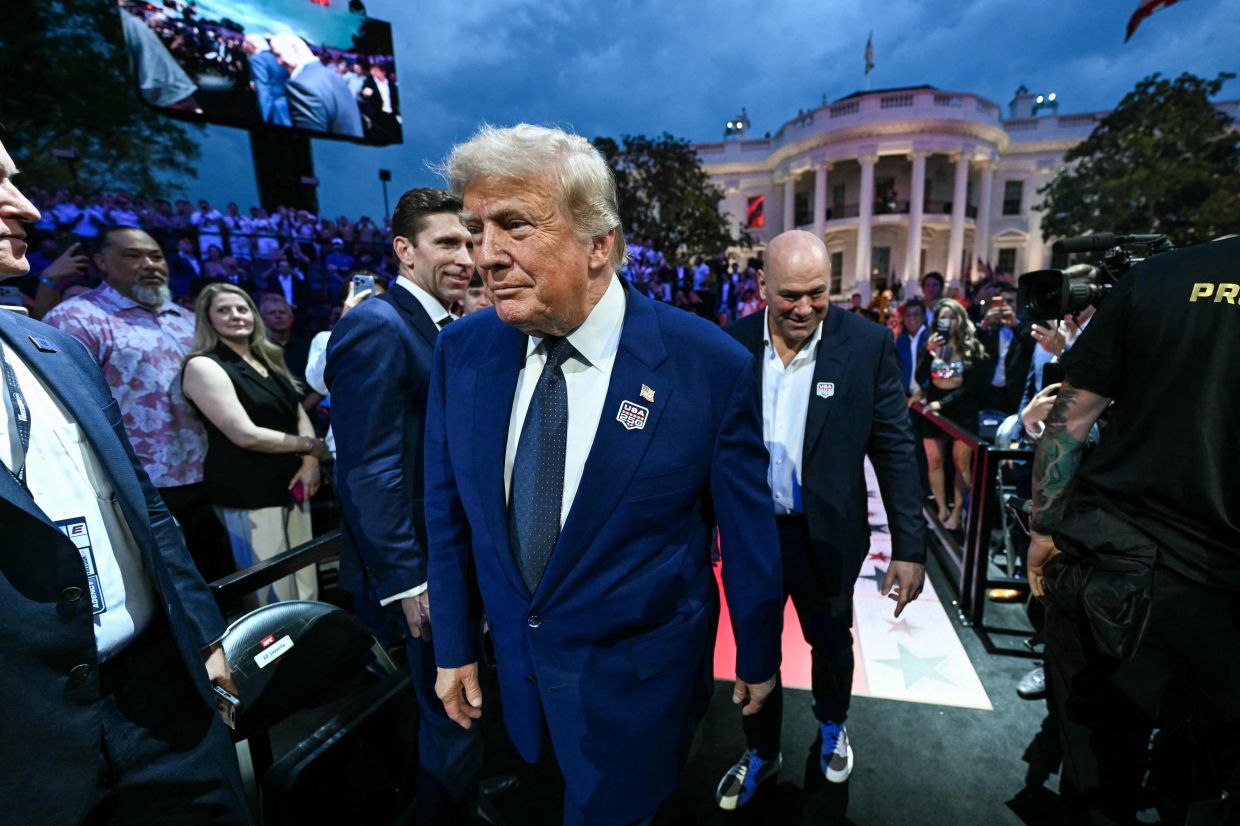
On his 80th birthday, Donald Trump bypassed traditional festivities for a spectacle more aligned with modern entertainment—bringing the Ultimate Fighting Championship to the White House South Lawn on Sunday evening. The event, billed as part of celebrations marking the 250th anniversary of the United States, represented an unconventional use of the executive residence and reflected how contemporary political figures court younger demographics through non-traditional venues and entertainment.
The UFC Freedom 250 event commenced just before 8:30pm, with Trump and UFC President Dana White making their entrance as the seven cage matches prepared to begin. A nearly 100-foot structure nicknamed the "Claw" dominated the South Lawn, dwarfing previous temporary installations and towering above the White House itself. The scale of the construction—larger than even the Eiffel Tower by Trump's estimation—underscored the ambition of the undertaking. Weather initially threatened the proceedings, with lightning and thunder affecting the nation's capital, but the event ultimately proceeded as scheduled.
The gathering drew an impressive roster of attendees from business and government sectors. Meta Platforms CEO Mark Zuckerberg, Paramount Skydance CEO David Ellison, and Treasury Secretary Scott Bessent were among those present, alongside members of Trump's family. The commentary was provided by Joe Rogan, the podcast host whose audience skews toward younger male listeners—a demographic that proved instrumental in Trump's 2024 election victory. Military personnel occupied seats throughout the venue, with coverage cutting to watch parties stationed across various military bases, including installations in Okinawa, Japan. Medal of Honor recipients and first responders held the distinction of escorting fighters into the arena.
The event's logistics were substantial by any measure. UFC reportedly invested over US$60 million to stage the competition, while court filings revealed that more than seven federal agencies allocated significant resources and manpower toward execution. The main arena accommodated 4,300 spectators, though organisers anticipated an additional 120,000 spectators gathering at the nearby Ellipse, where complimentary tickets were distributed through a lottery system. The White House maintained that UFC covered all event costs and managed sponsorship arrangements independently, yet the federal resources deployed suggest considerable government involvement beyond mere venue provision.
The event proved controversial among the American public. A YouGov poll released in early June found that 51 percent of surveyed Americans disapproved of the White House fight, whilst only 27 percent approved. A lawsuit filed by the Public Integrity Project characterised the event as a "volcano of corruption," attempting unsuccessfully to halt the proceedings before they commenced. Despite White's assertions that the event would operate at a loss for the UFC, the scale of expenditure and sponsorship involvement suggested significant commercial interest underlying the spectacle.
Corporate backing came from notable sources including the cryptocurrency platform Crypto.com and the Dodge Ram truck brand. More intriguingly, World Liberty Financial—a Trump family venture—contributed an additional US$250,000 bonus pool for the top two fighters competing at the event. This arrangement highlighted the blurred lines between presidential entertainment and private business interests, a distinction that animated critics' concerns about the propriety of staging such an event at a public building.
The pre-competition activities themselves reflected the ambition of the broader celebration. White and the fighters conducted their news conference at the Lincoln Memorial, one of America's most symbolically significant structures. Fighters traded insults and boasted of their anticipated victories in this hallowed setting, transforming a space traditionally associated with civil rights speeches and solemn remembrance into a promotional venue for combat sports. Fighter Michael Chandler acknowledged the historical weight of the moment, expressing his intention to display "the best version of" himself "on the White House lawn for America's 250th birthday."
The logistical footprint extended throughout the White House complex itself. Locker rooms were established on the grounds, including within the Indian Treaty Room, a space customarily reserved for official state functions and diplomatic occasions. The South Lawn, which historically hosted more decorous events such as the Easter Egg Roll and Congressional Picnic, underwent transformation into a combat sports venue. Former President Joe Biden had erected a temporary ice rink on the same location, but the scale and intensity of the current installation eclipsed previous modifications by a substantial margin.
Trump's remarks about potentially leaving the Claw in place permanently generated considerable media attention. In a June 2 TikTok video, he suggested the structure was "quite attractive to a lot of people" and speculated that it might remain indefinitely. The president later claimed these remarks were made in jest, though court filings indicated the administration's commitment to dismantling the structure beginning at 10am Monday—conveniently as Trump prepared to depart for France to meet with Group of Seven leaders. The UFC championship belt, according to the company, would accompany him on the journey.
The event represents a significant moment in American presidential tradition and the evolving relationship between political leadership and popular entertainment. The UFC's young, predominantly male fanbase constituted a crucial demographic supporting Trump's 2024 election victory, and his administration has reciprocated by embracing the organisation through State Department and Federal Bureau of Investigation partnership agreements. The White House event functioned simultaneously as entertainment, political theatre, and corporate showcase, illustrating how contemporary presidents mobilise cultural institutions to reinforce their political messaging and consolidate support among key voter segments.
For Malaysian and Southeast Asian observers, the spectacle offers insight into how American political culture has transformed over recent decades. The normalisation of commercial entertainment at the highest levels of government, the mobilisation of celebrity and business figures to validate political projects, and the substantial allocation of public resources toward private entertainment ventures reflect patterns increasingly visible across democracies grappling with the influence of wealth, celebrity, and digital media in shaping political discourse and legitimacy.