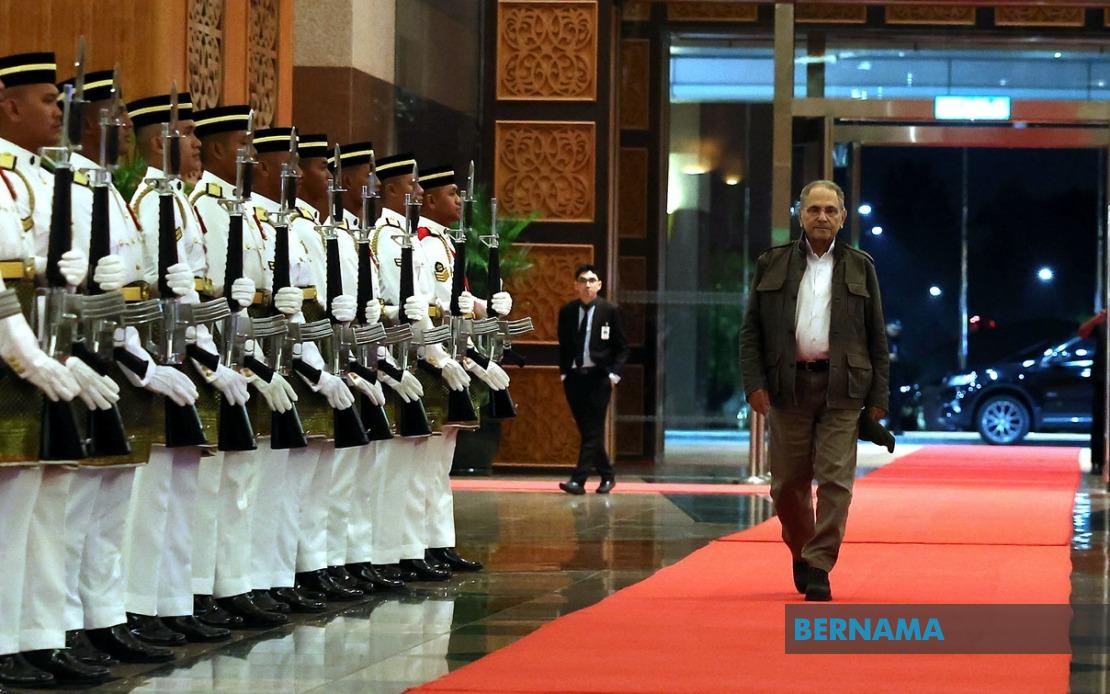
Timor-Leste President Jose Ramos-Horta departed Malaysia early today, concluding a five-day diplomatic mission that underscored the growing strategic relationship between the two Southeast Asian nations. The Nobel Peace Prize laureate boarded a Batik Air flight from Kuala Lumpur International Airport Terminal 1 at 2.15 am, marking the formal end of an engagement focused on deepening bilateral cooperation and reinforcing Malaysia's role in supporting Timor-Leste's regional integration.
The visit represented a significant moment in Malaysia-Timor-Leste relations, coming less than a year after Timor-Leste secured its long-awaited membership in ASEAN as the bloc's 11th member on October 26, 2025. Ramos-Horta's presence in Kuala Lumpur carried particular weight given Malaysia's recent tenure as ASEAN chair and its instrumental backing of Timor-Leste's accession bid. The President's high-profile visit signals that both nations view their partnership as foundational to regional stability and development in a period of geopolitical uncertainty across Southeast Asia.
During a public dialogue session titled "A Changing World, Enduring Values" on June 15, Ramos-Horta characterised bilateral ties in notably optimistic terms, describing them as "exceptionally good" while lauding Malaysia's track record in security, democracy, and economic advancement. These comments reflected not merely diplomatic courtesy but a genuine alignment of interests between two nations with distinct yet complementary development agendas. The President's emphasis on Malaysia's democratic credentials and security management resonated particularly given ongoing debates in Southeast Asia about governance models and how smaller nations navigate regional power dynamics.
A central theme of Ramos-Horta's remarks focused on historical gratitude. He acknowledged Malaysia's consistent support for Timor-Leste stretching back before 2002, when the nation achieved independence following decades of occupation. Critically, he highlighted Malaysia's contribution to UN-mandated peacekeeping operations in 1999, a period when Timor-Leste's transition to statehood remained fragile and contested. This historical framing served to ground contemporary cooperation in shared sacrifice and mutual commitment to regional peace, lending credibility to future collaborative ventures.
Economic opportunity formed another pillar of the President's engagement. Ramos-Horta made an explicit appeal to Malaysian investors, positioning Timor-Leste as an attractive destination for infrastructure development. He buttressed this pitch by highlighting the country's favourable fiscal fundamentals: low sovereign debt and a robust sovereign wealth fund that provides cushioning against external shocks. These credentials differentiate Timor-Leste from many regional peers and signal prudent macroeconomic management under his administration. By inviting Malaysian capital and expertise, Ramos-Horta tapped into the strategic interests of Malaysian conglomerates seeking growth opportunities beyond saturated domestic markets.
Prime Minister Datuk Seri Anwar Ibrahim's hosting of a state luncheon at the Seri Perdana Complex underscored the visit's importance at the highest government level. The bilateral discussion ranged across multiple domains: trade intensification, investment frameworks, human capital development, education partnerships, and technical training schemes. This broad agenda reflected recognition that meaningful integration requires depth across multiple sectors rather than transactional engagement. For Malaysia, closer ties with Timor-Leste represent an opportunity to extend its economic influence within ASEAN and position itself as a developmental model for smaller economies.
Bilateral trade figures reveal substantial asymmetry in the current commercial relationship. In 2024, total trade reached USD18.72 million, with Malaysian exports comprising USD18.37 million and Timor-Leste imports standing at merely USD0.35 million. This dramatic imbalance—with Malaysia exporting roughly 52 times the value of goods it imports from Timor-Leste—suggests untapped potential for reciprocal trade growth. The discrepancy likely reflects Timor-Leste's limited manufacturing base and heavy reliance on energy exports, creating openings for both nations to develop complementary supply chains and expand mutual commerce beyond current parameters.
A striking focus of the visit was Timor-Leste's commitment to hosting the ASEAN Summit in 2029. Ramos-Horta expressed confidence in the nation's capacity to mount a successful hosting, contingent on expedited infrastructure development. This represents an ambitious undertaking for a nation still consolidating state capacity and rebuilding institutions following independence. For Malaysia, supporting Timor-Leste's infrastructural readiness carries strategic benefits, as a smoothly executed summit reflects positively on ASEAN's collective credibility and demonstrates the bloc's commitment to inclusive growth that brings newer members into meaningful decision-making roles.
The visit also illuminated broader patterns within ASEAN diplomacy. Timor-Leste's recent accession has expanded the bloc's geographic footprint and added a Southeast Asian voice with distinct historical experiences, particularly its protracted struggle for self-determination and post-conflict reconstruction. By engaging closely with Timor-Leste, Malaysia reinforces its positioning as a stabilising force and senior partner within ASEAN, capable of mentoring newer members through institutional integration and governance challenges.
Looking ahead, the substantive outcomes from this visit will likely crystallize in concrete partnerships across sectors identified during bilateral discussions. Malaysian expertise in education, technical training, and infrastructure development could prove transformative for Timor-Leste's capacity-building agenda. Conversely, Timor-Leste's strategic location on major sea lanes and its energy resources make it valuable to Malaysia's long-term economic interests. The five-day engagement thus functioned not as a ceremonial courtesy but as groundwork for deepening integration that benefits both nations while strengthening ASEAN's internal cohesion during a period of regional transition.
Ramos-Horta's departure marks the conclusion of a carefully orchestrated diplomatic initiative that advanced multiple strategic objectives. For Malaysia, it demonstrated continued commitment to ASEAN expansion and mentorship of newer members. For Timor-Leste, it solidified bilateral ties with a crucial regional partner and reinforced international confidence in the nation's capacity for responsible ASEAN membership. As both nations move forward, the foundation laid during this visit will likely inform collaboration on issues ranging from maritime security and trade facilitation to human development and institutional strengthening across Southeast Asia's evolving political economy.