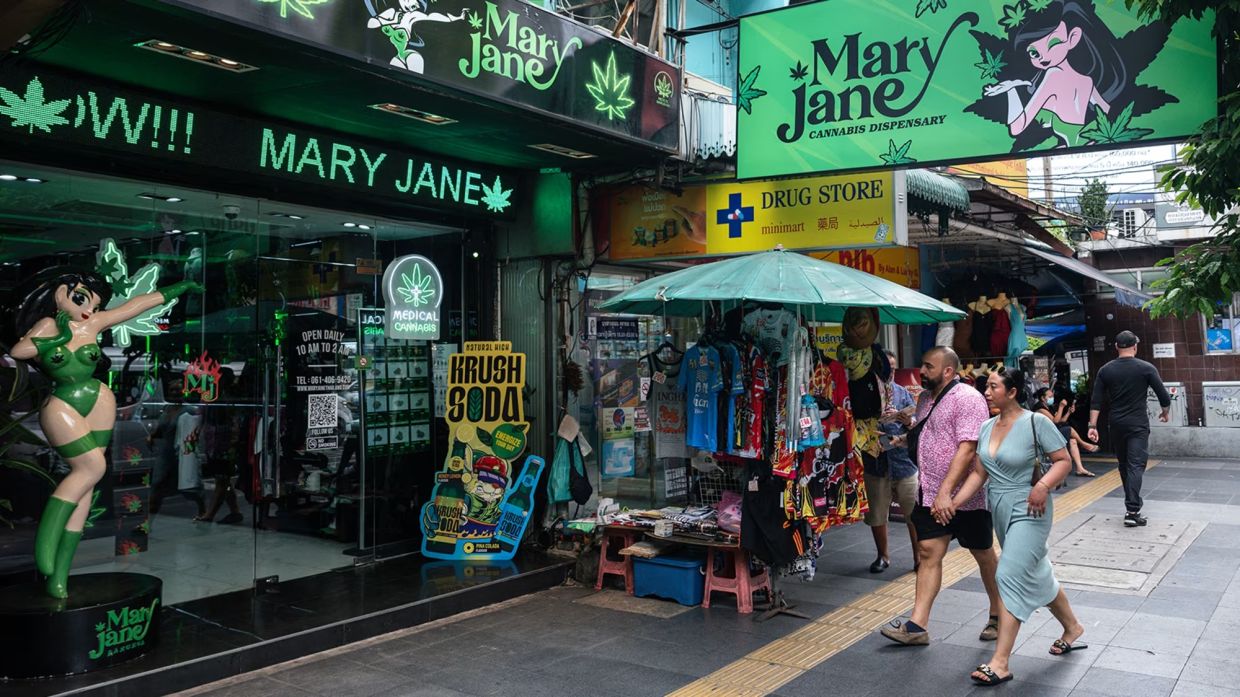
Thailand's approach to cannabis regulation has descended into a regulatory quagmire, with policymakers now openly questioning whether the controversial 2022 liberalisation was premature. A tense parliamentary session convened by the House Public Health Committee on June 18 spotlighted a fundamental impasse: whether cannabis should temporarily return to narcotics classification to contain widespread unauthorised sales and protect public health, or whether such a move would unfairly punish legitimate operators attempting to navigate an ambiguous legal landscape.
The gathering, presided over by House Public Health Committee chairman Sakoltee Phattiyakul, assembled an unusually broad coalition of stakeholders representing the Department of Thai Traditional and Alternative Medicine, the Food and Drug Administration, medical professionals, university researchers, and civil society groups focused on drug harm reduction. The very composition of the meeting underscored the polarisation defining Thailand's cannabis debate. For medical practitioners and public health advocates, the question is no longer whether cannabis poses public health risks—it is whether the current patchwork of regulations can adequately manage those risks. For cannabis entrepreneurs and farmer representatives, the threat of re-criminalisation represents an existential challenge to livelihoods built on the assumption of legal operation.
The backdrop to this dispute extends back to June 2022, when Thailand became the first Southeast Asian nation to decriminalise cannabis, removing it from the narcotics list in what was hailed as a progressive shift toward therapeutic and agricultural applications. For nearly three years, the Department of Thai Traditional and Alternative Medicine has classified cannabis as a controlled herb under the 1999 Protection and Promotion of Thai Traditional Medicine Wisdom Act. In June 2025, the Public Health Ministry introduced three fresh regulations targeting research, commercial sales, processing operations and international exports, ostensibly aligning Thai practice with global standards. Yet despite these interventions, the underlying regulatory framework remains fragmented and insufficient to address emerging harms.
Dr Tewan Thaneerat, the deputy director-general of the Department of Thai Traditional and Alternative Medicine, acknowledged during the committee meeting that anxieties about cannabis liberalisation have mounted steadily since 2022. Government agencies are now collaborating on a comprehensive cannabis and hemp bill designed to replace the current ad-hoc approach. The draft legislation, initially submitted to Cabinet under the previous administration, stalled when Parliament was dissolved. The incumbent Public Health Minister remains committed to advancing the bill, which is currently undergoing public consultation scheduled to conclude by late July before returning to Cabinet consideration. This glacial legislative pace has left a regulatory vacuum that unscrupulous vendors and informal cultivators have readily exploited.
Ekkapop Sittiwantana, deputy chairman of the House Public Health Committee representing the People's Party, articulated the case for temporary re-scheduling with particular clarity. He contended that unregistered cannabis cultivation and unregulated direct sales have proliferated across Thailand, generating exploitable loopholes that grey-market operators routinely abuse. Without mandatory plant registration and standardised tracking mechanisms, Sittiwantana argued, the authorities lack basic visibility into supply chains. He advocated for cannabis to be restored to narcotics control temporarily—a holding measure lasting only until comprehensive legislation takes effect—to enable authorities to regain regulatory footing and close the most egregious gaps.
Associate Professor Dr Smith Srisont, representing a coalition of medical doctors, academics, and harm-reduction organisations, reinforced this position with reference to practical experience. He observed that although cannabis extracts exceeding 0.2 percent THC remain technically classified as narcotics, the ready availability of cannabis flowers and other plant material has already generated measurable public health consequences. The current system creates an illogical hierarchy: cannabis flowers enjoy controlled-herb status, yet other plant components cultivated from the same crop fall outside criminal jurisdiction entirely. Srisont advocated for cannabis to first return to narcotics control, followed by parallel passage of a dedicated regulatory statute—a two-step approach that would eliminate the ambiguity haunting present enforcement. He emphasised that Thailand's experience demonstrates how liberalisation without robust regulatory machinery can rapidly deteriorate into de facto decriminalisation.
The Food and Drug Administration detailed its existing oversight mechanisms during the hearing. The agency maintains licensing systems governing three domains: production facilities and processing plants, import authorisations, and retail sales permits for certified outlets and products. The FDA reported that herbal medicines intended for disease prevention and treatment remain subject to rigorous controls, with the agency conducting ongoing inspections of cannabis-derived products to verify compliance with labelling standards and safety specifications. Initial testing results indicated that most inspected products met prescribed standards. However, the FDA acknowledged a critical vulnerability: sales channels operating entirely outside the formal regulatory system continue to flourish, undermining the agency's enforcement efforts and providing competitive advantages to illicit sellers.
Cannabis industry representatives and allied advocacy groups, particularly the Thai Cannabis Future Network, contested this regulatory narrative vehemently. They countered that licensed operators face existential pressure from black market competition, smuggled imports, and the legal uncertainty created by threats of re-criminalisation. The network raised grave allegations that some officials had solicited unauthorised benefits in exchange for cannabis operating licences, and that prescription requirements imposed on medical practitioners had become prohibitively expensive for small farmers or had been compromised through trade in non-medical settings. Industry advocates stressed that cannabis possesses significant economic and cultural value beyond mainstream medical applications, and argued that any future regulatory framework should reflect broad public participation rather than favouring large corporate investors at the expense of smallholders and cooperative structures.
Chairman Sakoltee, while not declaring a final position, signalled concern about the ease with which consumers access cannabis products. He directed government officials to compile comprehensive inventories of all legally licensed cannabis retailers in Bangkok alongside FDA-certified cannabis products for detailed review. More significantly, Sakoltee emphasised that any future legislation must include spatial restrictions preventing cannabis sales outlets from operating in proximity to schools and educational facilities—a common-sense public health safeguard that the current framework entirely lacks. The committee further mandated a broad epidemiological survey documenting cannabis-related harms across affected populations and demographic groups, acknowledging that policy decisions to date have proceeded without adequate empirical baseline data.
The committee's final directive reflected a pragmatic, if cautious, position. Rather than endorsing either the medical professionals' call for immediate re-scheduling or the industry's plea for stable liberalised markets, Sakoltee announced that the committee would review draft legislation from both public health agencies and external stakeholders. This invitation for multiple legislative proposals suggests that Thailand's policymakers recognise the inadequacy of unilateral approaches and the necessity of compromise. Yet Thailand's cannabis impasse also reflects broader governance challenges across Southeast Asia. As regional neighbours including Cambodia, Laos, and potentially Vietnam contemplate their own cannabis policies, Thailand's struggle to balance competing claims—therapeutic benefit, economic development, public health protection, and social equity—offers cautionary lessons about the dangers of rapid liberalisation without adequate regulatory scaffolding.
The outcome of these deliberations will significantly influence not only Thai cannabis users and operators but also the trajectory of drug policy across Southeast Asia. If Thailand successfully constructs balanced regulations protecting public health while enabling legitimate cultivation and commerce, it could serve as a model for neighbouring countries. Conversely, if re-criminalisation occurs or regulations become prohibitively restrictive, it may push Thailand's cannabis sector back underground, enriching criminal networks while destroying the farmers and entrepreneurs who took risks on the 2022 liberalisation. The stakes extend beyond cannabis itself; they encompass broader questions about whether governments in the region can craft evidence-based drug policies that serve multiple legitimate interests simultaneously.

%22%2F%3E%3C%2Fpattern%3E%3C%2Fdefs%3E%3Crect%20width%3D%22100%25%22%20height%3D%22100%25%22%20fill%3D%22url(%23ph523ndg)%22%2F%3E%3Crect%20width%3D%22100%25%22%20height%3D%22100%25%22%20fill%3D%22url(%23ph523ndp)%22%2F%3E%3Ctext%20x%3D%2250%25%22%20y%3D%2250%25%22%20text-anchor%3D%22middle%22%20dominant-baseline%3D%22central%22%20fill%3D%22rgba(255%2C255%2C255%2C0.95)%22%20font-family%3D%22Georgia%2C%20'Times%20New%20Roman'%2C%20serif%22%20font-weight%3D%22700%22%20font-size%3D%22272%22%20letter-spacing%3D%22-0.02em%22%3EAnwar%3C%2Ftext%3E%3C%2Fsvg%3E)