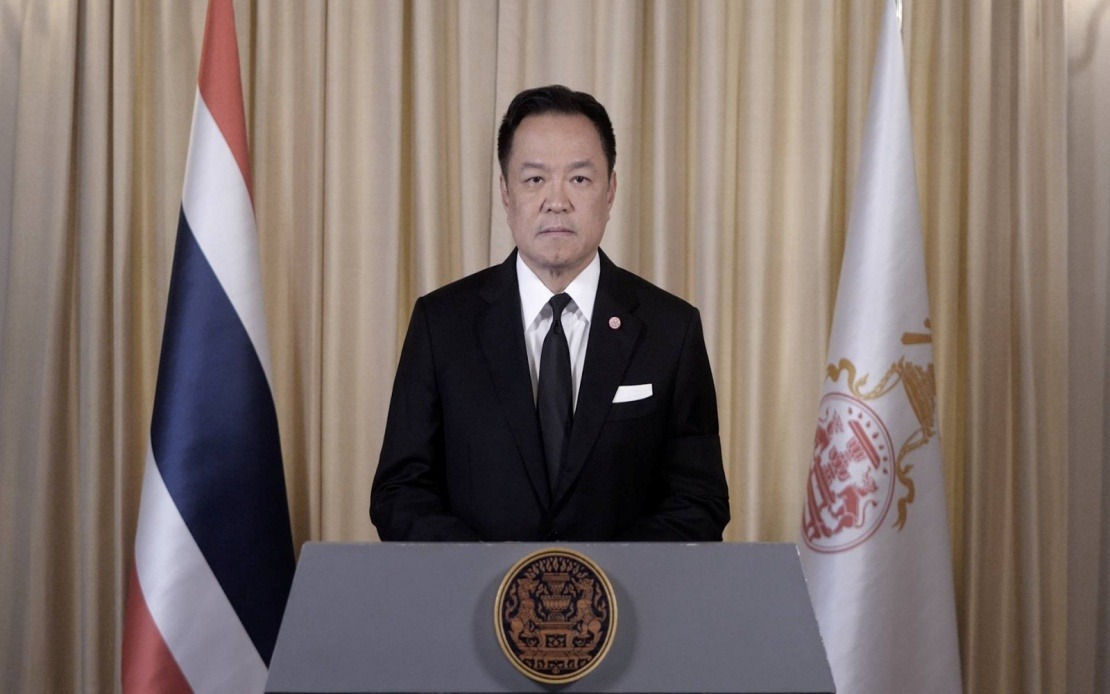
Thailand's government has signalled optimism that a potential ceasefire between the United States and Iran could provide meaningful relief to the Southeast Asian economy, which remains vulnerable to global energy shocks and supply chain disruptions. Prime Minister Anutin Charnvirakul told reporters on Monday at Government House that any diplomatic breakthrough in West Asia would constitute a positive development capable of mitigating broader international crises and reinforcing economic stability across the region. The remarks came after US President Donald Trump announced on Sunday that an agreement with Iran had been concluded, with plans to reopen the Strait of Hormuz and lift a US naval blockade that has constrained shipping and energy flows.
Anutin emphasized that Thailand has demonstrated resilience in navigating previous global disruptions and supply chain volatility, crediting the kingdom's capacity to anticipate challenges through strategic foresight rather than ad hoc crisis management. He described the government's approach as grounded in medium and long-term planning frameworks designed to insulate the economy from sudden external shocks. The prime minister's measured optimism reflects Bangkok's broader position as a relatively stable economy within Southeast Asia, though one that remains exposed to commodity price fluctuations and international trade dynamics. His statement underscores official recognition that while Thailand has weathered recent global turbulence, sustained stability depends partly on resolution of persistent geopolitical tensions that drive energy costs and create uncertainty for investors.
Deputy Prime Minister and Finance Minister Ekniti Nitithanprapas amplified this perspective, arguing that termination of the conflict would generate tangible economic benefits for both the global system and Thailand specifically. Ekniti identified energy pricing as a critical transmission mechanism through which Middle Eastern stability translates into improved conditions for Southeast Asian economies. Lower or stabilized oil prices would reduce input costs for Thai manufacturers, transportation operators, and utilities, creating cascading benefits throughout the supply chain. The finance minister's comments reflect standard economic orthodoxy regarding commodity price impacts, yet they also indicate Thai policymakers' acute awareness that their development model remains structurally dependent on affordable imported energy resources.
Ekniti outlined plans for continued government monitoring of inflationary pressures and cost impacts on households and small enterprises, suggesting that Bangkok intends to remain vigilant against persistent price pressures even as global conditions potentially improve. His statement implies that while a ceasefire would provide relief, underlying inflation risks stemming from monetary policies, supply constraints, and labor market tightness may persist independently of Middle Eastern developments. The finance minister projected that improved international circumstances could support stronger economic growth than currently anticipated, though he carefully avoided specifying revised growth targets or timelines. This cautious optimism contrasts with potential over-optimism about ceasefire effects and reflects the Thai government's effort to manage expectations while signalling competence in economic stewardship.
A particularly notable aspect of Ekniti's remarks concerns the government's decision to proceed with a 200-billion-baht energy transition programme despite expectations that ceasefire-driven oil price declines might reduce urgency around renewable and alternative energy development. The finance minister explicitly stated that Thailand would maintain commitment to this initiative, recognizing that structural dependence on imported hydrocarbons extends beyond immediate price concerns and encompasses long-term energy security vulnerabilities. This commitment reflects broader Southeast Asian trends toward decoupling economic development from fossil fuel consumption, driven by climate considerations, energy independence goals, and technological feasibility of renewable alternatives. Thailand's approach positions the kingdom alongside regional peers pursuing green energy transitions regardless of temporary commodity price movements.
The remarks by Thailand's senior leadership carry implications for Malaysian policymakers and businesses, given Malaysia's comparable regional position and parallel structural vulnerabilities to energy shocks. Both countries rely significantly on imported or regionally-sourced energy resources, operate manufacturing-dependent economies exposed to global supply chain dynamics, and face similar pressures from inflation and cost-of-living challenges. Malaysian stakeholders should note that Thai officials view Middle Eastern instability primarily through an economic lens rather than security framework, suggesting that regional assessment of geopolitical risks emphasizes commodity and trade channels over direct military or security spillovers. This perspective may inform how Malaysian authorities and businesses evaluate ceasefire prospects and their preparedness for various geopolitical scenarios.
For Southeast Asia more broadly, a US-Iran ceasefire would potentially ease energy market tightness and reduce insurance premiums embedded in shipping and commodity prices, benefiting the region's substantial manufacturing export sector and energy-importing economies. Thailand's explicit welcome of such developments reflects the kingdom's stake in stable global energy markets and relatively open international trade environment. The prime minister's emphasis on Thailand's preparedness and strategic planning capability appears designed to project investor confidence and signal that the government has successfully insulated the economy from major external shocks. Whether this confidence proves justified depends partly on whether the ceasefire holds and whether energy price declines materialize as anticipated.
Thailand's government response also reflects evolving diplomatic positioning within the broader US-China strategic competition. By welcoming US-Iranian rapprochement, Thai officials signal support for international peace and stability while avoiding direct commentary on US-Iran normalization or alignment with either power. This carefully neutral stance preserves Bangkok's strategic flexibility and its ability to maintain balanced relationships with multiple great powers. Thailand's approach contrasts with countries more directly aligned with either Washington or Beijing, and it demonstrates the kingdom's continued effort to navigate great power competition while prioritizing economic development and regional stability.
The potential economic gains from Middle Eastern ceasefire would not automatically resolve all challenges facing Thailand's economy. Structural issues including aging infrastructure, labor skill gaps, productivity growth limitations, and regional inequality persist independently of energy prices or geopolitical tensions. However, stable and moderately declining energy costs would provide space for policymakers to direct resources toward productivity-enhancing investments rather than managing inflationary crises. The government's framing of the potential ceasefire as supportive of stronger-than-expected economic growth appears designed to build political support for continued fiscal discipline and long-term investment priorities.
Moving forward, Thai observers should monitor whether anticipated energy price declines actually materialize and whether the government's projections of improved growth prove accurate. The success of Thailand's strategic approach depends on effective execution of medium-term development plans and continued institutional capacity to anticipate external shocks. For Malaysian and regional observers, Thailand's response provides a useful case study in how Southeast Asian governments assess geopolitical developments and attempt to position their economies advantageously within volatile international circumstances. The kingdom's emphasis on preparedness and long-term planning, rather than tactical responses to headlines, offers a model worth examining as the region navigates ongoing great power competition and climate transition pressures simultaneously.