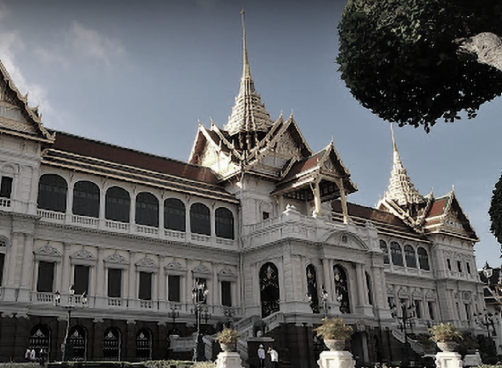
Thailand's courts continue to enforce one of the world's most stringent laws protecting royal reputations, with a Bangkok Criminal Court recently handing down an 18-month prison sentence to a man whose only transgression was posting a comment in a Facebook discussion group centred on monarchical affairs. The case underscores the chilling effect that Thailand's lese-majeste provisions have on public discourse, even as regional peers grapple with balancing press freedom against other social concerns.
The 43-year-old defendant, whose identity has been withheld for safety reasons, faced original charges that could have resulted in three years of incarceration under Article 112 of Thailand's Criminal Code. However, his decision to plead guilty led Thai judges to reduce the sentence by half, to 18 months. He was subsequently released on bail of 100,000 baht—equivalent to approximately US$3,043—pending appeal, according to information provided by Noppol Achamas, a spokesperson at the Thai Lawyers for Human Rights organisation.
The platform that precipitated the prosecution is itself a remarkable phenomenon within Thai society. The "Royalist Marketplace" Facebook group, which boasts a membership exceeding 2.2 million people, was established as an explicit space for discussing the institution of the monarchy. Founded by exiled scholar and royal critic Pavin Chachavalpongpun, the group emerged as an unprecedented platform within Thailand's traditionally constrained media landscape, allowing citizens to engage in dialogue about the crown in ways that would be unthinkable in mainstream public forums or conventional news outlets.
Thailand's royal defamation statute carries penalties reaching 15 years imprisonment for each violation, representing one of the most severe punishments for insulting a monarch among democracies and partial democracies globally. Human rights organisations and international observers have consistently argued that these provisions function as instruments of political control rather than genuine protections of institutional dignity, effectively criminalising legitimate discourse about governance and institutional reform. The severity of potential sentences means that citizens undertaking seemingly innocuous online commentary face profound legal jeopardy.
The timing of this prosecution reflects a broader pattern that intensified following Thailand's 2020-2021 youth-led protest movement, which mobilised tens of thousands of demonstrators in Bangkok and provincial cities. Those demonstrations, notable for their direct challenges to monarchical governance and explicit calls for constitutional amendments regarding the lese-majeste law itself, represented a generational shift in Thai political discourse. The youth movement demanded substantive reforms to both the institution and the legal frameworks protecting it, marking a departure from previous decades of relatively muted public criticism.
Following the initial momentum of 2020 and 2021, however, Thailand's protest landscape contracted significantly as legal mechanisms gradually dismantled activist infrastructure. Numerous organisers and participants found themselves facing lese-majeste charges alongside conventional criminal accusations, creating a climate where sustained political engagement carried prohibitive personal costs. Many younger activists retreated from street-level organising, recognising that continued visible dissent would likely result in prosecution and conviction.
The enforcement statistics reveal the scale of this legal campaign. Data compiled by Thai Lawyers for Human Rights indicates that 291 individuals have been formally charged under the lese-majeste law since 2020 alone. This represents a dramatic acceleration compared to historical prosecution rates, suggesting a deliberate enforcement strategy designed to eliminate the space for public discourse that emerged during the protest movement. Notably, at least 17 separate prosecutions have targeted individuals specifically for comments posted within the "Royalist Marketplace" group, indicating that authorities have identified this particular forum as requiring concentrated prosecutorial attention.
For Malaysian observers, Thailand's case offers instructive parallels and contrasts. Malaysia similarly maintains sedition laws and provisions against insulting the institution of the monarchy, yet enforcement patterns and sentencing practices differ substantially. Thailand's approach—combining exceptionally harsh statutory penalties with aggressive prosecution rates—represents a more comprehensive closure of political space than currently exists across the Strait. The scale of Thai prosecutions suggests not merely reactive legal enforcement but rather a systematic campaign to suppress what authorities view as dangerous discourse.
The implications extend beyond Thailand's borders into broader Southeast Asian governance trends. As democratic backsliding accelerates across the region, several states are increasingly exploiting laws ostensibly protecting institutions to restrict political participation and freedom of expression. Thailand's lese-majeste enforcement serves as an extreme exemplar of this pattern, where legal instruments designed with purported protective intentions function primarily as suppressors of dissent and alternative perspectives. The enthusiasm with which Thai courts have pursued social media commentators contrasts sharply with the relative restraint shown in prosecuting corruption among political and military elites.
For regional internet users and activists, Thailand's cases carry direct warning value. The prosecution of someone for remarks posted in a private Facebook group—albeit one with 2.2 million members—demonstrates that digital semi-privacy offers minimal protection against determined authorities. Even conversations framed as discussion rather than explicit criticism become vulnerable to prosecution when facilitated by platforms accessible to government monitors and informants.
The reduction of the defendant's sentence from three years to 18 months based on his guilty plea, while technically merciful within Thailand's legal framework, nonetheless represents a draconian punishment for expressing opinions about political institutions. Across democracies operating under common law traditions and civil law systems alike, such extended imprisonment for purely verbal or written expression without incitement to violence would be constitutionally untenable. Thailand's sentence reflects a fundamentally different calibration of rights, one that privileges institutional protection above individual liberty.
As this defendant pursues appeals, observers will monitor whether courts might ultimately overturn or further reduce the conviction. The trajectory of these cases will signal whether Thailand's judiciary retains any independence in reviewing lese-majeste prosecutions or whether such cases have become effectively predetermined. The broader question remains whether sustained regional and international pressure regarding press freedom and political expression might eventually induce Thai policymakers to revisit Article 112, or whether the current enforcement trajectory will persist indefinitely.

%22%2F%3E%3C%2Fpattern%3E%3C%2Fdefs%3E%3Crect%20width%3D%22100%25%22%20height%3D%22100%25%22%20fill%3D%22url(%23ph523ndg)%22%2F%3E%3Crect%20width%3D%22100%25%22%20height%3D%22100%25%22%20fill%3D%22url(%23ph523ndp)%22%2F%3E%3Ctext%20x%3D%2250%25%22%20y%3D%2250%25%22%20text-anchor%3D%22middle%22%20dominant-baseline%3D%22central%22%20fill%3D%22rgba(255%2C255%2C255%2C0.95)%22%20font-family%3D%22Georgia%2C%20'Times%20New%20Roman'%2C%20serif%22%20font-weight%3D%22700%22%20font-size%3D%22272%22%20letter-spacing%3D%22-0.02em%22%3EAnwar%3C%2Ftext%3E%3C%2Fsvg%3E)