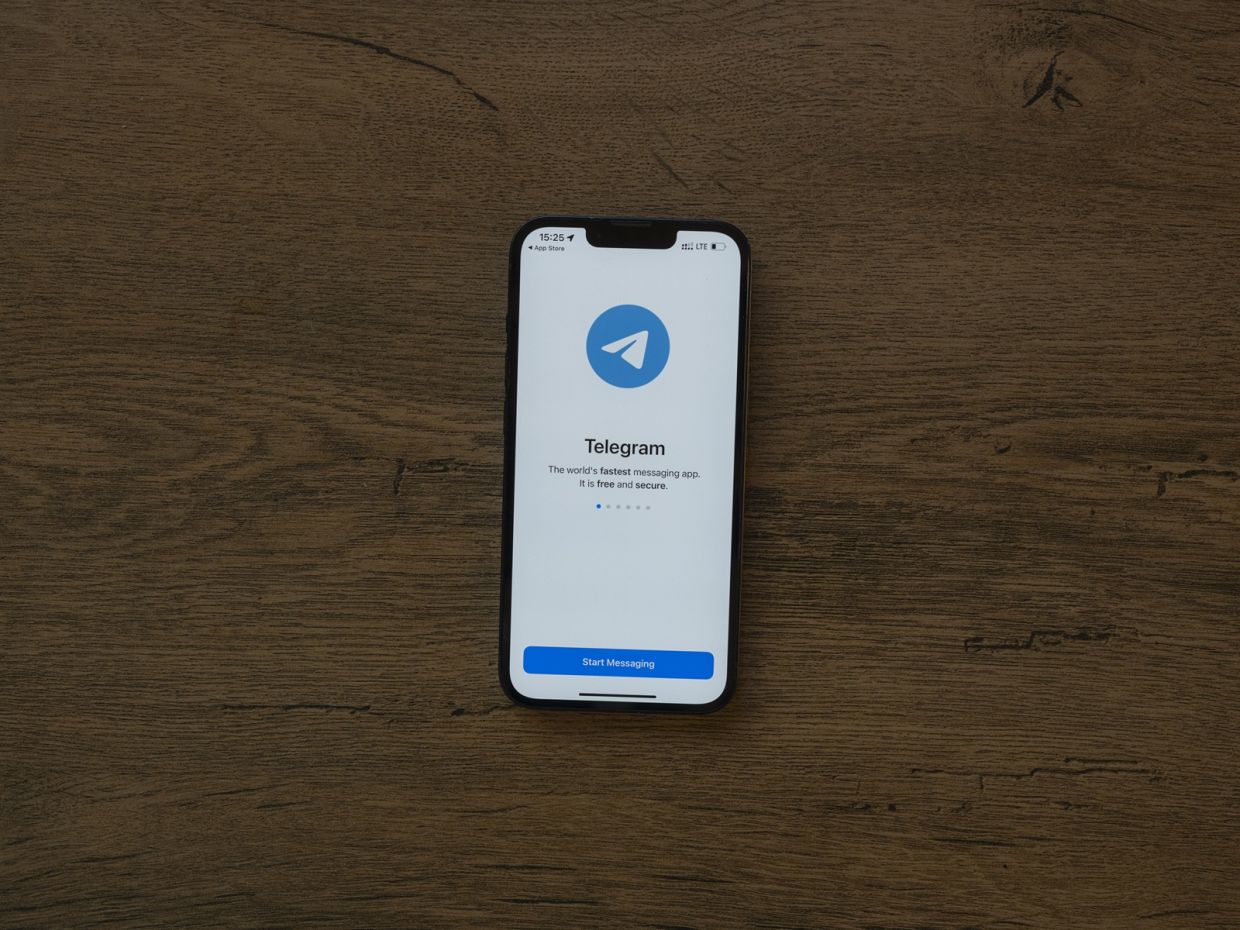
Telegram, the privacy-focused messaging application that has become a sanctuary for political activists, journalists, and ordinary citizens seeking refuge from government surveillance, now finds itself under siege from regulators across the globe. What was once celebrated as a bastion of digital freedom has become increasingly controversial, with authorities in major economies accusing the platform of facilitating terrorism, organised crime, fraud, and the spread of dangerous disinformation. The tensions between Telegram's commitment to user privacy and governments' demands for greater oversight have created a fundamental clash of values that shows no signs of resolution.
India's recent decision to temporarily suspend Telegram until June 22 exemplifies this growing confrontation and highlights the platform's vulnerability in emerging markets where it has achieved enormous penetration. With more than 150 million users in India alone, making it one of Telegram's largest markets globally, the app has become woven into the fabric of Indian digital life. The immediate trigger for the ban was discovery that fraudsters had exploited Telegram channels to perpetrate an elaborate exam scam, selling what they claimed were leaked questions from the National Eligibility cum Entrance Test, or NEET, the entrance examination for medical college admission. The fraudulent operation preyed on the desperation of millions of candidates and their families, offering fake exam materials at premium prices. When authorities invalidated the entire May examination and scheduled a retest for the following Sunday, widespread public anger erupted among young people who viewed the government as complicit in systemic mismanagement of a crucial educational institution.
Pavel Durov, Telegram's Russian-born founder, swiftly challenged India's ban through his X account, arguing that the measure punished millions of legitimate users rather than targeting the actual perpetrators of the fraud. Durov contended that Telegram had proactively removed hundreds of channels related to exam materials and related scams, demonstrating the company's commitment to enforcement. This defence reflects the core dilemma facing Telegram: as an end-to-end encrypted platform, the company has limited visibility into user communications and channel activities, making it difficult to prevent misuse while maintaining the privacy protections that define its value proposition. The India situation also illuminates a broader pattern whereby developing nations with large, youthful populations view Telegram as simultaneously essential infrastructure and a vector for criminal activity.
Russia, Durov's homeland, has waged the longest and most ideologically charged campaign against Telegram. In 2018, Russian courts ordered the platform's blockade after Telegram refused to surrender encryption keys to Russian security services, a principled stance that earned Durov's admiration from civil liberties advocates but rendered his creation technically inaccessible within Russia's borders. The enforcement proved technically messy and embarrassing for the Kremlin, which discovered that numerous Russian government agencies themselves relied upon Telegram for internal communications. By 2020, Russia pragmatically lifted the ban after Telegram ostensibly agreed to enhance efforts against extremist content, though sceptics questioned whether meaningful compliance actually occurred. When Russia launched its full-scale invasion of Ukraine in 2022, the government attempted once more to suppress Telegram as part of a broader internet crackdown, this time accusing the platform of enabling fraud, failing to protect personal data, and facilitating terrorist communications. Durov responded by characterising the Russian government's actions as an attempt to force citizens onto state-controlled applications designed explicitly for surveillance and censorship. Telegram remains effectively blocked in Russia today, though technologically sophisticated users continue accessing it through virtual private networks.
The Ukraine conflict has crystallised the paradoxes inherent in Telegram's global role. For millions of Ukrainians sheltering from Russian bombardment, the app has functioned as a genuine lifeline, delivering real-time warnings of impending attacks, facilitating the distribution of humanitarian assistance, and enabling citizens to maintain contact with loved ones amid chaos and destruction. Yet Ukrainian officials simultaneously recognised that Telegram's open architecture and anonymous channel functionality created pathways for Russian disinformation campaigns and intelligence gathering operations. In response, Ukraine's government prohibited military personnel, state officials, and workers at critical infrastructure sites from accessing Telegram on official devices, prioritising national security over the convenience of a widely-used communication tool. Some Ukrainian policymakers proposed requiring Telegram to disclose the identities of individuals managing large anonymous channels, a demand that would fundamentally compromise the platform's privacy architecture.
Europe has pursued its own regulatory approach, blending security concerns with data protection and criminal justice considerations. Norway's justice minister formally advised state officials to remove Telegram and TikTok from work devices, classifying both applications as potential national security threats. France pursued far more aggressive intervention, arresting Durov upon his arrival at a Paris airport in 2024 and charging him with multiple criminal offences related to Telegram's alleged failure to prevent child sexual abuse material, drug trafficking operations, and online hate speech. French authorities prevented Durov from departing the country while the investigation proceeded, a dramatic escalation that signalled the European Union's determination to hold technology executives personally accountable for platform governance. Telegram's corporate response—arguing that EU law compliance was demonstrated and that holding a platform owner responsible for all user-generated abuse was logically absurd—failed to satisfy prosecutors convinced that Durov had consciously prioritised growth and encryption over safety.
Brazil's experience demonstrates how Telegram's resistance to government demands creates acute friction in jurisdictions with strong judiciaries but fragile democratic institutions. In 2022, Brazil's Supreme Court ordered a nationwide ban shortly before a presidential election, claiming Telegram had failed to remove accounts operated by a Bolsonaro supporter who faced investigation for disinformation campaigns and threats against judges. Durov acknowledged at the time that Telegram had missed emails from the Brazilian court, an explanation that struck observers as implausibly negligent for a company operating one of the world's largest markets. The ban was lifted only after Telegram agreed to comply with court orders. Another Brazilian judge in 2023 ordered renewed blockade after Telegram allegedly failed to provide complete user data from neo-Nazi group chats or remove the communities. Telegram claimed the groups had been deleted and data recovery was impossible, a position that appeals courts eventually accepted while imposing substantial financial penalties. These episodes illustrated how Telegram's technical architecture and corporate policies create systematic friction with judicial systems accustomed to broad discovery authority.
Beneath these specific national conflicts lies a fundamental tension between two incompatible visions of digital infrastructure. Telegram, like other end-to-end encrypted platforms, operates on the premise that user privacy constitutes a fundamental human right and that encryption protects citizens from both criminal predators and authoritarian governments alike. From this perspective, government demands for backdoor access, user identification, and content surveillance represent existential threats to democratic freedom. Conversely, governments increasingly view encryption and platform opacity as facilitating terrorism financing, child exploitation, drug smuggling, election manipulation, and organised crime. From this perspective, the refusal to cooperate with lawful government requests represents corporate irresponsibility and dangerous prioritisation of abstract principles over concrete safety. This philosophical gulf suggests that Telegram's troubles are unlikely to ease regardless of specific policy adjustments or enforcement actions.
For Malaysian readers and Southeast Asian observers, Telegram's global struggles carry immediate implications. The platform has grown enormously throughout the region, serving as a communication tool for business, activism, and everyday social connection. Malaysia itself has not yet enacted a blanket ban, though authorities have scrutinised Telegram's role in spreading false information and coordinating illegal activities. The regulatory decisions taken by India, Russia, France, and Brazil create precedents that Malaysian policymakers will inevitably reference in future deliberations about platform governance. If enforcement actions continue escalating internationally, Telegram's Malaysian user base could face sudden service interruptions, forcing individuals and organisations to migrate to alternative platforms. Simultaneously, the platform's encryption capabilities render it attractive to Malaysian civil society organisations, journalists, and political dissidents who view it as essential protection against surveillance. The tension between these constituencies—those seeking security and those fearing government overreach—will likely define Malaysia's approach to Telegram regulation in coming years.

%22%2F%3E%3C%2Fpattern%3E%3C%2Fdefs%3E%3Crect%20width%3D%22100%25%22%20height%3D%22100%25%22%20fill%3D%22url(%23ph523ndg)%22%2F%3E%3Crect%20width%3D%22100%25%22%20height%3D%22100%25%22%20fill%3D%22url(%23ph523ndp)%22%2F%3E%3Ctext%20x%3D%2250%25%22%20y%3D%2250%25%22%20text-anchor%3D%22middle%22%20dominant-baseline%3D%22central%22%20fill%3D%22rgba(255%2C255%2C255%2C0.95)%22%20font-family%3D%22Georgia%2C%20'Times%20New%20Roman'%2C%20serif%22%20font-weight%3D%22700%22%20font-size%3D%22272%22%20letter-spacing%3D%22-0.02em%22%3EAnwar%3C%2Ftext%3E%3C%2Fsvg%3E)