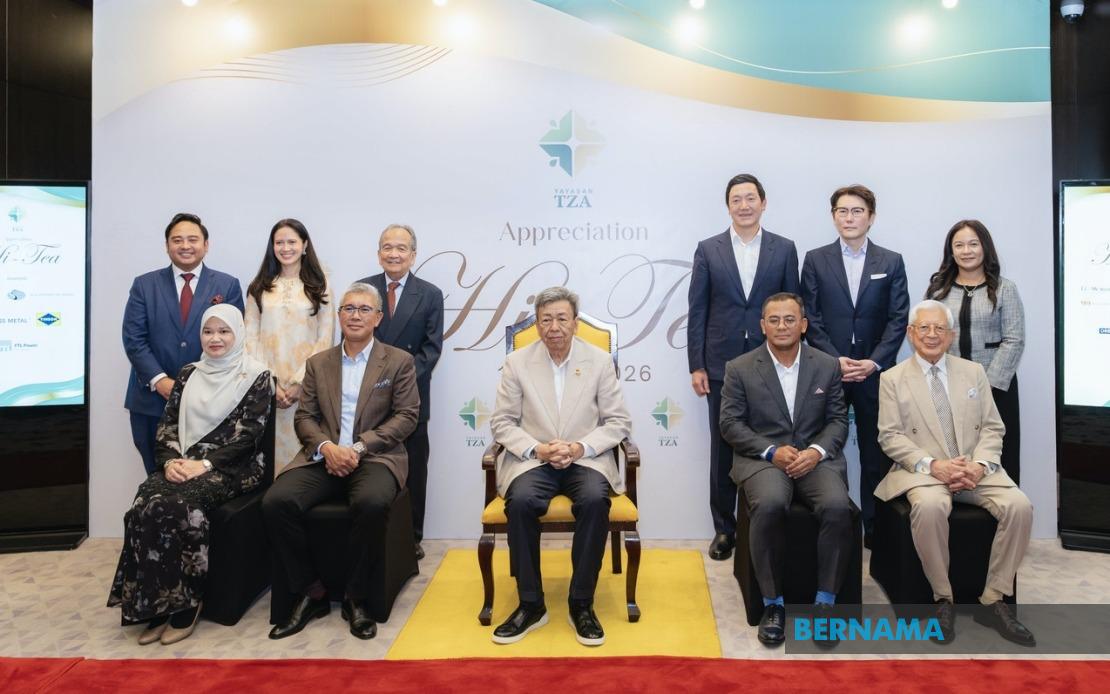
Sultan Sharafuddin Idris Shah, the Sultan of Selangor, graced the Yayasan TZA Appreciation Hi-Tea Ceremony in Kuala Lumpur on June 18, marking a significant moment for the foundation's ongoing charitable initiatives. His presence underscored the royal patronage extended to the organisation's mission of social uplift and community development across the region. The Sultan arrived at approximately 3.50 pm and was formally welcomed by YTZA chairman Tan Sri Arshad Raja Tun Uda alongside YTZA advisor Tengku Datuk Seri Zafrul Abdul Aziz, accompanied by Selangor Menteri Besar Datuk Seri Amirudin Shari and Education Minister Fadhlina Sidek.
Tengku Zafrul articulated the foundation's overarching philosophy during his address, emphasising that YTZA's programmes transcend addressing immediate hardships by focusing on sustainable empowerment mechanisms. The foundation operates across multiple fronts—from direct educational interventions and environmental sustainability projects to grassroots community engagement and cultural celebrations benefiting marginalised populations. This multifaceted approach reflects an understanding that lasting social change requires coordinated action spanning economic, educational, and social dimensions. The foundation's commitment to building inclusive and resilient communities demonstrates how philanthropic organisations are adapting their strategies to address Malaysia's diverse development challenges.
Among YTZA's cornerstone initiatives is the ACE SPM programme, designed specifically to strengthen examination readiness among Sijil Pelajaran Malaysia candidates from lower-income households. The programme recognises that students from B40 communities often lack access to supplementary academic resources that wealthier peers obtain through private tuition. By targeting this demographic, ACE SPM addresses a critical equity gap in Malaysia's education system. In 2025 alone, the programme benefited 467 students across ten schools within Selangor, demonstrating meaningful penetration into the state's education landscape. Beyond traditional classroom support, YTZA's digital initiatives have extended programme reach to over 4,000 students, leveraging technology to transcend geographical and socioeconomic barriers.
The expansion trajectory outlined by Tengku Zafrul suggests the foundation's confidence in programme scalability and its commitment to deepening impact. As examination pressures intensify and quality educational support becomes increasingly stratified by family income, targeted interventions like ACE SPM assume critical importance for social mobility. The digital dimension particularly resonates with Malaysian educational policy priorities, which increasingly emphasise technology integration and online learning infrastructure. The foundation's success in reaching thousands of students digitally demonstrates feasibility of blended learning models that might inform broader educational accessibility strategies across Southeast Asia.
During the ceremony, Sultan Sharafuddin witnessed the presentation of substantial corporate commitments to the foundation's work. Kuok Brothers Sdn Bhd pledged RM1 million whilst YTL Power International Berhad contributed RM300,000, collectively providing RM1.3 million in financial support. These donations represent meaningful corporate engagement with social development goals and reflect growing recognition among Malaysian businesses that sustainable operations require investment in community welfare. The presence of these contributions at a royal-attended function signals the legitimacy and credibility YTZA has achieved within corporate Malaysia, potentially encouraging further institutional backing for the foundation's expanded activities.
Tengku Zafrul's expressed gratitude to sponsors, donors, strategic partners, volunteers and supporters illuminated the ecosystem required for effective philanthropic work. This acknowledgment reflects practical reality that contemporary social development operates through coalitions spanning governmental, corporate, civil society and volunteer sectors. Malaysia's third sector increasingly depends on such collaborative networks to address gaps between government provision and community needs. The foundation's ability to mobilise diverse constituencies around shared social objectives offers a instructive model for other Malaysian charitable organisations seeking to scale impact whilst maintaining operational sustainability.
Larian KITA@Klang, launched during the ceremony, represents YTZA's expansion into community-based engagement activities aligned with cultural celebrations. Scheduled for October 10 in conjunction with the Sultan of Selangor's Silver Jubilee commemoration, the run constitutes the fourth iteration of the Larian KITA series. These community fun runs deliberately integrate social inclusion objectives with celebration of local cultural and culinary heritage, transforming physical activity into a mechanism for community bonding and cultural affirmation. For Klang specifically, leveraging the sultanate's jubilee milestone creates promotional momentum whilst embedding charitable objectives within festive community experiences.
The Larian KITA concept itself merits attention as an innovative social engagement model. Rather than positioning charitable work as aid distribution or sympathy-based assistance, community fun runs reframe social development as collective celebration of shared identity and mutual support. This approach particularly resonates in diverse Malaysian contexts where inclusive community activities can transcend ethnic, religious and socioeconomic divisions. The choice to highlight Klang's cultural and culinary attractions ensures the event generates economic benefits for local vendors and celebrates community assets rather than emphasising deficits requiring external assistance.
For Malaysian readers, YTZA's activities exemplify how private philanthropic institutions complement government social programmes whilst operating with greater flexibility and targeted precision. The foundation's focus on B40 educational support addresses persistent inequality in Malaysia's education system, where family income remains a significant predictor of examination success and tertiary access. As Malaysia pursues higher-income nation aspirations, ensuring equitable educational access becomes increasingly vital for maintaining social cohesion and expanding the talent pool driving economic competitiveness. YTZA's work demonstrates that private sector resources, when effectively coordinated, can meaningfully expand educational opportunity for vulnerable populations.
The royal patronage extending to YTZA also reflects institutional recognition that social development requires diverse institutional players beyond government. In Malaysia's constitutional monarchy framework, royal participation in charitable events carries significance beyond ceremonial dimensions, signalling state-level validation of philanthropic priorities and encouraging broader community engagement. The Sultan's attendance, coupled with the presence of senior state and federal government figures, created visibility that might encourage other corporate entities and individuals to support YTZA's missions. This institutional alignment between royal patronage, government leadership and private philanthropy creates synergies that amplify impact beyond what individual actors might achieve independently.
Looking forward, YTZA's trajectory suggests growing sophistication in Malaysian philanthropic approaches. The foundation combines direct service delivery through ACE SPM with community engagement through Larian KITA, digital outreach alongside traditional programmes, and corporate partnership cultivation. This diversified portfolio approach distributes risk whilst maximising reach across different demographic segments and intervention types. As Malaysian society grapples with persistent inequality, skills mismatches, and social fragmentation, organisations like YTZA offer templates for how private resources might be deployed strategically to address structural challenges requiring long-term commitment and cross-sectoral collaboration.

%22%2F%3E%3C%2Fpattern%3E%3C%2Fdefs%3E%3Crect%20width%3D%22100%25%22%20height%3D%22100%25%22%20fill%3D%22url(%23ph523ndg)%22%2F%3E%3Crect%20width%3D%22100%25%22%20height%3D%22100%25%22%20fill%3D%22url(%23ph523ndp)%22%2F%3E%3Ctext%20x%3D%2250%25%22%20y%3D%2250%25%22%20text-anchor%3D%22middle%22%20dominant-baseline%3D%22central%22%20fill%3D%22rgba(255%2C255%2C255%2C0.95)%22%20font-family%3D%22Georgia%2C%20'Times%20New%20Roman'%2C%20serif%22%20font-weight%3D%22700%22%20font-size%3D%22272%22%20letter-spacing%3D%22-0.02em%22%3EAnwar%3C%2Ftext%3E%3C%2Fsvg%3E)