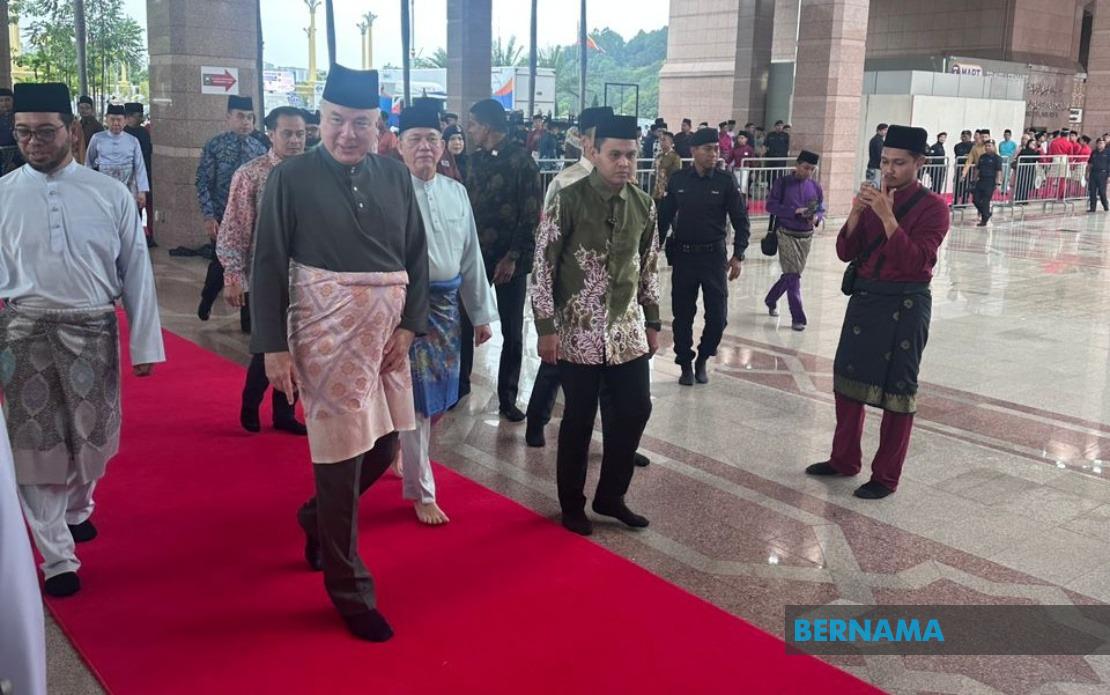
At the National Level Maal Hijrah 1448 Celebration held in Putrajaya on June 17, Deputy Yang di-Pertuan Agong Sultan Nazrin Shah delivered a pointed critique of contemporary leadership styles, warning that nations suffer when their leaders succumb to impulses and emotional reactions rather than exercising restraint and thoughtful deliberation. The occasion, attended by approximately 5,000 participants including Deputy Prime Minister Datuk Seri Fadillah Yusof and Minister in the Prime Minister's Department (Religious Affairs) Dr Zulkifli Hasan, provided the royal platform for a broader meditation on governance and national direction.
The Sultan articulated a fundamental problem besetting modern governance: leaders who prioritise short-term political expediency over long-term consequences inevitably transfer the burden of their poor judgments onto ordinary citizens. This observation carries particular relevance for Malaysia, where successive policy reversals and administrative decisions have occasionally demonstrated a lack of continuity or foresight. When administrators make decisions driven by personal sentiment or immediate political pressure, they set in motion consequences that ripple through society, affecting public welfare, economic stability, and institutional credibility. The financial and social costs of such impulsive governance eventually accumulate, demanding remedial efforts that consume resources and public patience.
Sultan Nazrin emphasised that effective leadership requires three interconnected qualities: calmness in responding to crises, openness to diverse perspectives and evidence, and a cautious approach grounded in careful analysis rather than reactive emotion. These principles represent a departure from populist leadership models that exploit momentary public sentiment. By invoking the necessity of "well-informed judgments," the Sultan implicitly called for governance rooted in expertise, research, and professional input—a subtle but significant statement in political contexts where decision-making sometimes bypasses institutional knowledge and specialist advice.
The royal address drew rich illustrative material from the Islamic historical tradition, particularly the Hijrah narrative. Sultan Nazrin pointed to Prophet Muhammad's decision to appoint Abdullah bin Uraiqit as guide during the migration to Medina, despite Uraiqit's non-Muslim status. This selection reflected a meritocratic principle: Prophet Muhammad recognised expertise, trustworthiness, and capability irrespective of religious affiliation, provided such individuals did not pose harm to the Muslim community. For Malaysian audiences, this historical lesson carries contemporary implications regarding religious diversity, professional competence, and the dangers of conflating religious identity with professional suitability. The principle suggests that effective governance requires drawing talent from across society based on capability rather than ideology alone.
Beyond individual decision-making, Sultan Nazrin addressed the concept of national greatness, distinguishing between hollow pride in historical achievement and genuine progress built on learning from the past. Many nations rest comfortably on narratives of former glory, using historical reference points to justify present inadequacy. The Sultan rejected this approach, advocating instead for nations that actively mine historical lessons to construct more effective contemporary institutions and policies. This distinction matters profoundly for Southeast Asian countries still grappling with post-colonial identity and development trajectories.
A particularly striking element of the address concerned the notion of sacrifice as a national prerequisite. Sultan Nazrin lamented what he perceives as the diminishing spirit of sacrifice within the Muslim community, characterising it as increasingly rare and sometimes merely rhetorical. He defined sacrifice not simply as accepting loss, but as the deliberate subordination of personal interest to collective welfare—a quality requiring courage, perseverance, and authentic commitment rather than performative patriotism. This critique suggests concern that Malaysian society, particularly among leadership circles, has drifted toward self-interested behaviour masked in nationalistic language. The Sultan's emphasis that sacrifice must become "a way of life" rather than occasional rhetoric implicitly challenges current norms.
The concept of unity received attention through the prism of the Medina Charter, a seventh-century document that successfully accommodated diverse communities through tolerance and equitable governance. This historical reference carries obvious relevance to Malaysia's multiethnic, multireligious composition and ongoing challenges in maintaining social cohesion. Sultan Nazrin emphasised that successful unity emerges not from homogeneity but from mutual respect, cooperation, and just administration that treats all communities fairly. The durability of such arrangements depends fundamentally on leadership that prioritises collective welfare over factional advantage.
Malaysian readers should recognise the subtle but significant political messaging embedded in these observations. At a time when national politics has sometimes fractured along ethnic and religious lines, when governmental decisions have occasionally appeared to privilege particular constituencies, and when institutional trust has eroded, the Sultan's call for thoughtful, inclusive, and sacrifice-oriented governance represents a coded critique of current trajectories. The emphasis on drawing expertise regardless of religious background, the warning against impulsive decision-making, and the invocation of principled sacrifice all suggest concern about departures from exemplary leadership standards.
Sultan Nazrin further contextualised Maal Hijrah not as mere calendar commemoration or nostalgic reflection on distant history, but as an annual moment for genuine introspection and institutional reset. The celebration should prompt societies to examine past missteps, confront complacency, and recommit to fundamental principles. This reframing transforms the religious observance into something functionally similar to a national audit—an opportunity to assess whether political and social institutions remain true to their founding values or have drifted through drift, corruption, or negligence.
The Sultan's warning about societies becoming "overwhelmed by the tides of worldly life" resonates particularly in contemporary Malaysia, where rapid economic transformation, technological disruption, and social change have sometimes outpaced institutional adaptation. Leaders can become so absorbed in managing immediate pressures—budget cycles, electoral timelines, factional disputes—that they lose sight of longer-term civilisational imperatives. The Maal Hijrah moment, in Sultan Nazrin's framing, offers corrective potential by refocusing attention on enduring principles and strategic direction.
For Malaysia's political and administrative establishment, the Sultan's address implicitly establishes a standard against which their performance should be measured. The emphasis on expertise regardless of religious background challenges religious discrimination in governance. The warning against impulsive decisions interrogates the quality of policy-making processes. The call for sacrifice questions whether leaders demonstrate genuine commitment to national welfare or pursue self-aggrandisement. The invocation of unity through equitable governance implicitly critiques approaches that concentrate benefits or sideline particular communities. These messages, delivered through the dignified medium of royal address at a national religious celebration, carry weight precisely because they emerge from an institution above ordinary partisan contestation, yet remain deeply engaged with contemporary governance challenges.