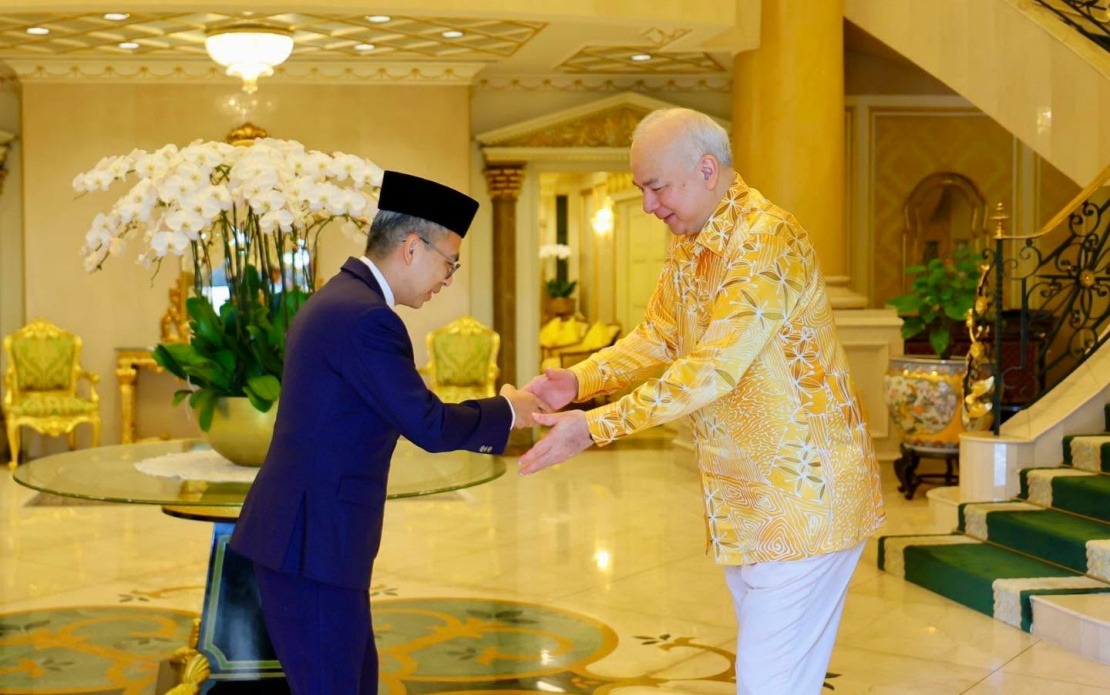
Communications Minister Datuk Fahmi Fadzil has informed the Sultan of Perak, Sultan Nazrin Shah, about the government's comprehensive strategy to bolster communication infrastructure across the state and extend digital connectivity to underserved areas. The briefing took place during an audience with the Sultan, reflecting the government's commitment to keeping the royal institution informed about key developmental initiatives affecting the state's residents and economy.
The enhancement of communication infrastructure represents a critical priority for Malaysia's digital transformation agenda. As Southeast Asia's most developed nation, Malaysia faces mounting expectations to provide reliable, high-speed connectivity across all regions, not merely in urban centres. Perak, one of the country's largest states by area, has historically faced challenges in achieving uniform digital coverage due to its geographical diversity, ranging from densely populated urban zones around Ipoh to sprawling rural and semi-urban territories. The government's initiatives aim to address this disparity through targeted investment and network expansion programmes.
Fahmi's presentation to Sultan Nazrin underscores the administration's recognition that infrastructure development requires stakeholder engagement at all levels of governance. The royal institution's interest in such matters demonstrates the relevance of digital connectivity to the state's broader development objectives, including economic growth, educational access, and healthcare delivery. By maintaining regular communication with the Sultan on such initiatives, the government signals its respect for the constitutional role of the monarchy in state affairs and its commitment to transparency in developmental planning.
Beyond infrastructure expansion, the briefing notably included discussion of online safety—a topic gaining urgency across the region as digital penetration accelerates. Online safety encompasses multiple concerns, including cybercrime prevention, data protection, digital literacy, and safeguarding vulnerable populations from exploitation and misinformation. For Malaysian policymakers, these issues have become increasingly central to the digital governance conversation, particularly following incidents of online fraud, identity theft, and the spread of harmful content affecting citizens nationwide. Perak, with its mixed urban-rural demographic, requires tailored approaches to address varying levels of digital sophistication among its population.
The Sultan's attention to online safety matters reflects broader societal concerns about the darker aspects of digitalisation. While expanded connectivity promises economic and social benefits, it simultaneously exposes communities to new risks. The government's engagement with the royal institution on this dimension suggests an integrated approach to digital policy that balances infrastructure development with protective frameworks. This holistic perspective is essential for ensuring that technological advancement translates into genuine improvements in citizens' lives rather than merely creating new vulnerabilities.
Fahmi's subsequent expression of goodwill toward Sultan Nazrin and the Perak Royal Family, conveyed through social media, represents standard protocol in Malaysian governance but carries symbolic weight. Such formal courtesies reinforce the collaborative relationship between the executive branch and constitutional monarchy, demonstrating that infrastructure decisions are made with respect for the institution's interests and the state's welfare. In the Malaysian context, where sultans retain significant ceremonial and advisory roles, maintaining such relationships is integral to effective governance.
The communication infrastructure initiative aligns with broader national objectives outlined in Malaysia's digitalisation roadmap. The country aims to establish itself as a regional digital hub and technology leader, requiring investment in backbone networks, 5G rollout, and digital service platforms. For Perak specifically, improved connectivity creates opportunities for economic diversification beyond traditional sectors like mining and agriculture. The state could attract technology-enabled businesses, support remote work capabilities, and enhance e-commerce participation among local enterprises and entrepreneurs.
Service coverage expansion in Perak has practical implications for various demographic groups. Students in rural areas gain improved access to online educational resources and distance learning platforms. Small and medium enterprises can leverage digital tools for market reach and operational efficiency. Healthcare providers in remote areas can utilise telemedicine capabilities to connect with specialist services. Agricultural communities can access market information and modern farming techniques through digital channels. These tangible benefits underscore why such infrastructure development warrants engagement with state leadership and institutional stakeholders.
The emphasis on online safety during discussions with the Sultan likely reflects growing awareness among policymakers about the need for regulatory frameworks accompanying infrastructure expansion. Malaysia has been developing cybersecurity protocols and digital protection mechanisms, but implementation remains uneven across the country. Perak's particular context—with significant populations in both urban and rural settings—requires nuanced approaches that account for varying internet literacy levels, access to complaint mechanisms, and vulnerability to emerging online threats. The government's discussion of these concerns with the Sultan suggests recognition that infrastructure development cannot proceed in isolation from protective measures.
Looking forward, the briefing represents a checkpoint in the ongoing evolution of Malaysia's digital landscape. Communications infrastructure decisions made today will shape economic competitiveness and social connectivity for years to come. By maintaining dialogue with all stakeholders, including the monarchy, the government enhances the legitimacy and effectiveness of its digital policies. For Perak residents and observers across Southeast Asia, this initiative symbolises the region's continuing effort to harness technology for broad-based development while grappling with the genuine risks that expanded connectivity introduces.

%22%2F%3E%3C%2Fpattern%3E%3C%2Fdefs%3E%3Crect%20width%3D%22100%25%22%20height%3D%22100%25%22%20fill%3D%22url(%23ph523ndg)%22%2F%3E%3Crect%20width%3D%22100%25%22%20height%3D%22100%25%22%20fill%3D%22url(%23ph523ndp)%22%2F%3E%3Ctext%20x%3D%2250%25%22%20y%3D%2250%25%22%20text-anchor%3D%22middle%22%20dominant-baseline%3D%22central%22%20fill%3D%22rgba(255%2C255%2C255%2C0.95)%22%20font-family%3D%22Georgia%2C%20'Times%20New%20Roman'%2C%20serif%22%20font-weight%3D%22700%22%20font-size%3D%22272%22%20letter-spacing%3D%22-0.02em%22%3EAnwar%3C%2Ftext%3E%3C%2Fsvg%3E)