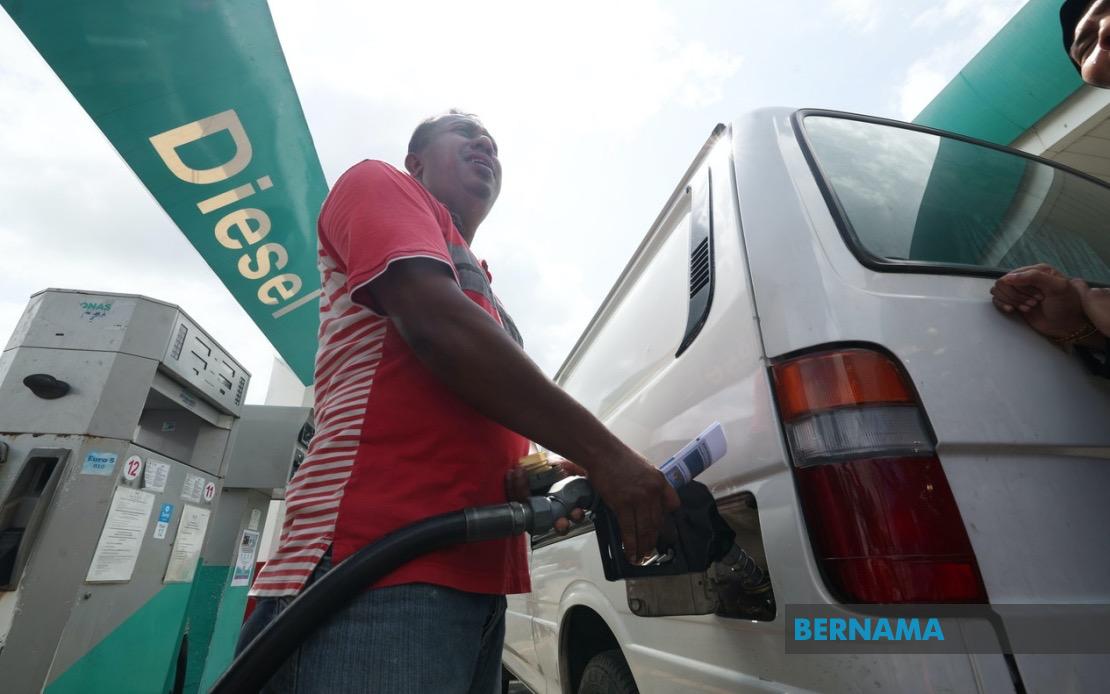
Prime Minister Datuk Seri Anwar Ibrahim has announced that the MADANI Government will reduce the price of subsidised diesel to RM2.10 per litre from July 2026, signalling a significant shift in Malaysia's fuel subsidy landscape. The announcement, made during the Cheque Handover Ceremony Following the Conversion of Bintulu Port Status from Federal Port to State Port, represents a continuation of the government's broader subsidy reform agenda aimed at making assistance more efficient and equitable.
The new pricing mechanism will operate through a reformed targeted diesel subsidy framework, drawing inspiration from the successful BUDI MADANI RON95 (BUDI95) programme that was introduced for petrol. This approach marks a departure from blanket fuel subsidies that benefit all consumers indiscriminately, instead directing support to Malaysian citizens who genuinely need assistance. The government's pivot towards targeted subsidies reflects global best practices, where countries facing fiscal constraints have increasingly shifted from universal price controls to means-tested or identity-verified support systems.
Verification through MyKad will be central to the new diesel subsidy system, ensuring that only eligible Malaysian citizens can access the subsidised rate. This digital identification mechanism mirrors the BUDI95 framework and leverages Malaysia's existing national digital infrastructure. The MyKad requirement adds a layer of administrative efficiency, allowing authorities to track subsidy uptake, prevent leakage to ineligible persons, and gather data on subsidy beneficiaries. Such targeted approaches have proven effective in neighbouring countries and demonstrate the government's commitment to fiscal responsibility while maintaining support for vulnerable populations.
For Malaysian consumers and businesses, the RM2.10 per litre price point carries significant implications across multiple sectors. Commercial transport operators, especially those in long-haul logistics, depend heavily on diesel for operations. The subsidised rate provides a cushion against volatile global oil prices, though it remains subject to future review based on fiscal conditions and international crude markets. Public transport providers and utility companies that rely on diesel generators will benefit from more predictable operating costs, contributing to broader economic stability and potentially moderating inflationary pressures on essential services.
The timing of this announcement reflects the government's phased approach to subsidy reform. By introducing the change in July 2026, policymakers provide a lead time for businesses and consumers to adjust their financial planning. This gradualist strategy contrasts with sudden price shocks that can trigger economic disruption. The government has learned from previous subsidy adjustments that advance notice, coupled with clear communication about the rationale behind reforms, helps manage public expectations and reduces resistance to necessary policy changes.
Finance Minister II Datuk Seri Amir Hamzah Azizan was scheduled to provide detailed implementation guidance, indicating that the government recognises the need for transparent communication with stakeholders. Such briefings typically address questions about eligibility criteria, distribution mechanisms, potential price adjustments, and contingencies if global oil prices spike unexpectedly. The finance ministry's involvement underscores that this is a comprehensive fiscal policy initiative, not merely an energy sector decision, reflecting broader government priorities on budget sustainability and social welfare.
Malaysia's subsidised fuel regime has long been a fiscal burden, consuming substantial portions of the annual budget that could otherwise fund education, healthcare, and infrastructure development. The transition to targeted subsidies represents an attempt to square a difficult circle: maintaining support for lower-income citizens and essential services while freeing up fiscal resources for other national priorities. This reform aligns with recommendations from international financial institutions and reflects the government's commitment to prudent fiscal management despite political pressures to maintain blanket price controls.
Regionally, Malaysia's subsidy reform effort carries relevance for other Southeast Asian nations grappling with similar challenges. Indonesia, Thailand, and the Philippines have experimented with various subsidy targeting mechanisms with mixed results. Malaysia's approach, combining digital identification, phased implementation, and clear government communication, offers a template that could inform policy discussions across the region. Successful execution could demonstrate that subsidy reform and social protection are not mutually exclusive objectives.
The diesel subsidy announcement also reflects evolving energy priorities in Southeast Asia. As countries commit to climate goals and transition toward cleaner fuels, supporting diesel consumption indefinitely becomes increasingly untenable from both fiscal and environmental perspectives. A lower subsidised price, combined with targeted access, represents a middle ground between abrupt subsidy withdrawal and perpetual support, buying time for the transport and industrial sectors to adapt to changing energy landscapes while signals long-term policy direction toward reduced reliance on fossil fuel price controls.
Business operators in transport, manufacturing, and utilities will likely engage closely with implementation details when Finance Minister Amir Hamzah Azizan releases them. Questions about MyKad application procedures, timing of price changes if crude oil volatility materialises, and potential exemptions for critical sectors will shape how smoothly the transition occurs. Industries dependent on predictable energy costs may lobby for extended notice periods or grandfathering provisions for existing long-term contracts, adding to the implementation complexity that policymakers must navigate.
The road to July 2026 will test the government's ability to communicate the necessity of subsidy reform to Malaysians accustomed to fuel price protections. Public understanding of why targeted systems serve the national interest better than universal subsidies will determine political sustainability. Past subsidy adjustments have occasionally triggered public backlash, and the government will need consistent messaging emphasising that reform ultimately protects Malaysia's economic fundamentals and creates fiscal space for investments benefiting broader segments of society. The success of this initiative will significantly influence prospects for further structural economic reforms that the MADANI Government may pursue before its term concludes.