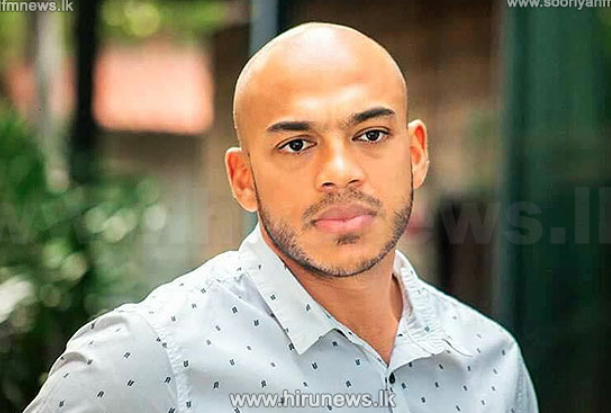
The son of Sri Lanka's former president Mahinda Rajapaksa has been taken into custody on corruption charges, marking another significant escalation in the government's crackdown against the once-dominant political dynasty. Yoshitha Rajapaksa, 38, was arrested on Wednesday by the country's anti-graft authority on allegations that he improperly accessed government resources to finance his military education abroad, a move that underscores the incoming administration's determination to hold powerful figures accountable for past misconduct.
The Bribery Commission detailed the precise nature of the accusations against the younger Rajapaksa, stating that he progressed through naval ranks despite lacking the mandatory qualifications for advancement, and subsequently utilised state coffers to fund his officer training in the United Kingdom. This arrest follows months of mounting pressure on family members and political associates connected to Mahinda Rajapaksa's administration, which governed the country between 2005 and 2015. The commission's statement emphasised that Yoshitha Rajapaksa stands charged with aiding and abetting in relation to his unqualified recruitment and the subsequent misappropriation of public money for his international education.
Yoshitha Rajapaksa's educational trajectory became a matter of public controversy years earlier. He attended Dartmouth, one of Britain's most prestigious naval institutions, with the government bearing the costs of his attendance. Many observers at the time questioned whether his placement at the academy constituted unfair advantage, arguing that the position should rightfully have gone to a naval cadet who had earned selection based purely on merit. The controversy gained particular resonance given his father's position as sitting president at the time, raising questions about potential preferential treatment.
The latest charges against Yoshitha Rajapaksa represent merely one component of a wider legal predicament facing the young officer. He had already been embroiled in two separate money-laundering investigations and remained under a foreign travel restriction. Prior to his arrest, he had been released on bail conditions, though his detention now signals that authorities view the corruption allegations with sufficient gravity to remand him in custody. This development suggests that investigators believe additional questioning and custody-based investigation remain necessary to establish the full scope of his misconduct.
The trajectory of cases against members of the Rajapaksa family has altered markedly since Sri Lanka's presidential election in 2024 brought Anura Kumara Dissanayake to power on an explicitly anti-corruption mandate. The new administration campaigned extensively on the promise to prosecute high-level officials implicated in financial crimes, and the targeting of Yoshitha Rajapaksa demonstrates that such pledges are being converted into concrete action. This shift in political will has reinvigorated investigations that had languished under previous administrations less inclined to pursue the politically powerful.
Beyond the Dartmouth training controversy, Yoshitha Rajapaksa faces additional legal liability related to his acquisition of real estate during his father's presidency. When questioned about the funding source for a residential property purchase, he provided an explanation that strains credibility. He maintained that he had obtained the necessary capital by selling gemstones that had been given to him by his grandaunt, though the relative reportedly has no reliable account of how she originally acquired the precious stones. This murky origin story now forms the basis of a criminal prosecution examining whether he could legitimately explain his sources of wealth.
Another separate case pertains to his involvement in the purchase and ownership of a television network, an investment whose financing similarly draws scrutiny from investigators. The cumulative effect of these multiple investigations creates a compounding legal exposure for Yoshitha Rajapaksa, suggesting that authorities are conducting a comprehensive examination of his financial activities spanning several years. Each case independently raises questions about appropriate conduct by a public servant, and collectively they paint a picture of systematic misuse of position for personal enrichment.
The Rajapaksa family's political dominance, which had seemed unassailable in previous years, has undergone dramatic reversal. Mahinda Rajapaksa's presidency ended in 2015, yet his influence over national politics persisted for years thereafter. His younger brother, Gotabaya Rajapaksa, assumed the presidency in 2019 but was compelled to resign in 2022 following civil unrest triggered by an unprecedented economic catastrophe that devastated ordinary Sri Lankans' livelihoods. The circumstances surrounding Gotabaya Rajapaksa's departure created political space for anti-corruption movements to gain traction.
Gotabaya Rajapaksa himself has become entangled in legal proceedings of his own. Earlier this month, authorities implemented a travel restriction preventing him from departing Sri Lanka, a measure associated with ongoing investigations into his administration's response to the Easter Sunday bombings of 2019. That terrorist attack killed 279 individuals, and Gotabaya Rajapaksa filed a court petition seeking judicial protection against potential arrest relating to allegations that his government failed adequately to prevent the attacks despite having advance intelligence warnings.
The broader context for these prosecutions involves fundamental questions about accountability in post-crisis societies. Sri Lanka's economic collapse exposed systemic governance failures and widespread corruption that had accumulated over years of unchecked executive power. The new administration's determination to investigate and prosecute family members represents an attempt to establish that no figure, regardless of political prominence or family connections, remains above the law. Whether these prosecutions will ultimately succeed depends on the strength of evidence, the independence of the judiciary, and the government's sustained commitment to pursuing cases that involve figures with continued political influence and substantial resources for legal defence.
For Malaysia and the broader Southeast Asian region, Sri Lanka's anti-corruption push offers instructive lessons about both the possibilities and limitations of post-electoral accountability efforts. The arrest of Yoshitha Rajapaksa signals that newly empowered administrations may indeed be willing to pursue previously untouchable figures, yet success remains contingent on institutional strength and political durability. The protracted nature of corruption cases means that outcomes will likely remain uncertain for years, testing whether reform commitments survive inevitable political pressures and countermeasures from the targeted families.