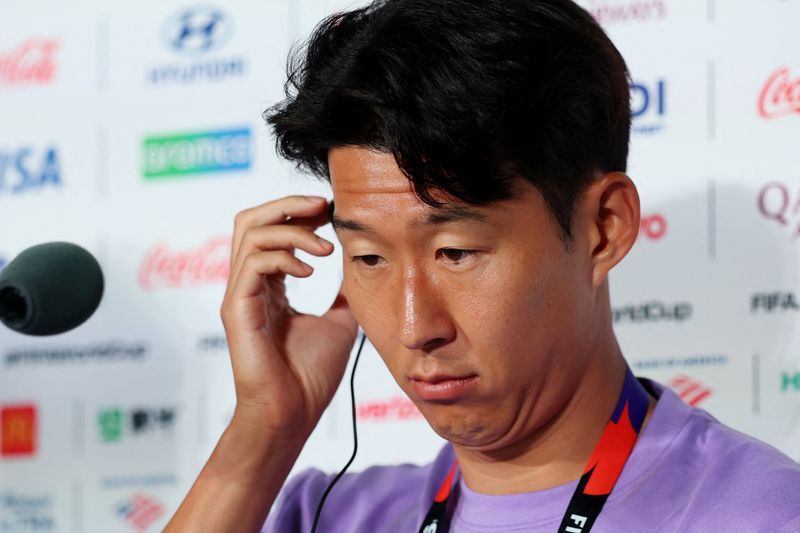
South Korea's national football team has withdrawn from voluntary media engagements during the World Cup in response to an incident involving disrespectful comments about captain Son Heung-min's military service obligations. The controversy emerged after reporters were caught on audio making derisive remarks about the 33-year-old Tottenham forward during a training session at the squad's Guadalajara base camp, according to multiple media accounts. The incident has triggered a significant rift between the national team and domestic sports media, raising broader questions about the pressure athletes face both on and off the pitch in South Korea.
Military service remains deeply embedded in South Korean society and national identity, functioning as a critical component of the country's security posture against North Korea. All able-bodied men are required to complete approximately 21 months of mandatory service, a civic obligation that shapes the lives of millions and remains socially significant regardless of celebrity status. The system, however, does provide a structured pathway for athletic exemptions, recognising exceptional achievement on the world stage as a form of national contribution. Athletes who secure gold medals at the Asian Games or Olympic Games can earn the right to defer or reduce their service obligations, a provision that underscores how South Korea values international sporting success as reflecting national pride and capability.
Son and his teammates earned this coveted exemption after delivering a gold medal victory at the 2018 Asian Games, an accomplishment that elevated their status considerably within South Korean society. Son's own military service, completed in 2020 during the COVID-19 pandemic when the Premier League was temporarily suspended, consisted of a rigorous three-week basic training programme that exposed him to demanding physical and psychological challenges. The training included exposure to tear gas, live-fire drills, and 30-kilometre hikes—experiences that demonstrated his commitment to fulfilling national obligations despite his elite athletic status. Yet rather than being viewed with respect for completing this responsibility, his service apparently became fodder for mockery among certain sections of the media.
The Korea Football Association responded to the incident with an official statement expressing regret over what it characterised as inappropriate remarks by media personnel. The KFA emphasised the team's dedication to representing the nation on football's biggest stage, underscoring their desire to honour the trust and expectations of the South Korean public. The statement highlighted how the leak of private conversations captured during training caused significant distress to the squad, disrupting morale during a period when focus and unity are essential. By characterising the remarks as both inappropriate and shocking, the KFA signalled that such conduct falls well outside acceptable professional standards for sports journalism.
The association's response extended beyond criticism to a formal plea for media outlets to exercise greater restraint and responsibility when covering the national team. This request reflects growing tensions between athletes and domestic media in South Korea, where intense scrutiny and high expectations can sometimes manifest as needless antagonism. The KFA committed itself to protecting squad members and fostering a constructive media environment, suggesting that institutional measures may be implemented to shield players from further incidents. Such protective measures, while understandable, also highlight the fragility of the relationship between sports journalists and athletes operating under immense national and cultural pressure.
While the squad has chosen to boycott voluntary media duties, FIFA's regulatory framework mandates certain minimum media participation requirements that cannot be circumvented. This distinction—between optional engagement and mandatory obligations—creates a clear boundary that allows the team to register their displeasure while still honouring their international commitments. The boycott of voluntary activities serves as a potent symbolic gesture, demonstrating the team's principled stance without jeopardising their World Cup campaign through violations of tournament regulations. It reflects a measured approach to conflict resolution that acknowledges grievance while maintaining professional obligations.
The incident reveals deeper cultural complexities surrounding military service in South Korea, where the issue intersects with national security, individual identity, and social expectation. For many South Koreans, military service represents a shared sacrifice that binds citizens together across class and profession. When athletes complete their service, they typically earn public respect for fulfilling this duty, particularly when they undertake it with visible commitment. The decision to mock Son's service, rather than acknowledging it as a commendable discharge of civic responsibility, represents a significant breach of cultural understanding and journalistic ethics.
From a regional perspective, this controversy illuminates the intense pressure that athletes in East Asia face when representing their nations in global sporting competitions. South Korea's football culture places enormous emphasis on international success as a reflection of national competence and modernity, creating an environment where both triumph and failure carry outsized significance. The media's role in this ecosystem is complicated, tasked simultaneously with promoting the national team, holding players accountable, and reflecting public sentiment. When that role is exercised irresponsibly, as appears to have occurred in this instance, it undermines the collective project of national representation.
The timing of this incident, occurring during World Cup preparations when squad cohesion is paramount, compounds its impact on team dynamics and morale. Athletes performing at the highest level require psychological stability and trust in their support systems, whether institutional or informational. A breach of that trust by domestic media can have tangible consequences for performance, as players become distracted by off-field controversies rather than concentrating on tactical preparation and competitive focus. The KFA's response attempts to shield the squad from such distractions, yet the very act of boycotting media duties ensures that the story continues circulating, potentially prolonging the negative atmosphere.
Looking ahead, this controversy may catalyse broader conversations within South Korean sports media about professional standards and ethical boundaries. The incident serves as a cautionary reminder that journalists covering national teams bear a responsibility not only to their audiences but to the athletes they cover, particularly when those athletes are operating under extraordinary pressure. The balance between legitimate scrutiny and supportive coverage remains delicate, and missteps can damage the crucial relationships needed for a healthy media-athlete ecosystem. For Malaysian and Southeast Asian observers, the incident underscores how national pride, cultural obligation, and athletic achievement intersect in complex ways across the region, shaping the experiences of athletes representing their countries on the world stage.