South Korean President Lee Jae Myung has attempted to strike a delicate balance between acknowledging legitimate public anger over election administration failures and stamping down on what he characterises as baseless allegations of voting fraud following the June 3 local elections. Speaking through social media and public statements on June 15, Lee recognised the serious nature of ballot shortages and other voting irregularities that disrupted polling on election day, yet simultaneously drew a firm line against conspiracy theories suggesting deliberate election manipulation, establishing a framework that aims to validate voter concerns without endorsing more radical interpretations of events.
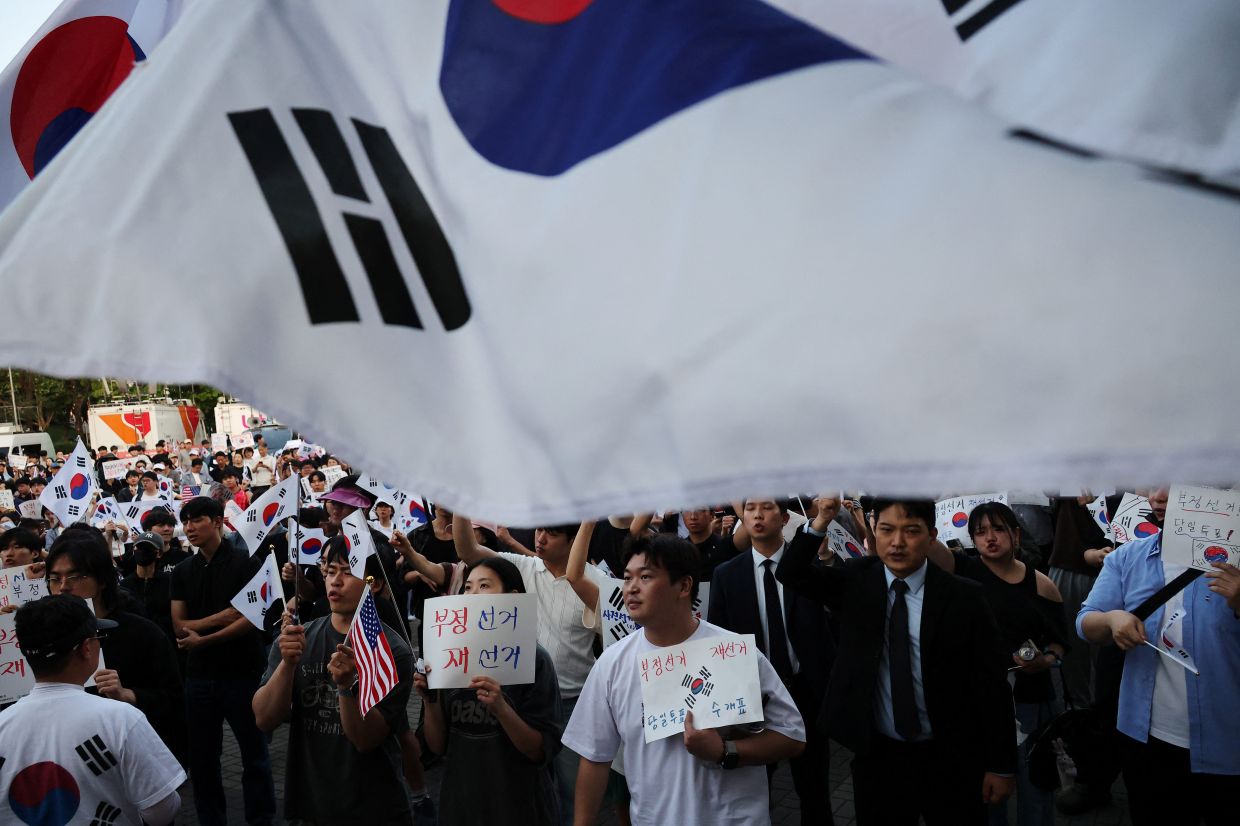
The immediate catalyst for Lee's intervention was the continuation of sustained protests around Olympic Park in southern Seoul, particularly near the handball arena that served as the vote-counting centre for the contested election. Demonstrators had maintained a visible and disruptive presence at the venue, where ballot boxes remained stored following the election, and their activities had begun to cascade into unintended consequences for legitimate operations. Sports organisations with administrative facilities within Olympic Park reported significant work disruptions as protesters blocked access routes, preventing staff from conducting essential paperwork required for South Korean athletes to participate in upcoming international competitions—a practical impact that underscored the widening ripple effects of the protest movement.
In addressing this situation, Lee deployed presidential authority to instruct police to conduct comprehensive investigations not merely into those who physically obstructed access or disrupted operations, but also into individuals who allegedly conspired to organise such blockades. This dual focus suggested an intention to prosecute both direct and indirect participants in actions deemed to have crossed the boundary from legitimate protest into unlawful obstruction. By explicitly directing law enforcement to pursue conspiracy charges, Lee signalled that the government viewed coordinated protest activity that impeded public facilities as warranting serious legal consequences, a position that would likely intensify tensions between authorities and protest organisers.
Lee's nuanced stance emerged more fully during remarks made while he presided over a meeting of senior advisers via video link from Vatican City, a setting that appeared chosen to underscore the gravitas with which he viewed the matter. He explicitly acknowledged what he termed an "infringement of the right to vote," recognising that ballot shortages and voting management failures had genuinely prevented some citizens from exercising their democratic franchise. This concession was significant, as it validated core grievances animating the protests without requiring protestors to abandon their core complaint that the National Election Commission had failed in its fundamental duty to facilitate universal suffrage.
Yet Lee's language shifted markedly when addressing claims of deliberate election manipulation. He dismissed such allegations as "absurd conspiracy theories" being deliberately amplified by unnamed "forces" seeking to exploit legitimate management failures for political advantage. In characterising fraud claims as conspiracy narratives, Lee implicitly argued that protestors were being manipulated by actors with ulterior motives, a rhetorical move designed to delegitimise and isolate hardline elements within the movement. This framing suggests the government views not merely the blocking of facilities or threatening of officials, but the very articulation of election fraud theories, as requiring legal accountability and public censure.
The president specifically cited escalating protest conduct as justifying intervention, pointing to allegations that some demonstrators had threatened police officers and citizens, conducted what he termed "incomprehensible searches and inspections," blocked facility access, and obstructed official duties. By enumerating specific alleged transgressions, Lee constructed a case that protests had evolved beyond acceptable civic engagement into unlawful conduct that breached legal and institutional boundaries. His statement that "there are lines that must be observed and the clearest of those lines are the law and institutions" functioned as a warning that further escalation would trigger state coercion, while also establishing a theoretical distinction between legitimate criticism and illegal action.
Despite his firmness regarding protest conduct and fraud allegations, Lee stopped short of dismissing the underlying election administration failures. Instead, he called for the National Election Commission to cooperate fully with a parliamentary investigation scheduled to commence within days, and urged a joint investigation team comprising prosecutors and police to accelerate fact-finding efforts "without any sanctuary"—language suggesting willingness to hold senior officials accountable regardless of rank or position. This stance allowed Lee to position himself as demanding institutional accountability while simultaneously opposing what he viewed as unwarranted leaps toward fraud allegations.
The episode reflects broader regional dynamics regarding electoral credibility and protest politics in East Asia. South Korean democracy has weathered previous periods of electoral controversy and large-scale street movements, yet each incident carries implications for public confidence in institutions and the government's perceived legitimacy. By simultaneously validating voter grievances while delegitimising fraud claims, Lee attempted to contain the controversy within technocratic frames focused on administrative improvement rather than systemic breakdown. However, this strategy risks appearing to critics as an effort to minimise what they view as more sinister irregularities while using legal mechanisms to suppress political expression.
For Southeast Asian observers, the South Korean situation offers instructive parallels regarding how governments navigate electoral controversies in increasingly polarised democracies. The distinction Lee sought to draw between legitimate criticism of administrative failures and allegations of intentional fraud mirrors debates occurring across the region regarding how to balance institutional accountability with maintaining public confidence. The use of law enforcement against protestors and the framing of fraud allegations as conspiracy theories similarly reflects governance patterns visible in multiple Southeast Asian contexts, where governments employ legal tools and rhetorical strategies to contain challenges to electoral legitimacy while ostensibly permitting legitimate dissent.
Lee's appeal for "healthy criticism and constructive alternatives" alongside transparent fact-finding represented his preferred pathway forward—one that would satisfy demands for accountability without opening space for more radical questioning of electoral integrity. Whether this framework can contain the controversy depends substantially on investigative findings and whether protestors view the parliamentary and prosecutorial inquiries as genuinely independent and capable of addressing underlying concerns. The coming weeks will likely determine whether Lee's attempt to manage competing demands proves sustainable or whether the controversy deepens, with implications extending beyond South Korea to regional perceptions of democratic resilience and state responses to electoral challenges.