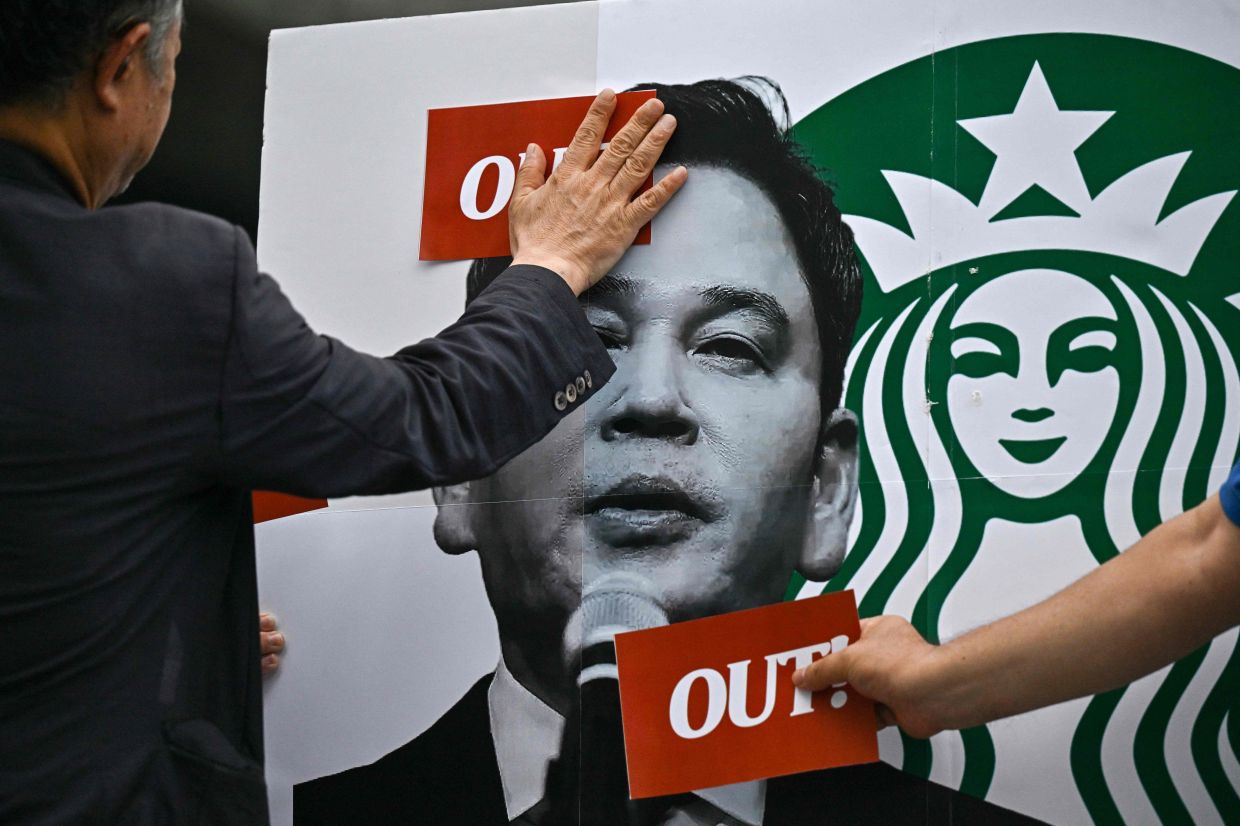
South Korean police have brought in an executive from Shinsegae Group, the operator of Starbucks Korea, for questioning as part of a widening investigation into a deeply controversial promotional campaign that inadvertently commemorated a tragic historical event. The questioning of Yang Jong-hwan, who heads Shinsegae's audit team, represents an escalation in the government's response to what has become a significant public relations crisis and cultural insensitivity controversy that triggered widespread anger across the country.
The debacle centres on a "Tank Day" reusable cup promotion that Starbucks Korea launched on May 18, a date of profound national significance in South Korea. The same date marks the anniversary of the Gwangju uprising, a pivotal 1980 pro-democracy movement during which security forces brutally suppressed civilian demonstrators. Official records document 165 deaths from the crackdown, though numerous historical accounts and eyewitness testimonies suggest the actual casualty count was considerably higher. The choice of May 18 for a commercial promotion celebrating reusable drinking vessels demonstrated a catastrophic lapse in cultural awareness and historical sensitivity that reverberated far beyond the corporate world.
The timing of the promotion struck many Koreans as either remarkably callous or deeply disrespectful, igniting a firestorm of public criticism that forced rapid corporate response. Shinsegae Group swiftly removed its Korea chief executive from his position on the day the scandal became public knowledge, signalling the severity with which the company's leadership regarded the misstep. Later, Chung Yong-jin, the chairman of Shinsegae Group, made a formal public apology in an attempt to quell the mounting backlash and demonstrate contrition. Yet these swift damage-control measures failed to satisfy civic organisations and citizens who viewed the incident as indicative of deeper institutional negligence and inadequate oversight.
Facing sustained pressure, a civic group filed an official complaint against Chung and other senior executives, invoking South Korea's 2016 law governing commemorations of the 1980 pro-democracy crackdown. The legislation contains specific provisions prohibiting the dissemination or distribution of false or misleading information regarding the historical events of that period. The complainants alleged that the executives had violated these provisions through their negligence, while also filing claims for defamation and insult. This legal avenue opened a pathway for state authorities to intervene formally in what had initially appeared to be a private corporate error.
The investigation has prompted remarkable corporate self-examination within the Starbucks Korea organisation. Internal reviews by Shinsegae identified a series of failures in due diligence and approval procedures that allowed the problematic campaign to advance toward launch. The company found that multiple officials had signed off on the promotional materials without conducting thorough checks of the design file or considering the calendar implications. This kind of institutional negligence—where important decisions pass through numerous approval stages without proper scrutiny—points to systemic weaknesses in how major corporations manage reputational risk and cultural sensitivity in their home markets.
In response to the scandal and police investigation, Starbucks Korea has announced mandatory educational measures for its workforce and leadership. All Starbucks stores across the country will close for half a day on a Monday to allow staff to participate in a structured history lesson about the 1980 Gwangju uprising and its significance in Korean national memory. Two days later, Chung and other senior executives will undergo similar educational programming. These initiatives suggest an attempt to rebuild public trust through demonstrated commitment to historical awareness and cultural education, acknowledging that commercial operations must respect the nation's difficult historical reckoning.
The controversy has tangible business consequences for one of the world's largest coffee chains. South Korea represents Starbucks' third-largest market globally, trailing only the United States and China in sales volume and strategic importance. The operator reported a "sharp decline in sales" in the immediate aftermath of the scandal becoming public, as consumers expressed their disapproval through reduced patronage. This financial impact underscores how quickly public sentiment can affect corporate performance in markets where historical sensitivities run deep and consumer activism remains vigorous.
The incident also drew criticism from high-level political figures, with President Lee Jae Myung characterising the promotion as "inhumane and disgraceful conduct." Such statements from the nation's leader emphasise that the Gwangju uprising remains a defining moment in South Korean democracy and national identity, and that corporations operating in the country must demonstrate genuine respect for this historical legacy. The presidential condemnation signals that this is not merely a corporate embarrassment but a matter touching on fundamental questions of how the nation's traumatic past is acknowledged and honoured.
The police questioning of Shinsegae executives represents the formal criminalisation of what began as corporate negligence, transforming an internal management failure into a potential legal matter. Authorities appear to be investigating whether the executives' actions—or inactions—rose to the level of violations under the 2016 law protecting the historical record of the 1980 crackdown. This approach reflects South Korea's broader commitment to ensuring that the nation's recent democratic history is not trivialised or diminished by commercial interests operating without proper regard for cultural context.
The unfolding saga offers important lessons for multinational corporations operating in markets with profound historical sensitivities. Southeast Asian companies and international businesses expanding across the region should recognise that calendar management, promotional scheduling, and campaign design cannot be purely commercial decisions divorced from local historical awareness. The Starbucks Korea incident demonstrates that inadequate due diligence in this realm can generate not only public backlash but also government investigation and legal consequences that extend far beyond reputational damage.
As investigations continue, Shinsegae has committed to cooperating fully with police and ensuring that facts are "clarified swiftly and transparently." The company's public statements suggest recognition that institutional reform and accountability are necessary to restore confidence among consumers and stakeholders. For Starbucks Korea and its parent company, the scandal represents a watershed moment that will likely reshape how international coffee chains approach market operations in countries where historical memory remains central to national identity and civic discourse.

%22%2F%3E%3C%2Fpattern%3E%3C%2Fdefs%3E%3Crect%20width%3D%22100%25%22%20height%3D%22100%25%22%20fill%3D%22url(%23ph523ndg)%22%2F%3E%3Crect%20width%3D%22100%25%22%20height%3D%22100%25%22%20fill%3D%22url(%23ph523ndp)%22%2F%3E%3Ctext%20x%3D%2250%25%22%20y%3D%2250%25%22%20text-anchor%3D%22middle%22%20dominant-baseline%3D%22central%22%20fill%3D%22rgba(255%2C255%2C255%2C0.95)%22%20font-family%3D%22Georgia%2C%20'Times%20New%20Roman'%2C%20serif%22%20font-weight%3D%22700%22%20font-size%3D%22272%22%20letter-spacing%3D%22-0.02em%22%3EAnwar%3C%2Ftext%3E%3C%2Fsvg%3E)