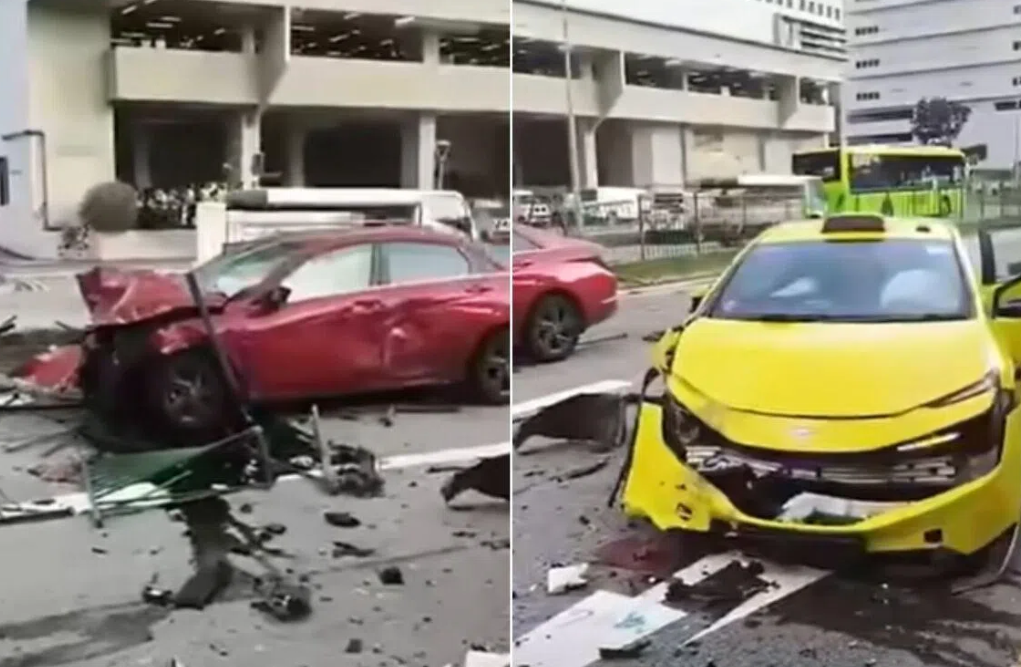
A 36-year-old man faces serious criminal charges following a vehicle collision in Singapore's Kallang area that left two people injured, with authorities alleging he was driving under the influence of the drug methamphetamine, commonly known as Ice. Mohamed Firdouz Mohamed Akram was charged on June 19 with a slate of offences that extend far beyond the traffic incident itself, reflecting the scope of police investigations into his conduct that morning and the hours that followed.
The core incident occurred on the morning of June 17 when Firdouz allegedly operated a motor vehicle along Kallang Bahru at approximately 8am despite being impaired by drug consumption. According to court documents presented during his charges hearing, he failed to maintain adequate control of the car, a lapse in driving that culminated in a collision with a taxi carrying two occupants. The 60-year-old taxi driver sustained chest pain injuries from the impact, while his 43-year-old passenger reported tailbone trauma. Both individuals required medical attention, their injuries incorporated into the charges against Firdouz as an aggravating factor that elevated his culpability beyond simple traffic violations.
The circumstances surrounding the immediate aftermath of the crash reveal a pattern of evasion that caught police attention. Rather than remaining at the scene, Firdouz abandoned his vehicle and fled before officers arrived to investigate. This flight from the collision site became a critical investigative thread that would ultimately lead to his apprehension. Within five hours of the initial police report, authorities had established his identity and successfully arrested him, demonstrating the efficiency of Singapore's rapid response mechanisms for serious traffic incidents involving injuries. The speed of his arrest underscored how quickly investigators could piece together identifying information from the abandoned vehicle and witness statements.
Once apprehended, the scope of evidence recovered during police investigations broadened significantly. Officers searching Firdouz's vehicle discovered what they describe as suspected drugs alongside drug-related paraphernalia, vaporisers, and a knuckleduster. These items were seized as exhibits for the prosecution's case. Further investigation revealed that Firdouz allegedly possessed two knives in a room at the Village Hotel Katong on Marine Parade Road around 1pm on June 17, the same day as the traffic incident. These weapons discoveries resulted in two separate weapons possession charges that compound the legal jeopardy he faces beyond the driving-related offences.
The charges laid against Firdouz reflect a judicial approach that addresses both the immediate danger posed by impaired driving and the broader context of his conduct. Driving without a valid Class 3 licence—the category required for private motor vehicles in Singapore—represents a fundamental licensing violation. More seriously, the charge of operating a motor vehicle while under the influence of methamphetamine targets the core impairment that prosecutors will argue rendered him incapable of safe driving. The dangerous manner driving charges that resulted in injuries to the taxi occupants carry particularly severe potential penalties, reflecting how the law treats situations where criminal driving directly harms innocent parties.
Under Singapore's transport regulations, driving while impaired by drugs carries maximum penalties of one year imprisonment, a fine up to S$10,000, or both. These sanctions acknowledge the serious public safety risk posed by drug-impaired driving, which can impair reaction times, judgment, and vehicle control comparably to alcohol intoxication. For those convicted of causing injury to others while driving dangerously, sentencing guidelines permit up to one year in jail coupled with fines ranging from S$2,000 to S$10,000. The compound effect of multiple charges means Firdouz potentially faces cumulative penalties that could result in substantial incarceration and financial consequences, depending on how the court structures any eventual conviction.
The case carries implications beyond the immediate circumstances for Malaysian and regional readers, particularly regarding cross-border road safety awareness. The method of enforcement in Singapore—rapid identification, swift arrest, and comprehensive investigation of the broader context surrounding the incident—contrasts with varying approaches across Southeast Asia. Firdouz's case illustrates how a single traffic incident can balloon into multiple charges when the investigation reveals ancillary criminal activity, particularly drug possession and weapons offences. This interconnected nature of the allegations suggests that impaired driving incidents often correlate with other criminal conduct, a pattern worth noting for road safety advocates and law enforcement across the region.
The presence of drug paraphernalia and vaporising devices in the vehicle provides context suggesting habitual substance use rather than isolated impairment. Similarly, the weapons found in his hotel room hours after the crash indicate a broader pattern of criminal involvement that transcends a momentary lapse in judgment while driving. Prosecutors will likely use this evidence to paint a picture of systemic criminal behaviour rather than defending against a simple negligent driving charge. The narrative becomes one of an individual engaged in multiple serious offences whose drug impairment during driving created a specific danger that materialised in the collision with the taxi.
From a regional perspective, this case underscores the intersection of drug abuse, dangerous driving, and broader criminal conduct that law enforcement agencies across Southeast Asia increasingly confront. The methamphetamine economy in the region remains robust, with Ice representing one of the most prevalent illicit substances driving both addiction and criminal activity. Drivers operating under methamphetamine influence present elevated dangers not merely because of their impairment but because their involvement with the drug economy frequently correlates with weapons possession, flight from law enforcement, and other destabilising criminal behaviours. The Kallang incident exemplifies how a single careless moment behind the wheel can expose a larger web of criminal conduct when authorities investigate thoroughly.
Firdouz's case will return to court for its next mention on July 17, when prosecutors and the defence will presumably begin substantive discussions about how the charges will proceed. Whether the matter advances to trial, results in guilty pleas to some or all charges, or involves negotiations regarding sentencing recommendations remains to be determined. The court documentation will likely be closely followed by traffic safety advocates and law enforcement agencies across Singapore and neighbouring jurisdictions as another data point in understanding the correlation between drug impairment, dangerous driving, and broader criminality. For Malaysian authorities overseeing traffic safety and drug enforcement, the comprehensive nature of Singapore's response to this incident—charging not only the driving offence but also the drug and weapons possession—offers a template for how interconnected criminal conduct can be simultaneously addressed through the courts.

%22%2F%3E%3C%2Fpattern%3E%3C%2Fdefs%3E%3Crect%20width%3D%22100%25%22%20height%3D%22100%25%22%20fill%3D%22url(%23ph523ndg)%22%2F%3E%3Crect%20width%3D%22100%25%22%20height%3D%22100%25%22%20fill%3D%22url(%23ph523ndp)%22%2F%3E%3Ctext%20x%3D%2250%25%22%20y%3D%2250%25%22%20text-anchor%3D%22middle%22%20dominant-baseline%3D%22central%22%20fill%3D%22rgba(255%2C255%2C255%2C0.95)%22%20font-family%3D%22Georgia%2C%20'Times%20New%20Roman'%2C%20serif%22%20font-weight%3D%22700%22%20font-size%3D%22272%22%20letter-spacing%3D%22-0.02em%22%3EAnwar%3C%2Ftext%3E%3C%2Fsvg%3E)