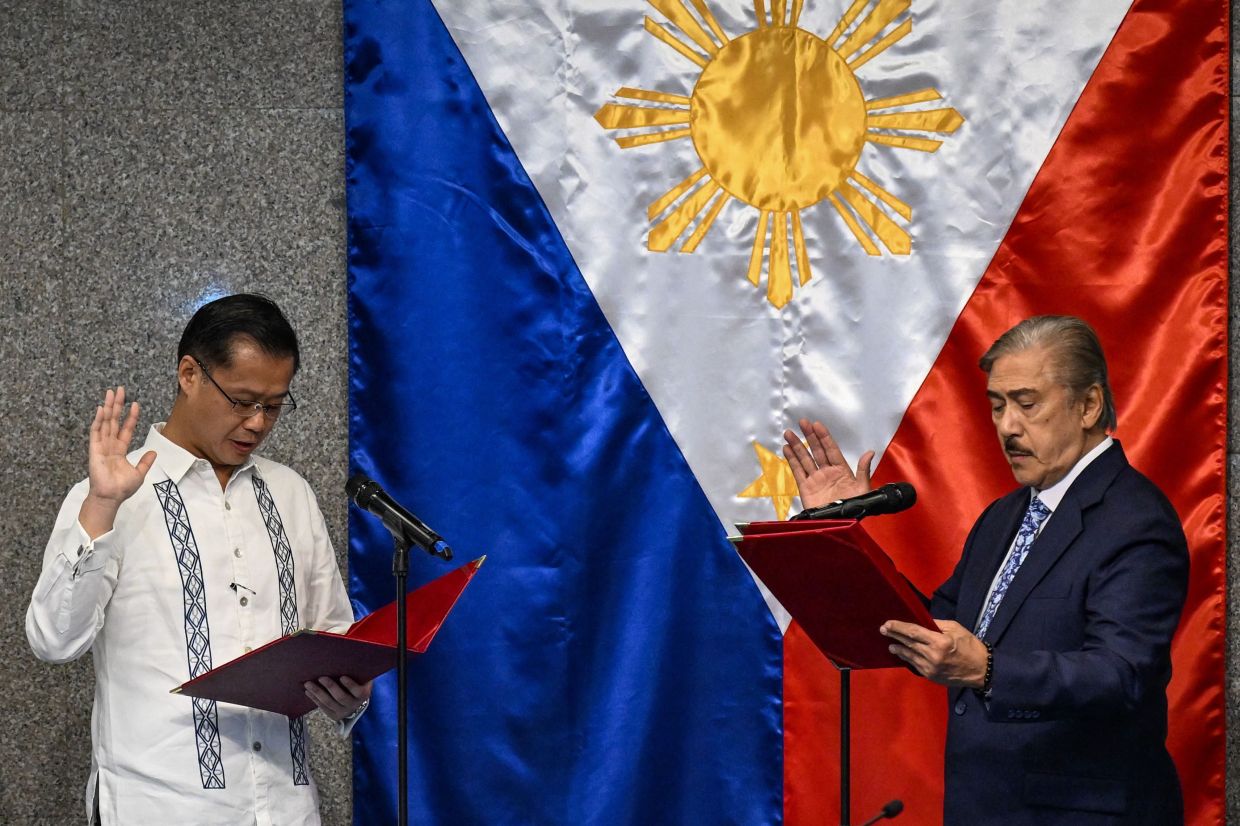
Senator Sherwin Gatchalian has been elected as the new president of the Philippine Senate after a special session held Wednesday where the chamber's political dynamics shifted dramatically. The 13 senators who attended the vote represented the bare minimum required to elect a new presiding officer, highlighting the fractured nature of the 24-member chamber and the razor-thin majorities that characterize current Senate politics. Gatchalian, who brings extensive legislative experience from his previous roles as Mayor of Valenzuela City in Metro Manila and a member of the House of Representatives, assumes leadership at a time of considerable institutional instability within the upper chamber.
The path to Gatchalian's election underscores the volatile political alignments that have emerged in the Philippine Senate. Just two weeks prior, on June 3, a coalition of 12 senators had moved to install Gatchalian as Senate president pro tempore, simultaneously declaring that Alan Peter Cayetano, who had assumed the presidency on May 11, had vacated the position. Cayetano contested this assessment, insisting that he retained the Senate presidency and asserting that a 13-senator quorum was necessary to conduct business relating to the election or removal of Senate officers. The technical dispute over voting thresholds concealed deeper fissures within the chamber regarding power distribution and control.
The breakthrough came when Senator Joel Villanueva, a figure who had previously aligned with Cayetano's faction, reversed course and lent his support to Gatchalian's bloc. This single defection proved decisive. Villanueva's shift transformed the mathematical reality of the Senate, moving the Gatchalian faction from a 12-senator plurality to a 13-senator majority. Cayetano himself acknowledged this arithmetic on Tuesday, recognizing that the political terrain had fundamentally altered following his conversation with Villanueva. Rather than stage a prolonged contest he was unlikely to win, Cayetano indicated his willingness to step aside from the Senate presidency, effectively conceding defeat without forcing a formal removal vote.
Gatchalian's elevation highlights the personal allegiances and transactional relationships that frequently determine leadership contests within the Philippine Congress. The Senate presidency carries significant procedural authority and symbolic weight, controlling the legislative agenda and determining which bills receive priority consideration. As the presiding officer, Gatchalian will wield influence over committee assignments, scheduling, and the floor management that shapes legislative outcomes. His background in local government and the House suggests familiarity with navigating competing factional interests, though the Senate operates under different dynamics and institutional cultures.
The current composition of the Senate presents Gatchalian with immediate governance challenges. The chamber nominally comprises 24 members, yet only 22 senators are currently sitting. Senator Jinggoy Estrada surrendered to police authorities earlier in June and faces graft charges before the Sandiganbayan, the anti-graft court, which ordered his suspension from office for 90 days. This suspension effectively removes him from legislative participation for the duration of the penalty. More dramatically, Senator Ronald Dela Rosa remains at large as a fugitive, wanted by the International Criminal Court for crimes allegedly committed during his tenure as national police chief. His location remains unknown, and his absence further depletes the Senate's available membership.
These absences mean that the effective Senate majority consists of substantially fewer than the 24 senators for which the chamber was designed. A 13-senator coalition therefore represents nearly 60 percent of the sitting membership, yet only slightly more than half of the full authorized strength. This structural weakness complicates legislative operations, as unexpected absences, illness, or further political defections could undermine Gatchalian's ability to maintain his coalition. The dependency on narrow, precarious majorities limits the president's capacity to advance an ambitious legislative agenda and necessitates constant attention to coalition maintenance.
For Malaysian observers and Southeast Asian policymakers, the Philippine Senate's current instability carries broader regional implications. Legislative dysfunction in the Philippines affects bilateral relations, trade negotiations, and regional security cooperation. Prolonged internal battles over Senate leadership divert attention from substantive legislation addressing economic development, infrastructure, and regional integration. The institutional turmoil also raises questions about the resilience of the Philippines' democratic institutions and the strength of its legislative processes during periods of political fragmentation.
Gatchalian's task as Senate president will require careful balance between competing factions while maintaining focus on legislative priorities. His prior experience in Valenzuela City government provides background in managing diverse stakeholder interests, though the Senate operates at a national scale with considerably higher political stakes. He must consolidate his coalition while preventing further defections that could destabilize his position. The Senate's ongoing dysfunction—exemplified by the rapid succession of leadership contests and the current shortage of sitting members—suggests that structural reforms to the chamber's operations may ultimately prove necessary to restore institutional effectiveness.
The political maneuvering surrounding Gatchalian's election reflects persistent challenges within the Philippine legislative system, where party discipline remains weak and personal political networks often supersede formal institutional structures. Senators frequently shift alliances based on immediate political calculations rather than consistent ideological or party-based positioning. This fluidity, while sometimes enabling compromise and pragmatic decision-making, can also produce gridlock and prevent coherent policy implementation. As Gatchalian assumes the presidency, his success will likely depend less on the ideological vision he articulates and more on his ability to manage the competing personal interests that characterize Philippine Senate politics.

%22%2F%3E%3C%2Fpattern%3E%3C%2Fdefs%3E%3Crect%20width%3D%22100%25%22%20height%3D%22100%25%22%20fill%3D%22url(%23ph523ndg)%22%2F%3E%3Crect%20width%3D%22100%25%22%20height%3D%22100%25%22%20fill%3D%22url(%23ph523ndp)%22%2F%3E%3Ctext%20x%3D%2250%25%22%20y%3D%2250%25%22%20text-anchor%3D%22middle%22%20dominant-baseline%3D%22central%22%20fill%3D%22rgba(255%2C255%2C255%2C0.95)%22%20font-family%3D%22Georgia%2C%20'Times%20New%20Roman'%2C%20serif%22%20font-weight%3D%22700%22%20font-size%3D%22272%22%20letter-spacing%3D%22-0.02em%22%3EAnwar%3C%2Ftext%3E%3C%2Fsvg%3E)