The Selangor State Secretary's Office has issued a public advisory urging residents to exercise heightened caution regarding unsolicited text messages and online communications claiming to be connected with the KitaSelangor Voucher incentive scheme. State authorities are particularly concerned about scammers attempting to deceive residents by sending phishing links and fraudulent notifications, with the explicit goal of compromising personal information and financial details. The alert underscores the growing sophistication of online fraud targeting government assistance programmes across Malaysia, where legitimate-sounding communications can easily mislead vulnerable populations seeking financial relief.
A critical detail from the state government's announcement is that the KitaSelangor Voucher Programme has not commenced its public application phase. This timing is significant because scammers are deliberately exploiting public anticipation and awareness of the scheme to engineer convincing fake messages. By circulating fraudulent SMS communications before official channels activate, criminals create a window of confusion where residents may struggle to distinguish legitimate notifications from fabricated ones. The state authorities have explicitly advised residents to disregard any messages received from unverified or unauthorised sources, no matter how official they may appear in formatting or tone.
Official notification of eligible recipients is scheduled to commence on June 23, with the state government planning to contact qualified applicants through legitimate SMS channels in a phased rollout. However, prior to this date, all legitimate communications will be restricted to official state government platforms and announcements. Residents should treat any messages received before the official June 22 state announcement with considerable suspicion. The structured timeline is designed to create clarity for the public, allowing authorities to maintain control over information dissemination and preventing the circulation of misinformation that could undermine programme credibility.
When official notifications do arrive, eligible recipients will be guided to verify their personal details and complete application submissions exclusively through the KitaSelangor Voucher Portal, alongside submission of required documentation. The portal-based system provides a secure environment where residents can authenticate communications and protect their information from interception. Residents should never provide personal or financial information through SMS links, email attachments, or third-party websites, as legitimate government agencies consistently direct applicants toward official dedicated portals rather than external channels.
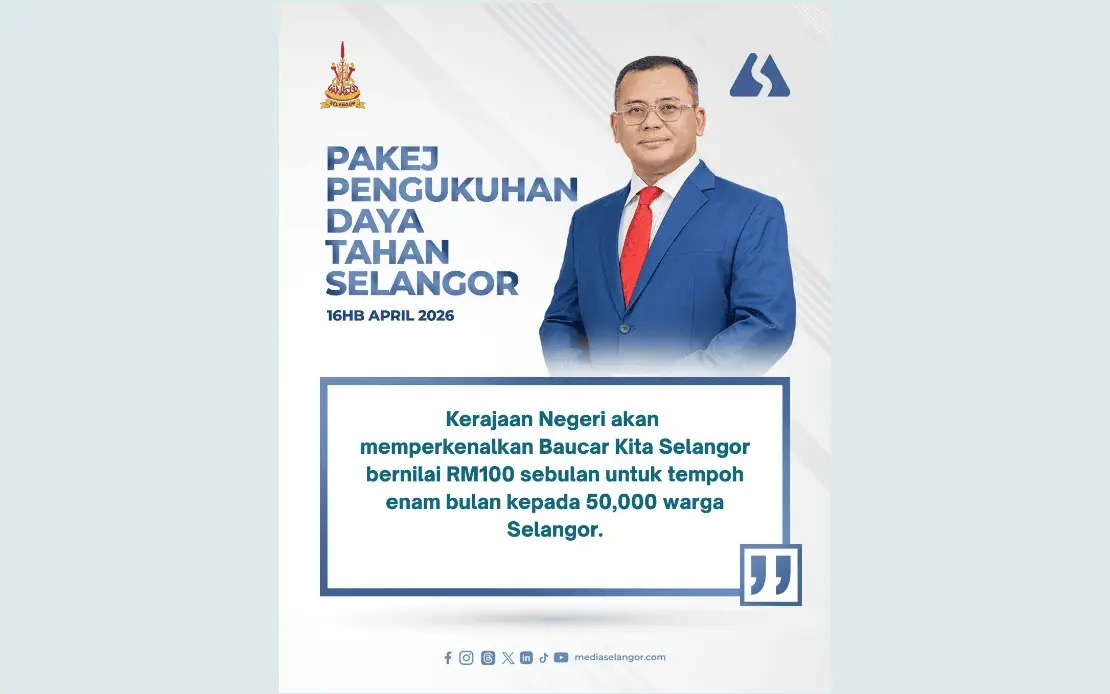
The KitaSelangor Voucher initiative represents a substantial financial commitment from the state government, with Selangor Menteri Besar Datuk Seri Amirudin Shari announcing that approximately 50,000 low-income households will receive monthly cash assistance of RM100 for a six-month period. This translates to RM600 per eligible household, forming part of a broader RM140 million Selangor Resilience Strengthening Package unveiled in April. The programme addresses mounting economic pressures confronting state residents, including inflation, escalating cost of living, employment displacement, and global supply chain disruptions. Given the substantial sums involved and the genuine need among target populations, scammers have compelling incentive to engineer convincing fraudulent communications.
Beneficiary targeting will follow a systematic data-driven approach, focusing on households identified through existing government registries and databases. Eligible groups encompass households registered in the eKasih poverty database, workers who have experienced recent job losses, individuals classified as vulnerable populations by the Social Welfare Department (JKM), and single mothers satisfying specified eligibility benchmarks. This targeted distribution methodology ensures assistance reaches those facing genuine hardship while creating a defined beneficiary list against which residents can verify their eligibility status through official government sources. The selective approach distinguishes legitimate programme operations from indiscriminate scam messages that typically target broad audiences.
The KitaSelangor Voucher programme implementation begins on June 30, providing residents with approximately two weeks from the announcement date to prepare required documentation and familiarise themselves with application procedures. This implementation window offers residents reasonable time to gather supporting evidence and understand programme requirements through official announcements, while simultaneously limiting the period during which scammers can exploit confusion and uncertainty. Residents planning to apply should begin assembling necessary documents immediately upon receiving official notification, rather than waiting until application deadlines approach.
For Malaysian readers unfamiliar with similar assistance schemes, it is important to understand that fraudulent programmes targeting government aid have proliferated throughout Southeast Asia as digital literacy gaps persist and economic hardship intensifies competition for available assistance. Selangor's proactive fraud warning reflects broader regional challenges where criminals exploit residents' legitimate expectations of government support. Similar schemes in neighbouring states and countries have experienced fraud attempts, demonstrating that vigilance remains essential regardless of programme credibility or government backing.
Residents seeking information should exclusively consult official Selangor State Government communications channels, including the state government website, official social media accounts, and announcements from state agencies. Any communication received through alternative channels should be independently verified against official sources before residents take action or provide personal information. This verification step remains crucial even when communications appear professionally formatted or reference authentic programme details, as sophisticated fraudsters frequently incorporate legitimate information to enhance deception credibility.
The advisory serves as a broader reminder that government agencies will never request sensitive financial information through SMS or email, nor will they ask residents to click links in unsolicited messages to access assistance programmes. Legitimate government processes consistently direct applicants toward secure authenticated portals and official locations where identity verification occurs transparently. Residents harbouring doubts about communication authenticity should contact official state government offices directly using verified contact numbers rather than responding to suspicious messages or following embedded instructions.