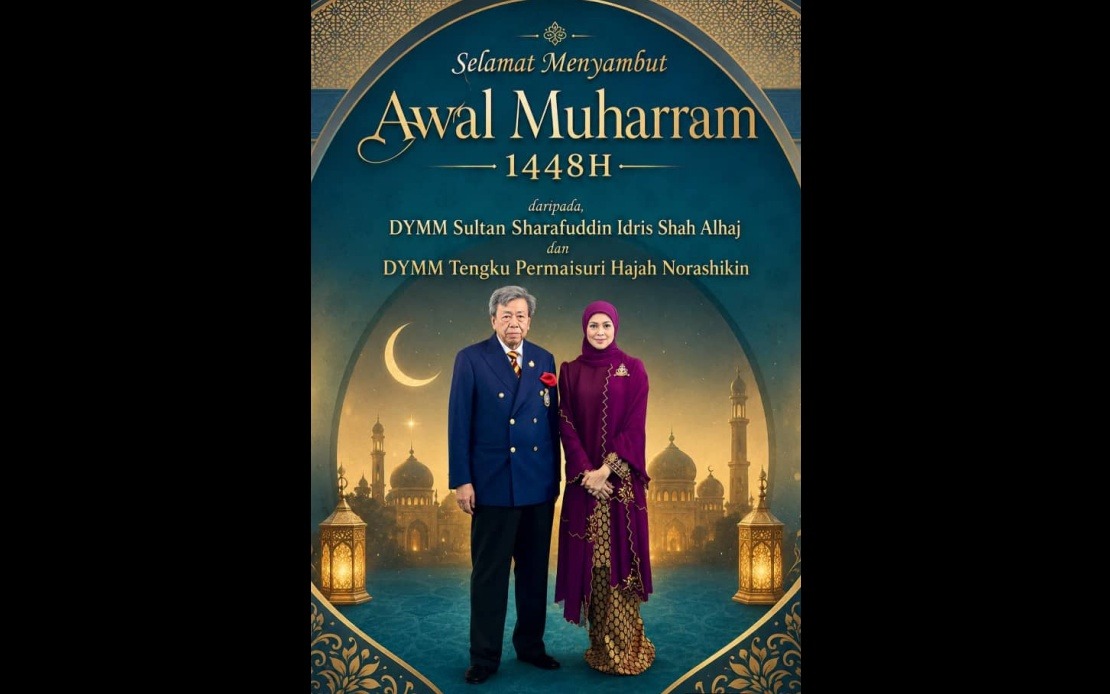
Sultan Sharafuddin Idris Shah renewed his appeal to the Muslim community to place collective harmony above individual concerns as Selangor joined the nation in observing Maal Hijrah 1448H, the Islamic new year. Speaking in Shah Alam on June 16, the ruler framed the occasion not as a mere commemoration of historical migration, but as a transformative moment calling for spiritual renewal and strengthened bonds within the ummah.
The Sultan's remarks reflected a deeper interpretation of the Hijrah concept, moving beyond its literal meaning as a physical journey from one place to another. Instead, he presented it as emblematic of positive transformation and the consolidation of Muslim solidarity. This reframing carries particular significance in a Malaysian context where religious harmony and national cohesion remain foundational to social stability.
Drawing on paternal wisdom, the Sultan referenced guidance from his late father, Sultan Salahuddin Abdul Aziz Shah, who consistently emphasised restraint in expressing disagreements within the community. The lineage of such counsel underscores how institutional leadership has long viewed intra-Muslim dialogue as a delicate matter requiring discipline and propriety. The Sultan articulated a framework for addressing contentious issues: they should be discussed with wisdom and courtesy, channelled through private forums rather than public platforms where unfiltered rhetoric can inflame tensions.
The monarch elaborated on the mechanics of constructive disagreement, suggesting that when corrections are necessary or opinions diverge, they must be communicated with decorum and good faith. This approach reflects Islamic principles of admonition and mutual accountability that, when properly executed, strengthen rather than fracture communities. The emphasis on tone and venue—private rather than public—reveals an underlying concern that open quarrelling inadvertently weakens the collective by exposing internal fractures.
Internal disputes that escalate to public view carry compounding risks, as the Sultan outlined. When divisions become visible to outsiders, they create vulnerabilities that adversaries or competitors can exploit. This assessment carries weight in Malaysia's pluralistic environment, where religious and inter-communal dynamics are closely scrutinised. The ruler's warning that persistent public conflict produces no victors—only mutual damage—reflects realpolitik thinking about the costs of unmanaged sectarian or doctrinal disagreement.
The Sultan called upon the Muslim population to embrace the Hijrah spirit by consolidating unity, nurturing reciprocal tolerance, and subordinating narrow interests—whether personal, sectional, or ideological—to broader religious and national objectives. This formulation places the ummah's welfare and national stability at the apex of the moral hierarchy, demanding that Muslims subordinate parochial concerns to collective good.
He also articulated hope that the new Islamic year would usher in material and spiritual prosperity while catalysing renewed commitment to interfaith and intra-faith harmony. The dual emphasis on inter-Muslim reconciliation and broader societal peace reflects the Sultan's understanding that religious community cohesion directly affects national well-being. In Malaysia's context, where diverse populations coexist, Muslim institutional voices promoting internal discipline carry implications for public order and intercommunal relations.
The timing of such appeals—during a significant Islamic observance—lends them heightened cultural weight. Maal Hijrah celebrations reach millions across Malaysia and beyond, making this an amplified platform for messaging about collective responsibility and restraint. The Sultan's intervention signals that custodians of institutional authority view contemporary discourse patterns as requiring course correction.
The broader implications extend to how Malaysian Islam navigates modern challenges. Social media and digital platforms have democratised public commentary, making it increasingly difficult to contain disputes within private channels. The Sultan's emphasis on pre-digital norms of consultation and restraint suggests concern about these technological disruptions to traditional governance of Muslim discourse. His message indirectly addresses how contemporary communication patterns test historical protocols designed for more controlled information environments.
For Malaysia's multicommunal polity, a Sultan's call for Muslim internal discipline carries reassuring valence, signalling that major religious institutions prioritise social peace over amplifying grievances. Conversely, it may also reflect underlying anxieties about fragmentation or discourse quality within Muslim communities that necessitate such reinforcement. The need to reiterate these principles annually suggests they require persistent reinforcement in contemporary contexts.
The Sultan's framing of Hijrah as spiritual renewal rather than historical recollection offers a template for contemporary Islamic thought that prioritises timeless moral principles over particular political or sectarian agendas. By grounding his appeal in foundational Islamic values and filial continuity with his predecessor's teachings, he positioned unity as an enduring obligation rather than expedient preference. This theological grounding strengthens the message's resonance within Muslim populations for whom such institutional religious voices carry normative weight.