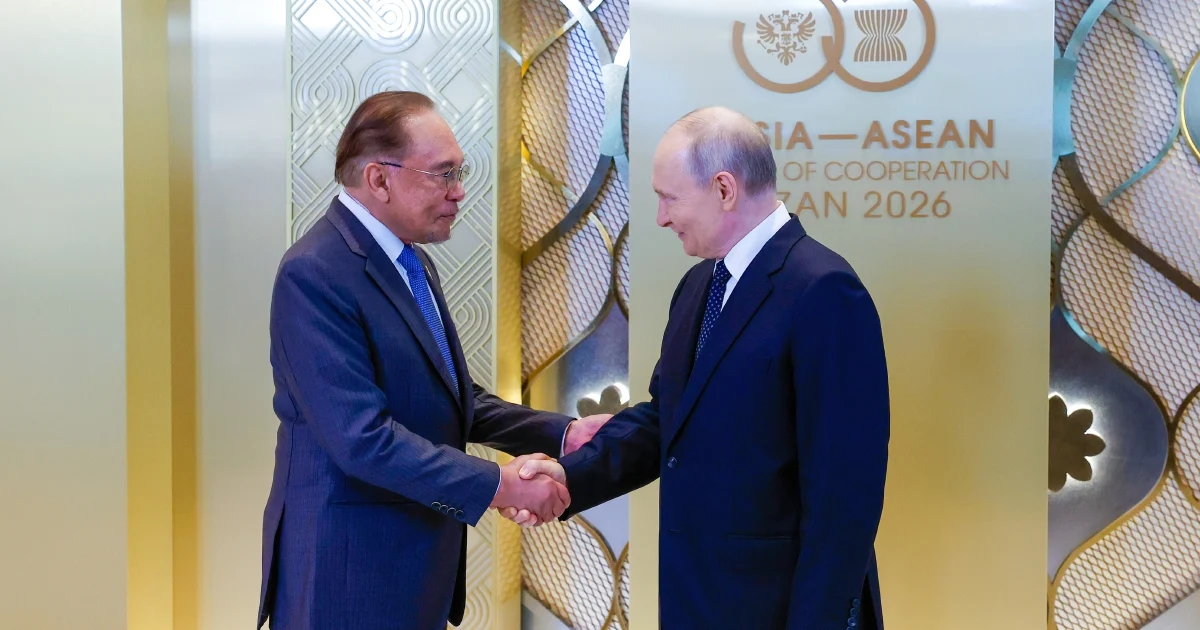
Prime Minister Datuk Seri Anwar Ibrahim has secured a significant commitment from Russian President Vladimir Putin to supply Malaysia with energy on a sustained basis, marking another milestone in the nation's efforts to diversify its international energy partnerships and shield itself from market volatility. The assurance, articulated during discussions between Malaysian and Russian officials, represents part of a broader initiative to establish enduring relationships with major global energy producers that can anchor Malaysia's long-term economic stability and industrial competitiveness.
Malaysia's pursuit of multiple energy supply channels reflects the economic realities facing the nation as it navigates an increasingly complex geopolitical landscape where energy security directly impacts manufacturing capacity, electricity costs, and household affordability. By cultivating strategic relationships with established energy powerhouses like Russia, Malaysia positions itself to negotiate favourable terms and maintain consistent access to fuel supplies that are essential for sustaining economic growth. This approach contrasts with an over-reliance on any single supplier and provides negotiating leverage when international energy prices fluctuate or supply disruptions occur elsewhere.
The significance of Russia's commitment to Malaysia extends beyond immediate commercial transactions. Russian energy exports have become increasingly important to Asian markets as geopolitical tensions in Europe redirect Moscow's trade focus toward countries seeking alternative suppliers outside Western-aligned frameworks. For Malaysia, engaging Russia represents both a pragmatic energy procurement strategy and a demonstration of its non-aligned foreign policy positioning, whereby the nation maintains diplomatic relationships across competing global power blocs to preserve strategic autonomy.
Anwar's emphasis on energy security speaks to systemic vulnerabilities in Southeast Asia's energy infrastructure. The region remains heavily dependent on imported oil and liquefied natural gas, with prices denominated in US dollars and subject to international market fluctuations beyond regional control. Malaysia itself, despite significant domestic hydrocarbon reserves, faces mounting domestic energy demands as its economy expands and population grows. Securing long-term supply agreements with diverse partners helps insulate the nation from sudden price shocks or political leverage that external actors might otherwise exert through energy embargoes or supply manipulation.
The Russian partnership announcement also underscores Malaysia's deliberate diversification of energy sources and suppliers. While the nation continues extracting crude oil and natural gas domestically, and maintains relationships with Middle Eastern producers, adding Russia to this portfolio demonstrates sophisticated energy diplomacy. This multi-pronged approach reduces vulnerability to disruptions affecting any particular production region, whether caused by conflict, weather, environmental restrictions, or technical failures.
From a regional perspective, Malaysia's energy agreements carry implications for ASEAN stability and cohesion. As Southeast Asian nations increasingly compete for energy resources and develop bilateral partnerships, the collective bargaining power of the region can either strengthen or fragment depending on whether nations pursue complementary or conflicting strategies. Malaysia's independent approach to securing Russian energy, while economically rational, may influence how neighbouring countries conduct their own energy diplomacy and could subtly reshape the balance of influence within regional organisations.
Domestic energy costs remain politically sensitive in Malaysia, where citizens have experienced multiple rounds of subsidy adjustments and utility price increases over the past two decades. By securing long-term agreements with reliable suppliers, the government can present a narrative of proactive management and protection of consumer interests. Predictable energy costs translate into more stable inflation rates, which affects household purchasing power and business planning across all sectors of the economy.
The timing of this commitment is noteworthy given Malaysia's development trajectory. The nation is transitioning toward renewable energy sources and pursuing ambitions to reduce carbon emissions, yet this transition requires time and substantial investment. During the interim period, maintaining access to conventional energy sources like natural gas and oil is essential for meeting economic demands without allowing energy shortages to constrain growth or force reliance on more expensive alternatives. Russia's willingness to commit to long-term supplies provides breathing room for Malaysia to execute its energy transition at a sustainable pace rather than under crisis conditions.
International energy markets have grown increasingly contested, with major producers using supply as a geopolitical tool to advance diplomatic objectives. By establishing formal, long-term agreements with Russia, Malaysia creates contractual frameworks that reduce uncertainty and provide legal recourse if either party contemplates unilateral action. Such arrangements typically include pricing mechanisms, delivery schedules, and dispute resolution procedures that protect Malaysian interests during periods of international tension.
For regional investors and businesses operating in Malaysia, energy security assurances carry direct implications for operational planning and competitiveness. Manufacturing facilities, data centres, and industrial operations factor energy reliability and cost predictability into location decisions. A government that demonstrates competent management of energy supply chains attracts investment and enables private sector growth. Conversely, regions beset by energy insecurity or volatile pricing see capital flee toward more stable competitors.
Moving forward, how Malaysia manages its relationship with Russia while maintaining constructive engagement with Western nations will test the nation's diplomatic skill. The energy sector provides common ground for cooperation across ideological divides, as Russia benefits from reliable customer relationships and Malaysia benefits from stable supply. Compartmentalising energy relationships from broader geopolitical positioning allows nations to cooperate pragmatically on mutual interests without requiring alignment on unrelated issues.

%22%2F%3E%3C%2Fpattern%3E%3C%2Fdefs%3E%3Crect%20width%3D%22100%25%22%20height%3D%22100%25%22%20fill%3D%22url(%23ph40xibg)%22%2F%3E%3Crect%20width%3D%22100%25%22%20height%3D%22100%25%22%20fill%3D%22url(%23ph40xibp)%22%2F%3E%3Ctext%20x%3D%2250%25%22%20y%3D%2250%25%22%20text-anchor%3D%22middle%22%20dominant-baseline%3D%22central%22%20fill%3D%22rgba(255%2C255%2C255%2C0.95)%22%20font-family%3D%22Georgia%2C%20'Times%20New%20Roman'%2C%20serif%22%20font-weight%3D%22700%22%20font-size%3D%22272%22%20letter-spacing%3D%22-0.02em%22%3EMITRA%3C%2Ftext%3E%3C%2Fsvg%3E)