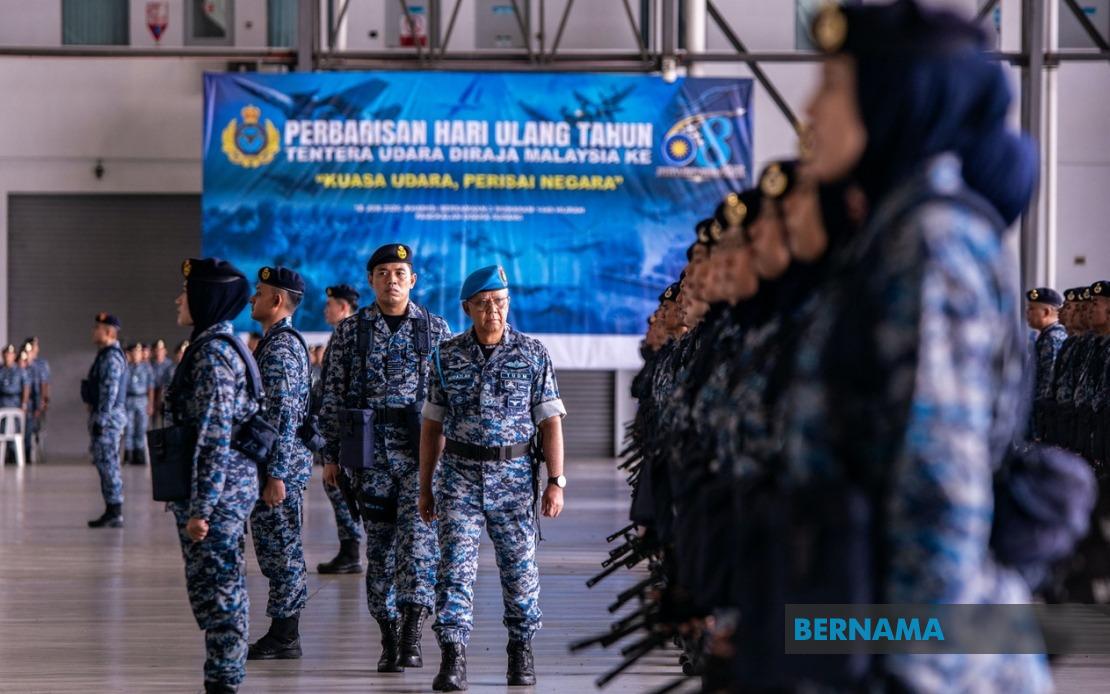
The Royal Malaysian Air Force is significantly upgrading its defensive infrastructure by deploying cutting-edge radar systems across the nation, marking a substantial step forward in the country's response to evolving regional security dynamics. During the RMAF's 68th Anniversary Parade in Subang on June 18, Chief of Air Force General Tan Sri Muhamad Norazlan Aris unveiled details of the multi-location installation project, which represents the first phase of an ambitious long-term capability development strategy designed to keep the service technologically competitive through 2055.
The radar installations are being distributed across strategically significant locations that reflect Malaysia's geographic vulnerabilities and operational priorities. Air defence radars are being positioned in Bintulu, Sarawak; Bukit Puteri, Terengganu; and Bukit Lunchu, Johor, while a dedicated air surveillance system is being constructed on Pulau Layang-Layang in the South China Sea. This geographical spread demonstrates a deliberate effort to address surveillance gaps across multiple regions critical to national security, from the peninsula's eastern seaboard to the maritime territories where Malaysia maintains territorial interests.
According to General Tan Sri Muhamad Norazlan Aris, the primary objective of these installations is to furnish the air force with enhanced early warning detection capabilities and eliminate blind spots within Malaysian airspace. The radar network is particularly designed to monitor strategic sectors where potential threats or incursions could emerge with minimal warning. By establishing this layered surveillance system, the RMAF aims to ensure that any aerial activity—whether commercial, military, or unauthorised—can be detected and tracked, providing decision-makers with critical intelligence and reaction time.
These deployments form part of the RMAF Capability Development Plan 2055, an overarching modernisation strategy that acknowledges Malaysia's long-term security environment will be shaped by technological advancement and geopolitical volatility. The plan explicitly addresses the challenge of ensuring the air force remains equipped with contemporary systems capable of addressing 21st-century threats, from conventional military challenges to emerging hybrid security concerns. By spacing these capability enhancements across decades, the RMAF is pursuing a sustainable modernisation pathway rather than attempting disruptive wholesale replacement.
The air force chief drew explicit connections between the radar project and current regional instability, particularly the ongoing conflict in West Asia. He emphasised that disruptions to vital shipping lanes—particularly the Strait of Hormuz—carry consequences far beyond the immediate conflict zone, reverbating through global supply chains and energy markets with tangible effects on Malaysia's economy and security interests. These observations underscore why Malaysian policymakers view investment in early warning and surveillance capabilities as increasingly urgent.
Malaysia's dependence on unimpeded maritime commerce through regional sea lanes renders the country vulnerable to disruptions originating thousands of kilometres away. The Strait of Malacca and the South China Sea are arterial routes through which Malaysian trade flows and energy supplies pass, making the security of these waters fundamental to national prosperity. General Tan Sri Muhamad Norazlan Aris stressed that maintaining vigilance and operational readiness represents an essential precondition for protecting these critical interests and preserving national sovereignty in an era of complex security challenges.
The ceremony itself demonstrated the RMAF's ceremonial traditions and personnel strength, with General Tan Sri Muhamad Norazlan Aris receiving the general salute and conducting an inspection accompanied by parade commander Lieutenant Colonel Mohd Nazree Mansor. The formal proceedings included the presentation of service medals—Pingat Perkhidmatan Am, Pingat Perkhidmatan Setia, and Chief of Air Force Commendation Certificates—to seventeen recipients, honouring personnel whose contributions have strengthened the service across operational and administrative domains.
The parade itself showcased the breadth of RMAF capabilities through participation by four distinct units representing different functional specialisations. The RMAF Special Forces (PASKAU) and Ground Defence Force (HANDAU) demonstrated the service's multifaceted security responsibilities, while the Women's Composite Flight and Multi-Trade Composite Flight illustrated the air force's commitment to diversity and inclusive personnel policies. The assembled sixteen officers and 272 personnel, organised into four flights, provided visual testimony to the institutional capacity required to sustain modern military operations across peacetime and contingency scenarios.
For Malaysia and the broader Southeast Asian region, the radar deployment initiative signals a measured but determined commitment to technological self-sufficiency in air domain awareness. Rather than adopting a purely reactive posture toward regional security threats, the RMAF is pursuing proactive investments in detection and surveillance infrastructure that would permit earlier identification of potential challenges. This approach reflects a realistic assessment that Malaysia cannot depend entirely on external security arrangements or alliance partners for its air defence, necessitating indigenous capabilities that complement regional cooperation mechanisms.
The timing of the announcement also carries significance given evolving great power competition in Southeast Asia and the South China Sea. Multiple nations maintain substantial military presences and competing territorial claims in waters through which Malaysian commerce transits, rendering real-time airspace awareness increasingly valuable. By establishing a comprehensive radar network, Malaysia strengthens its capacity to monitor activities within and near its airspace, supporting both routine air traffic management and emergency response protocols. This enhanced situational awareness also enables Malaysia to participate more effectively in regional dialogue and coordination mechanisms addressing maritime and aviation security.
Looking forward, the RMAF Capability Development Plan 2055 appears likely to inform military modernisation discussions across Southeast Asia, potentially influencing how other nations conceptualise their own air defence investments. Malaysia's experience demonstrating that phased, technology-focused upgrades can strengthen capabilities without overwhelming defence budgets may offer instructive lessons for regional partners facing similar pressures to modernise ageing systems while maintaining fiscal sustainability.
The radar installations represent more than technical infrastructure; they embody Malaysia's determination to maintain autonomous capabilities for protecting its airspace and maritime approaches. As regional security dynamics become increasingly complex and globalised disruptions threaten to reverberate through Southeast Asian economies, the RMAF's investment in early warning and surveillance systems positions Malaysia to respond more effectively to emerging challenges while preserving the strategic autonomy essential to national defence planning.

%22%2F%3E%3C%2Fpattern%3E%3C%2Fdefs%3E%3Crect%20width%3D%22100%25%22%20height%3D%22100%25%22%20fill%3D%22url(%23ph523ndg)%22%2F%3E%3Crect%20width%3D%22100%25%22%20height%3D%22100%25%22%20fill%3D%22url(%23ph523ndp)%22%2F%3E%3Ctext%20x%3D%2250%25%22%20y%3D%2250%25%22%20text-anchor%3D%22middle%22%20dominant-baseline%3D%22central%22%20fill%3D%22rgba(255%2C255%2C255%2C0.95)%22%20font-family%3D%22Georgia%2C%20'Times%20New%20Roman'%2C%20serif%22%20font-weight%3D%22700%22%20font-size%3D%22272%22%20letter-spacing%3D%22-0.02em%22%3EAnwar%3C%2Ftext%3E%3C%2Fsvg%3E)